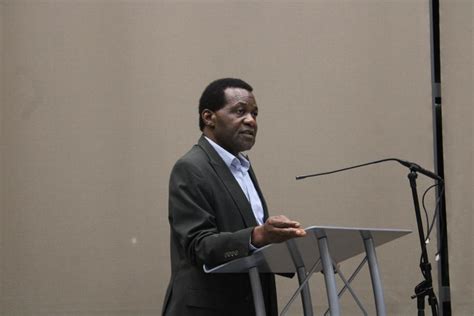
I trusted Milazi, but I don’t anymore. It’s as if the man doesn’t understand people remember what he’s said in the past about the very same issue. Maybe he forgot what he swore to when the city sued Harold Young.
Frank Milazi, Stockbridge’s City Treasurer and CFO, has spent the last year telling anyone who will listen that no city money ever went missing. His exact words, on the record.
“Council being misled”
File: 2025-07-15_Rescheduled_Regular_Council_Meeting_transcript.md
Councilwoman Gantt asks whether the budget documents the council had been approving were accurate. Milazi answers:
[3:19:19 – 3:19:23] — “No. They were not accurate. That’s it. So the documents that we received looked as if we were on budget.”
[3:19:27 – 3:19:33] — “That is correct. That’s where my uh talking was we let you down.”
[3:19:33 – 3:19:53] — “Yes. I didn’t know. I did mention that and I’m saying today again we let you down, hopefully, from now going forward.”
Then Gantt, turning it back on the council, says “you didn’t let us down. We did. You weren’t here” — Milazi was hired later and is admitting the documents his office inherited and handed the council were wrong.
[3:20:13 – 3:20:32] — “We received reported reports. We received budgets. We received spreadsheets, and the numbers were increased. Incorrect, but the numbers appeared to be what we thought were good numbers, correct?”
So: the council was being given reports that looked balanced but weren’t — which is the transcript’s own confirmation of “the council was misled.”
“Controls not being in place”
File: 2025-07-15_Rescheduled_Regular_Council_Meeting_transcript.md
[3:16:32 – 3:16:46] — “Right, because what was being done was being done by management and staff without council. There was no budget amendment at the end of the fiscal year.”
[3:16:53 – 3:16:57] — “So in essence it was mismanagement. Mismanagement, yes. So moving forward, we need to make sure that we have systems in place that will prevent mismanagement.”
[3:15:53 – 3:15:58] — “There were some um s plus. We were spending but we didn’t budget. But it wasn’t brought to Mayor and Council either. It was never brought before the council.”
[3:18:11 – 3:18:31] — “The thirty two million that they are talking about is the difference between what was budgeted and what was acted on that was not presented to council to work on it or to approve it. So the expenditures were there, but they were not approved by council.”
File: 2025-12-08_Regular_Council_Meetings_transcript.md
[0:54:17 – 0:54:34] — “Um what we are doing here was being done in the past, but it was being done behind the scenes that he did not have authorization of the council, because still money was being moved from one fund to the other. There were some funds that they didn’t have enough revenues. So the movement and the balancing can only be authorized by the governing body.”
That last one is the clearest single quote: Milazi states plainly that money was moved between funds without council authorization, “behind the scenes” — which is, in his own words, why the books had to be corrected.
At the July 15, 2025 council meeting, when a resident demanded to know where $32 million had gone, Milazi was summoned to the microphone to “put a misnomer” to rest:
“There’s no thirty two million dollars missing in the city.”
Then, under questioning from Councilwoman Gantt about the same number:
“So the money is not missing. No, there’s no missing of money. But we are making it right.”
And again, later in the same meeting:
“So there was no money of thirty two million that went missing.”
He repeated the line, nearly verbatim, at the September 29, 2026 meeting when the FY2025 audit was presented:
“There has never been a missing of a penny.”
“$32.9 million was never missing in the city of Stockbridge.”
“There was never $32.9 million missing from the city.”
The framing is always the same: the $32.9 million was never “missing” — it was just a budget adjustment, a reclassification, money “spent but not budgeted.” Nothing vanished. Nothing was lost. Everyone should calm down.
The court record says otherwise.
The account the city forgot to mention
On August 8, 2025 — three weeks after Milazi stood before the council and declared “there’s no missing of money” — Milazi’s own finance department “discovered multiple deposits” into a bank account the city never authorized. It was held at Ameris Bank under the name “Harold J Young Stockbridge Amphitheater,” account ending in 1358.
The account belonged to Harold Young, the amphitheater’s general manager, whom the city had terminated on June 16, 2025. It was opened in his name — personally. And it had, in the city’s own words, “received in excess of $400,000 of City funds that were budgeted for the 2025 concert series.”
The city’s complaint is unambiguous about whose money it was:
“Upon information and belief, the majority of the funds in the Ameris Account is City taxpayer funds.”
And the reason the city ran to court ex parte, asking the judge to freeze the account before Young was even told, is stated flatly in Judge Veal’s order:
“Without immediate intervention, Respondent may dispose of the Ameris Account, and the taxpayer funds believed to be held within it.”
“There is good cause to believe that Respondent, if informed of the TRO Motion, would hide assets and destroy evidence.”
The judge also made a finding Milazi never bothered to make at the podium:
“During his tenure with the City of Stockbridge, Respondent was not [a] city official contemplated by City of Stockbridge Code § 3.04.030 with authority to open a bank account on behalf of the City.”
In other words: the money did not go to a city account. It went to a private account in the name of a fired contractor — someone the city code says had no authority to hold a single city dollar.
Milazi’s signature is on the very document that proves it
Here is the part that should end the “not a penny missing” talking point permanently.
The exhibit attached to the complaint — the document proving the money moved — is not a subpoenaed bank record dug up by lawyers. It is an email from Frank Milazi himself. His signature block sits at the bottom:
Frank S. Milazi, City Treasurer/CFO
In that email, Milazi lays out Young’s accounts in his own words:
“The second account below is where we sent Harold reimbursements for deposits/expenses he paid for himself.”
That second account is the Ameris account, ending 1358 — the same account a judge later froze because it held taxpayer money Young had no authority to hold. The wire detail lists a single entry: $142,500.00 to “Harold Young,” Ameris Bank, checking.
Add to that the $15,000-a-month “consultant fee” the city paid Young to a separate Wells Fargo account — an account the city’s own complaint says Young “would regularly conduct business on behalf of the City” through — and you have the answer to the question Milazi keeps insisting no one should ask.
So: was money missing?
The city’s own Treasurer, in the city’s own sworn complaint, says that a fired contractor controlled a private bank account containing more than $400,000 of money “budgeted for the 2025 concert series” — money that had to be clawed back through a TRO and an asset freeze because, in the court’s words, Young might otherwise “hide assets and destroy evidence.”
That is not a “budget adjustment.” That is not “spent but not budgeted.” That is not “a roadmap based on prior expenditures.” That is a man running city funds through his personal checking account, and a Treasurer who — while standing at the podium telling taxpayers “there’s no missing of money” — was simultaneously documenting, in his own email, $142,500 of it flowing into that exact personal account.
Milazi’s “not a penny missing” was never a statement of fact. It was a shield. He deployed it to wave away $32.9 million of unapproved spending, and it turns out the $32.9 million story and the $400,000-in-a-private-account story are not two different things. They are the same disease: a finance office that could not — or would not — account for where the city’s money actually was.
The city would not have filed an emergency lawsuit, and Judge Veal would not have frozen a bank account at 2 a.m., if nothing was missing. The city sued because money had to be found and pulled back. Some of the money was missing. That is the entire reason the court case exists.
Milazi can keep saying “never a penny missing” for as long as he likes. The complaint he signed his name to says otherwise — and a Superior Court judge has already ordered the money seized back on exactly that basis.
The same names, one venue removed
The Harold Young account was not the first time the people now guarding Stockbridge’s amphitheater money had crossed paths with a venue money scandal.
Sandra “Sandy” Ward-Poag was the entertainment director of the Wolf Creek Amphitheater in Fulton County. In November 2016, a county audit of that venue came back so bad the Atlanta Journal-Constitution called it “damning.” It found more than two dozen violations of county policy: cash management problems, preferential treatment for certain vendors, business done with unlicensed companies, contracts signed without county approval, fee structures changed without the commission’s sign-off — and a ticket-printing scheme that handed complimentary entry to thousands more people than allowed, overcrowding the facility.
Ward-Poag and an assistant county manager, Lisa Rushin, were both fired in February 2017. They sued, claiming they were really terminated for whistleblowing on Commissioner Marvin Arrington Jr.’s use of the venue’s skybox for private parties. The case wound its way up to the Georgia Court of Appeals, and in May 2025 the panel ruled against them — finding that Fulton County had “legitimate, nondiscriminatory reasons” for the firings, grounded in the pair’s “own financial indiscretions” and “numerous findings of misconduct” from that same audit.
Then the venue changed hands. South Fulton incorporated and took over Wolf Creek from Fulton County, and the man running its books as Chief Financial Officer was Frank Milazi — the same Frank Milazi who would later become Stockbridge’s City Treasurer and CFO.
That is where the two tracks collide. In February 2026, after Harold Young was fired and the city sued him over the $400,000 in the personal Ameris account, Stockbridge needed a new general manager for its amphitheater. The person hired for the job — announced as “your new VyStar Amphitheater Stockbridge General Manager” — was Sandy L. Ward-Poag, the same woman fired from Wolf Creek after the audit that found money mishandled and tickets given away by the thousands.
So the sequence a Stockbridge taxpayer is left to make sense of is this: the city’s Treasurer stood before the council and swore “there’s no missing of money” — while the amphitheater he oversaw had just discovered $400,000 in an ex-manager’s personal bank account and filed an emergency lawsuit to claw it back. Then, to run that same amphitheater, the city brought in a manager whose last public-venue job ended with a county audit so severe it became a two-word shorthand — “damning” — and a court ruling that her firing was justified by her own financial misconduct.
Frank Milazi was the CFO of the city that absorbed Wolf Creek when its scandal erupted. He is the CFO of Stockbridge now. In both places, the same pattern shows up on his watch: an amphitheater, a manager, and money that the people in charge insist was never missing — until the audit, or the lawsuit, says it was.
A note on the record
Nothing in the public record ties Milazi to the Wolf Creek audit itself — his involvement there is as the finance chief of the successor government, and his involvement in Stockbridge is as the CFO who was serving while Ward-Poag was hired. He is not named in the Wolf Creek audit findings, and no source found for this piece asserts he personally hired Ward-Poag or was directly implicated in that scandal. Those are stated as the facts they are, and nothing more.
Sources
- City of Stockbridge v. Harold Young, Henry County Superior Court, No. 2025-SU-CV-2626-HV — Complaint and Emergency Ex Parte TRO (Judge Holly W. Veal), filed Aug. 15, 2025.
- Atlanta Journal-Constitution, “Money mishandled at Wolf Creek Amphitheater, extra tickets printed,” Nov. 14, 2016.
- 11Alive, “Two Wolf Creek Amphitheater employees fired after audit,” Feb. 9, 2017.
- Fulton County v. Sandra Ward-Poag et al., Ga. Ct. App., A25A0178, decided May 29, 2025 (via Law360 / Robbins Firm).
- HomeRuleNews, “South Fulton declared debt free, completely transitioned from Fulton County,” Dec. 2018 (Frank Milazi, CFO, quoted).
- Stockbridge City Council meeting transcripts, July 15, 2025 and Sept. 29, 2026.
- My transcript archive.
- FY2023: https://app.fac.gov/dissemination/report/pdf/2023-12-GSAFAC-0000056073
- FY2024: https://app.fac.gov/dissemination/report/pdf/2024-12-GSAFAC-0000384683
- FY2025: https://app.fac.gov/dissemination/report/pdf/2025-12-GSAFAC-0000426279
A plain-English reading of the three single-audit filings the city submitted to the Federal Audit Clearinghouse — FY2023, FY2024, and FY2025.
For three years running, the City of Stockbridge has told the public its books are clean. The city has taken home the Government Finance Officers Association’s highest award for financial reporting, and its treasurer has stood at the podium declaring “there’s no missing of money.”
The actual audit filings tell a different story. Every one of the three annual reports carries a clean (“unmodified”) opinion on the financial statements — but that is the only thing that is clean. The part of the audit that examines whether the city can be trusted to account for its own money has failed, every single year, in the same places.
The headline numbers
| FY2023 | FY2024 | FY2025 | |
|---|---|---|---|
| Opinion on financial statements | Unmodified | Unmodified | Unmodified |
| Material weaknesses (internal control) | Yes | Yes | Yes |
| Significant deficiencies | Yes | Yes | None reported |
| Federal compliance opinion | Qualified | Qualified | Unmodified |
| Federal grant findings | 1 | 2 | 0 |
| Low-risk auditee? | No | No | No |
| Total findings | 6 | 11 | 5 |
The three columns have one constant: the city has never once qualified as a low-risk auditee. That designation is the federal government’s way of saying “your controls are good enough that we don’t need to look too hard.” Stockbridge failed it all three years, because it carried material weaknesses forward every year.
What a “material weakness” actually means
The auditors (Mauldin & Jenkins, LLC) define it precisely in each report:
“A material weakness is a deficiency, or a combination of deficiencies, in internal control such that there is a reasonable possibility that a material misstatement of the entity’s financial statements will not be prevented, or detected and corrected, on a timely basis.”
In plain English: a material weakness means the city’s own accounting could not be trusted to catch a serious error — and, in these cases, the outside auditors had to correct millions of dollars the city had recorded wrong.
FY2023 — four material weaknesses and a qualified federal opinion
The FY2023 audit (filed as 2023-12-GSAFAC-0000056073) identified four material weaknesses, one significant deficiency, and one federal grant finding:
2023-001 — Receivables and revenue. The city could not correctly state its receivables and revenue. The auditors had to post adjustments across the General Fund, the ARPA Fund, the Grants Fund, the Stormwater Fund, the Solid Waste Fund, and the Conference Center Fund — including a single ARPA adjustment of $1,626,110 of misclassified unearned revenue.
2023-002 — Capital assets. The city simply left $2,253,737 of capital assets out of its books, plus another $1.78 million of Water & Sewer construction-in-progress.
2023-003 — Interfund activity. Money moving between the city’s own funds was misstated. The General Fund needed $9,598,792 in transfer corrections and a $7,930,727 cash correction. The Amphitheater Fund alone required $6,357,806 of expense corrections — a number that will reappear.
2023-004 — Prepaid assets. Misclassified prepaids across five funds.
2023-005 — Accrued liabilities (significant deficiency). Liabilities left unrecorded in six funds.
2023-006 — COPS grant reporting (federal finding). The city did not submit two quarterly financial reports and three semiannual performance reports on time, and five reports lacked required supporting documentation. This drove a qualified opinion on federal compliance.
Every single 2022 finding was carried forward as “Unresolved.” The corrective action plan was signed by Lakeisha Gaines, Interim Treasurer — a placeholder name that signals the finance office itself was in turnover.
FY2024 — eleven findings, the worst year
The FY2024 audit (2024-12-GSAFAC-0000384683) is the low point: seven material weaknesses, two significant deficiencies, and two federal findings — eleven in total. The auditors classified them explicitly:
- Material weaknesses: 2024-001 (receivables), 2024-002 (interfund), 2024-004 (inventory), 2024-005 (expenditures/cash), 2024-006 (Amphitheater), 2024-007 (accrued liabilities), 2024-009 (capital assets).
- Significant deficiencies: 2024-003 (prepaid assets), 2024-008 (depreciation).
The dollar figures are where this stops being a technicality:
- Interfund (2024-002): the General Fund needed $10,788,213 in transfer corrections and a $6,796,573 correction to interfund receivables.
- Capital assets (2024-009): $9,046,595 of completed projects were never moved out of “construction in progress,” meaning the city was still carrying finished projects as if they were unfinished — plus $529,298 of related depreciation.
- Amphitheater (2024-006): the General Fund needed a $6,013,271 correction. The auditors wrote that “many disbursements did not have proper approvals by management” and “support for some disbursements was not available.”
The two federal findings — CSLFRF (COVID relief) and COPS grants — both reported “multiple required reports not submitted timely,” producing another qualified opinion on federal compliance.
The prior-year schedule showed the pattern clearly: of the six FY2023 findings, five were “Unresolved” and one “Partially resolved.” The city had fixed almost nothing.
FY2025 — better, but the same five wounds
The FY2025 audit (2025-12-GSAFAC-0000426279) is the one the city’s leadership celebrates — and it is genuinely better on one axis. The federal compliance opinion returned to unmodified (both grant-reporting findings were resolved), and significant deficiencies dropped to zero.
But the material weaknesses did not go away. There are still five, and every one is a repeat of a prior-year finding:
- 2025-001 — receivables and revenue (repeat of 2023-001 / 2024-001). The General Fund needed a $2,084,550 receivable correction and a $1,528,080 fund-balance correction.
- 2025-002 — depreciation recorded in the wrong fund (repeat of 2024-008).
- 2025-003 — capital assets and assets held for resale (repeat of 2023-002 / 2024-009). The Water & Sewer Fund alone needed $2,788,947 of capital-asset corrections and $981,054 of depreciation expense.
- 2025-004 — Amphitheater expenditures (repeat of 2024-006). The General Fund needed a correction of — the exact same figure as the prior year — $6,013,271. The auditors again noted disbursements “did not have proper approvals by management or supporting documentation.”
- 2025-005 — interfund activity (repeat of 2023-003 / 2024-002). The General Fund needed $4,843,114 in interfund payables and $4,046,366 in transfer corrections.
The prior-year schedule for FY2025 tells the real story of “progress.” Of the eleven FY2024 findings: six were resolved, but four remained “Unresolved” (receivables, interfund, depreciation, capital assets) and one — the Amphitheater — was only “Partially resolved.”
The pattern the corrective actions can’t hide
Three details recur so consistently they are the story itself.
First, the same four failures every year. Receivables/revenue, interfund activity, capital assets, and Amphitheater expenditures appear in all three audits. These are not new mistakes being discovered each year; they are the same mistakes, found again, with the prior-year schedule stamped “Unresolved.”
Second, the boilerplate corrective action. Almost every finding carries the identical response: “We concur. Additional controls will be implemented.” The same sentence, verbatim, year after year, on the same findings — which is how you know the controls were never actually implemented.
Third, the cause is always the same word. For nearly every finding across all three years, the auditors list the cause as two words: “Management oversight.” Not a software glitch, not a transition, not a one-off error — management oversight, repeatedly, in the same areas, for three consecutive years.
What this means
A clean financial-statement opinion sounds reassuring, and it is what gets announced at the podium. But it coexists, in all three filings, with the auditors saying the city’s internal controls could not be relied upon to catch a material error — and then proving it by correcting millions of dollars every year.
The two qualified federal opinions (FY2023 and FY2024) are the closest thing to a penalty in these filings: the city was formally out of compliance with its federal grant terms two years running. Grant noncompliance is how federal money gets clawed back.
And the Amphitheater is the thread running through all of it. Its expenditure problems were a material weakness in FY2024 and again in FY2025 — with the identical $6,013,271 correction both years — and its interfund activity was being misstated as far back as FY2023. The same venue, the same amount, the same “management oversight,” three years in a row.
The audits don’t say the money was stolen. But they say something Milazi’s “no missing money” framing cannot: that for three straight years, the city could not correctly record where its own money was — and needed an outside firm to fix millions of dollars of it, every single time.