Category: Council Meetings & Records

  • Elton Alexander’s Claim he Spearheaded the Mayoral Replacement Legislation

    Elton Alexander’s Claim he Spearheaded the Mayoral Replacement Legislation

    On social media, Elton Alexander says he spearheaded legislation on the mayor’s powers in Stockbridge. The claim is specific. He says he spearheaded the rule that when a council removes a mayor, a vote must be held to fill the office, instead of letting the council appoint a replacement.

    I went looking for that bill. It is not there.

    The claim, and what the record shows

    Alexander is a city councilman. City councilmen do not file bills in the Georgia General Assembly. State representatives and state senators file them, and a city can only ask its delegation to carry a local bill.

    I searched every bill naming the City of Stockbridge in every session from 2011 through the 2026 special session. That includes the bill pages, the act text and the sponsor lists. No Stockbridge bill carries Alexander’s name. No Stockbridge bill proposes what he describes. There is no Stockbridge mayoral vacancy bill at all in the 2025-2026 session, and none in the 2026 special session.

    The rule he describes does exist. It is charter section 2.12(b), and it was written in 2016 by Senate Bill 362. The sponsors were Sen. Emanuel Jones of the 10th and Sen. Rick Jeffares of the 17th. The act reads:

    A vacancy in the office of the mayor or any councilmember shall be filled for the remainder of the unexpired term, if any, as follows: If the vacancy occurs when six months or more remain in the term of office of the seat vacated, then such vacancy shall be filled for the unexpired term of office at a special election held in accordance with Georgia law.

    The same section says that if fewer than six months remain, the remaining members of the governing authority select a qualified person by majority vote.

    So the charter already answers the question. A mayor removed with time left on the term goes to a special election. A mayor removed in the last six months is replaced by a council vote. Nothing new has to be passed to get there, and the city is already preparing the special election after the September removal of Mayor Jayden Williams, with roughly six months to schedule it.

    One more thing is missing. When a city wants a local bill, its council passes a resolution asking for it. The council did exactly that for the boundary legislation in 2017. I found no resolution in the 2015 and 2016 minutes available in the city record asking the delegation for a mayoral vacancy bill, and no record of Alexander requesting one.

    What actually changed about the mayor’s powers

    The charter is the act of April 4, 1991. It has never been replaced. Every change since then is an amendment to that act.

    In 2011 the legislature nearly rewrote it. Senate Bill 189, by Sen. Emanuel Jones and Sen. Gail Davenport, would have revised the powers and duties of the mayor, revised vetoes, created a city administrator and set two referenda. It passed the Senate, the House substituted it, and the Senate disagreed with the substitute on April 14, 2011. It died.

    The real rewriting came in 2016, in six Senate bills from the same two senators, Jones and Jeffares:

    • SB 358 added the oath of office.
    • SB 359 ended a city appointment or job when the holder qualifies for public office.
    • SB 360 barred the mayor and councilmembers from holding another elective office.
    • SB 361 created the city manager. The mayor recommends at least two candidates, the council accepts or rejects them, and the mayor may suspend or remove the manager. The council can override a suspension or removal by three votes.
    • SB 362 set the vacancy and special election rule quoted above.
    • SB 390 set the veto override at four councilmembers.

    That is the shape of the deal the delegation made. The mayor got real executive authority over a professional manager. The council got a four vote override on vetoes, which is a high bar in a five member body.

    Later acts were narrower. SB 262 in 2018 revised the corporate boundaries with a referendum. SB 256 in 2019 created the Stockbridge Public Facilities Authority. SB 612 in 2022 changed the corporate limits and created the council districts. SB 584 in 2024 added homestead exemptions.

    What Alexander actually did about mayoral power

    The one place he engaged the mayor’s appointment power directly was January 12, 2026.

    At that meeting Mayor Jayden Williams announced council committee assignments. He called them his appointments under the charter, and cited sections 2.04-210 through 2.04-230. Councilwoman Yolanda Barber objected that she did not know whether he could assign members to committees.

    Alexander spoke next. He said he did not plan to serve on any committee. He said he had emailed in December asking not to be appointed, and he called the committees redundant. Then he said this:

    I certainly would make a motion to uh to change the city charter so that that is not a requirement.

    The mayor’s answer was that members have the right to serve or not. The item was tabled so the city attorney could read the charter. You can read the exchange in the January 12, 2026 transcript.

    That is the whole of it. The mayor’s power to name people to committees was answered by a member refusing the appointment, saying he had already asked not to be named, and moving to amend the charter so that serving is optional. A power nobody has to accept is not much of a power.

    Two other moments round out the record. In June 2019 he urged the mayor to veto a measure he opposed, and the mayor corrected him that a resolution cannot be vetoed, only an ordinance. In August 2026, presiding as Mayor Pro Tem with the mayor’s seat vacant, he defended the district seats against a proposal to add two at-large seats or dissolve the districts.

    So the pattern is not a man writing the rules for how a mayor leaves office. The pattern is a man working to make sure a mayor cannot hand out appointments that mean anything.

    If there is a bill, the bill number and the session will settle this in one line. Until that number appears, the claim is a campaign line with no document behind it.

    Sources

    Georgia General Assembly bill pages and act text for SB 189 (2011), SB 358, SB 359, SB 360, SB 361, SB 362 and SB 390 (2016), SB 262 (2018), SB 256 (2019), SB 612 (2022) and SB 584 (2024).

    City council transcript, January 12, 2026, Reading Room document doc-552a00fa.

    City council minutes and agenda packets, 2015 through 2016, for the local legislation record.

    Press coverage of the September 2026 removal and the special election timeline.

  • The Surveillance Stack on Monday’s Agenda

    The Surveillance Stack on Monday’s Agenda

    Social share card for: The Surveillance Stack on Monday’s Agenda
    A weathered CCTV surveillance camera on a rusted bracket against a blue sky
    Photo: Cao Huy / Pexels
    City of Stockbridge November 9th Agenda Item #9

    Monday night the council will vote itself a bigger surveillance machine without ever using the word. Item 9 spends $2,338,763.29, all of it traffic-camera revenue, on a five-year Axon renewal: 89 new Axon Body 4 cameras, dashcams for 49 patrol vehicles each wired with an Ericsson cellular router so every vehicle becomes a streaming node, sensor triggers in 84 cars, and five years of cloud storage on top. Item 7 lays the pipe for what comes next: a $15 technology surcharge on every criminal and quasi-criminal fine, routed through a local bill in Atlanta instead of a straight vote, dedicated to keeping this technology funded forever. Neither item asks residents anything, because neither item is supposed to require asking, which is the real subject here. Stockbridge already carries the third-largest state ALPR footprint’s local share: volunteers have documented around 55 Flock-style plate readers in this town, on streets no one voted to put cameras on, feeding a private national network where any participating police department can search your plate’s history in any other participating city. Georgia lets that data sit for thirty months, not the thirty days Flock advertises, and no state law stops sharing it with ICE. This is a Fourth Amendment violation in plain operation. What Carpenter v. United States held unconstitutional was not surveillance but the dossier: the comprehensive, retrospectively searchable record of where you have been. A grid of readers on our few arterial roads, cross-referenced across municipal and state lines, gives the state exactly that mosaic on a driver who has done nothing at all, assembled without a warrant, without a suspicion, without an opt-out. That some courts have so far declined to say the quiet part (most recently Schmidt v. Norfolk and State v. Simonson, both crediting Flock’s “discrete point-in-time observations” story, while the Fourth Circuit now hears the appeal and one Virginia judge in Commonwealth v. Bell actually called a Flock drag a search) is the litigation calendar, not a constitutional finding.

    The reason this is finally a national argument instead of a local one is that independent researchers stopped taking the vendors’ word for it. Atlanta-based Benn Jordan has spent two years doing the audits the police departments promised they were already doing: he found Flock administrative interfaces sitting open on the public internet with no credentials (watch any day’s footage, delete it, drop files on the box), and he and cybersecurity researcher Jon Gaines took a Flock camera apart until it rooted, showing the “secure appliance” was an ordinary Android device whose firmware an attacker could compromise undetectably, outside Flock’s audit logs entirely. Gaines’s firmware dumps later yielded the camera’s Wi-Fi signature set, which communities now use to detect the readers that Flock’s own map doesn’t always admit to, and Flock’s Condor cameras were documented streaming live public surveillance with no authentication at all. Flock spent months answering with “we’ve never been hacked” until Jordan downloaded the footage on camera. The pattern those findings expose is a private company operating a national surveillance network with no customer, no court and no city able to see inside it. That is why cities are now terminating Flock contracts at record pace, why Senator Hawley has an open probe, why Reuters reported Flock cutting eighteen percent of its workforce in October, and why Sheboygan, Wisconsin fired Flock in September when it emerged the company had quietly tried to sell the city’s own traffic data to another buyer: not a hack, just the business model surfacing. The ACLU’s “Get the Flock Out” campaign and EFF’s 2025 investigations say the same thing with subpoenas and public records where Jordan and Gaines used rootkits and a Wi-Fi antenna.

    The same questions apply to the company in item 9, so read Axon’s backend before praising the hardware. Every frame those 89 body cameras and 49 dashcams capture leaves Stockbridge for Axon’s cloud, Evidence.com, hosted on Microsoft Azure, where Axon is Azure’s largest customer and the company boasts of holding some forty times the Netflix video library. Axon’s public line is that it doesn’t sell agency data and the agency “owns” it, but the contract actually before council goes further than the slogan. Axon’s own Road Footage Notice says it uses road video “to evaluate and train its license plate recognition system”: your plates become Axon’s product training data, “not sold” but not deleted on request either, because Axon says it can’t find your segment without collecting more information about you. The Fusus terms in the packet make Axon a “Data Processor” of the city’s live video and let it automatically collect the traffic data, location data and access logs of everyone using the platform. And the Dedrone clause, drone detection data sitting in the terms of a contract Stockbridge has been asked to sign without a word of discussion, grants Axon the right to use that data “for any purpose,” including compiling it “with or without compensation” with other customers’ data and other governments’, the same Dedrone that Axon bought outright in 2024 and wired into Fusus. That is the actual architecture: cameras feed a private cloud, the cloud feeds Axon’s AI products, the contracts license the aggregation, and the only check on any of it is the audit log the vendor keeps about itself. Benn Jordan’s point about this space is the point the packet proves: the network is only as secure and only as honest as the weakest agency plugged into it and the vendor that refuses to be audited, and Stockbridge is about to buy five more years of both, funded by the cameras nobody debated.


    Sources

  • September 29 meeting summary

    September 29 meeting summary

    Social share card for: September 29 meeting summary

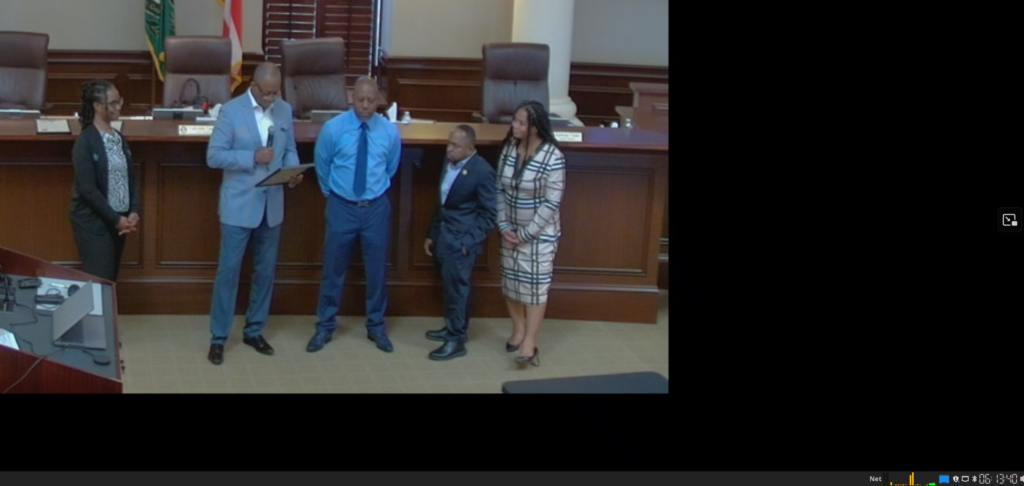
    It’s an hour and a half of undue praise and proclamations. This motherfucker will not shut the fuck up. So I’m turning this bullshit off. In the morning I’ll have my machine transcribe and pick arpart the meeting. Because I don’t have to listen to Elton pretend to be something he’s not.

    He’s a realtor. He opens the doors to bathrooms and says, “this is a bathroom.” If it weren’t for shucking and jiving for massas Welch, Strickland, Talmadge, Price, Herndon-Woodall and their white supremacist biker friend of a friend, Mark Ware. Elton would not have been installed as mayor.

    No shit. They write songs about their ethnostate down in Butts county. ‘Good old boys that look just like me and you.’ First of all, you motherfuckers don’t look like me. Second, why would Sandra Pogue or Charisma Webster have this person at the amphitheater in this city of all cities? And finally, ladies and gentlemen. When they tell you who they are, belive them.

    The first line is “playing hard and getting wet” and it’s a song about “Sheriff Long and all his boys.” Incomprehensible how awful these lyrics are. So, get ready Mark. This’ll be the most views that video ever gets in any period of time.

    If you peckerwoods down in Butt County take issue with this. Stay your corny ass away from me in your prison rape gay, leather daddy cosplay. Gary Long isn’t tough. Gary Long handed that landscaper over to Victor Hill to be tortured. Considering this man doesn’t provide you liberty or protection. All your white pride & back the blue ass kissing means abolutely nothing.

    Oh yeah. Almost forgot. Mark Ware was the first manager of the amphitheater. His email was mware@pacesga.com & then this RICO was filed against Paces.

  • April 13 Council Meeting Notes

    April 13 Council Meeting Notes

    Social share card for: April 13 Council Meeting Notes

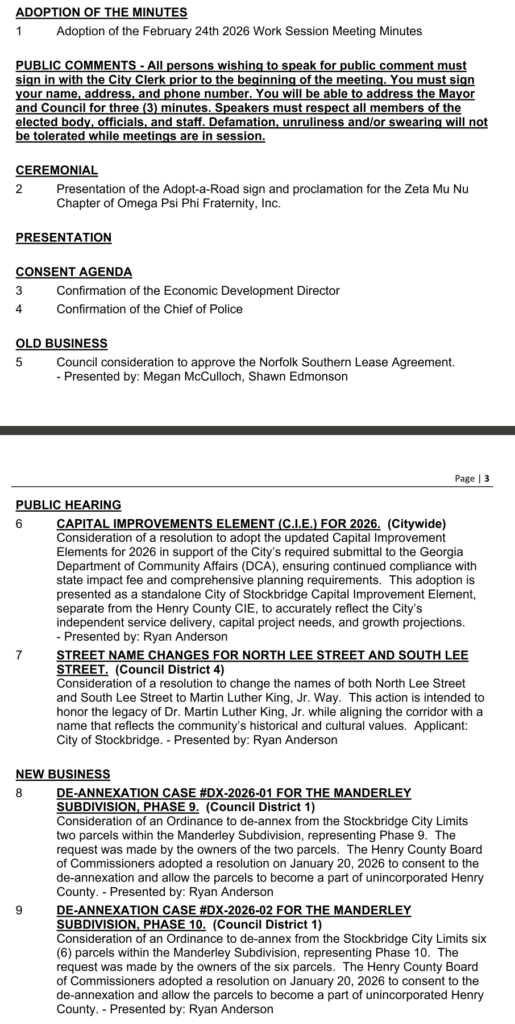
    Well, first let’s clear up the Lee St. timeline. Last night, Elton said he used the words General Lee as an anecdote. No, he said April 24, “that street is definitely named for General Lee.” Then, March 9 Linda Logan put in the agenda packet a slide that said the road was named for General Robert E. Lee. In the interim I called Ryan Anderson for a curt conversation in which he said, “they got their mind made up.”

    Now. I don’t know if he was referring to management or the city council. But I don’t have to care about that part. My job is to point out that this city hasn’t changed.

    We have a $300,000 limit per artist. Per artist, and not per show. There’s ~3200 usable seats. No one in this city can pay enough to make that profitable. No one can ever make $300K “artists” break even. There is no clause in place to stop E.g. Brett Michaels. Who never performed here in 2025, but that no-show show cost us $110,000 and got the city sued for $8000 due to Ga. Radio Alliance for advertising. The potential for fraud is as high as it ever was. Their willingness to lie about serious subjects is present, here, now in this road renaming gambit.

    Someone at City Hall last night said, “we’re just getting started.” The thing is. You work for the people and the people haven’t brought any of this forward. You need to be performatively Black with a capital B for the new mayor and city manager. Well, I’m sorry, this isn’t Campbellton Road. We don’t want to live in “Black” downtown. We just want a normal downtown like Roswell. As the Mayor opened with a proclamation about bookstores. If someone wants to open a bookstore, I hope it would have Langston Hughes alongside Isaac Asimov. More likely than not, it won’t have Hughes or Asimov. It’ll stock Kamala’s Diary and half the store dedicated to the Clinton Family.

    As to the road renaming. Council blames Staff. Anderson blamed staff. Elton blamed Vanessa & staff. I here, now blame Shawn Edmonson. This is his play at, ‘showing them who’s boss.’ At the end of the day. Whether it was staff, council, inside, or outside of the city hall. The fact remains that this road renaming was designed to torpedo the Pinehurst Catering real estate listing. Set aside that renaming something does absolutely nothing, in the real sense of the word “doing.”

    If anyone of you built something new and wanted to name it for Mr. Thomas no one would stand in your way. But what you’re doing is using time honored dead people to do stupid, unpopular things. “align the corridor” is the stupidest excuse in all this. This isn’t your “corridor.” It’s my neighborhood. Until the city comes up with a plan for the 330 people affected & entourage effects created by the TAD & Redevelopment plan, sic semper tyrannis.

    Let me illustrate: I don’t work for you, Shawn. You don’t own my house, Shawn. There ain’t no bossing us around over here in these neighborhoods. Change any street name you want. We own this neighborhood. Until you pay for the relocation of these resident as the law proscribes, we will continue to own this neighborhood.

    Put that in your Black Bookstore and read it, partner.

  • Propaganda & Lies planned for March 9 Stockbridge City Council Meeting.

    Propaganda & Lies planned for March 9 Stockbridge City Council Meeting.

    Social share card for: Propaganda & Lies planned for March 9 Stockbridge City Council Meeting.


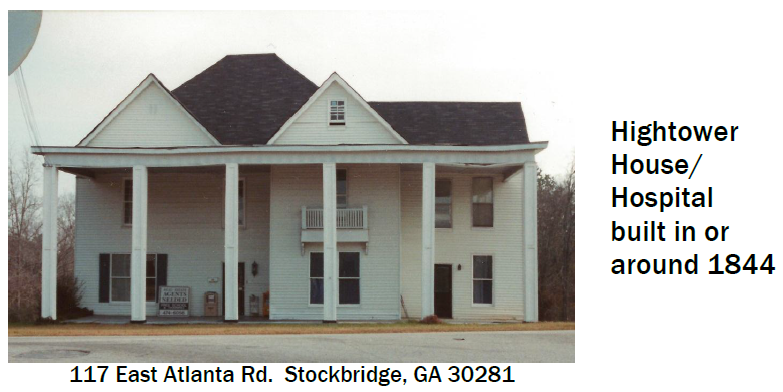
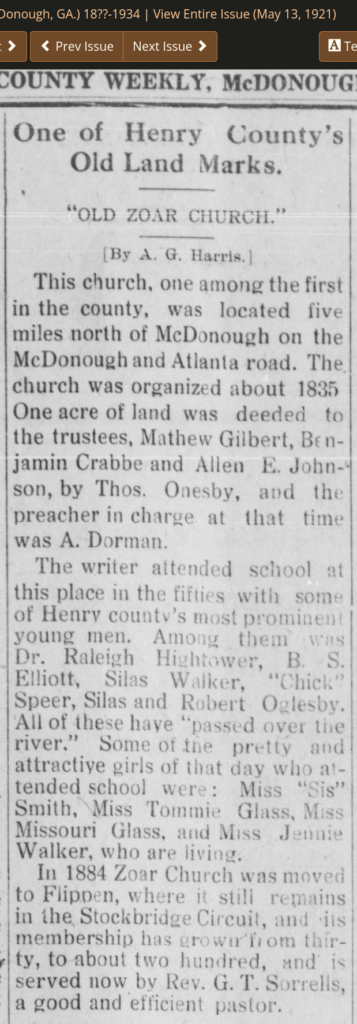
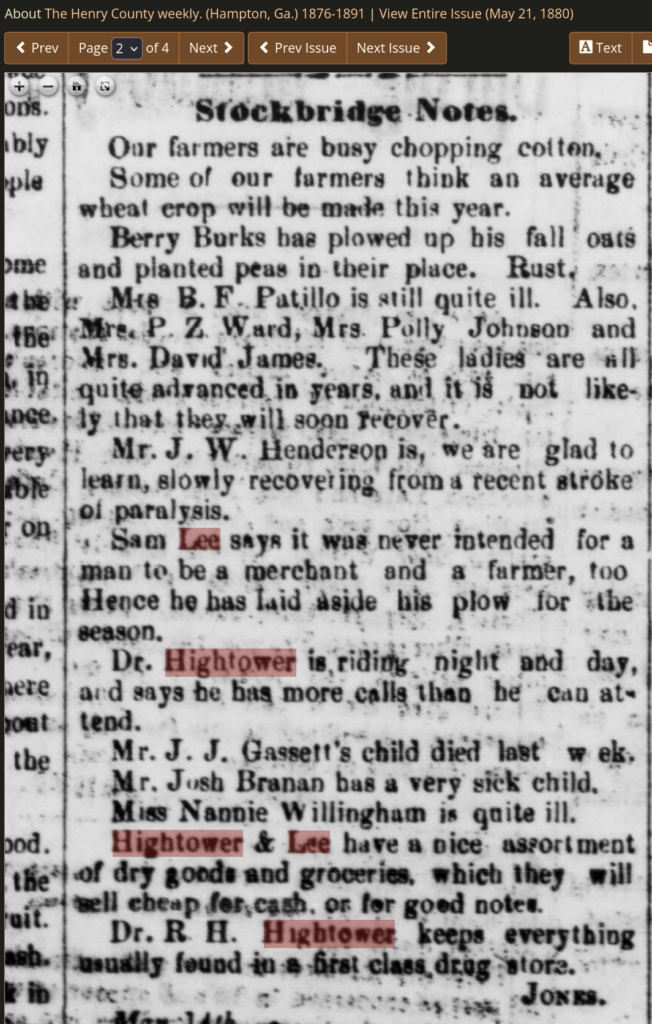
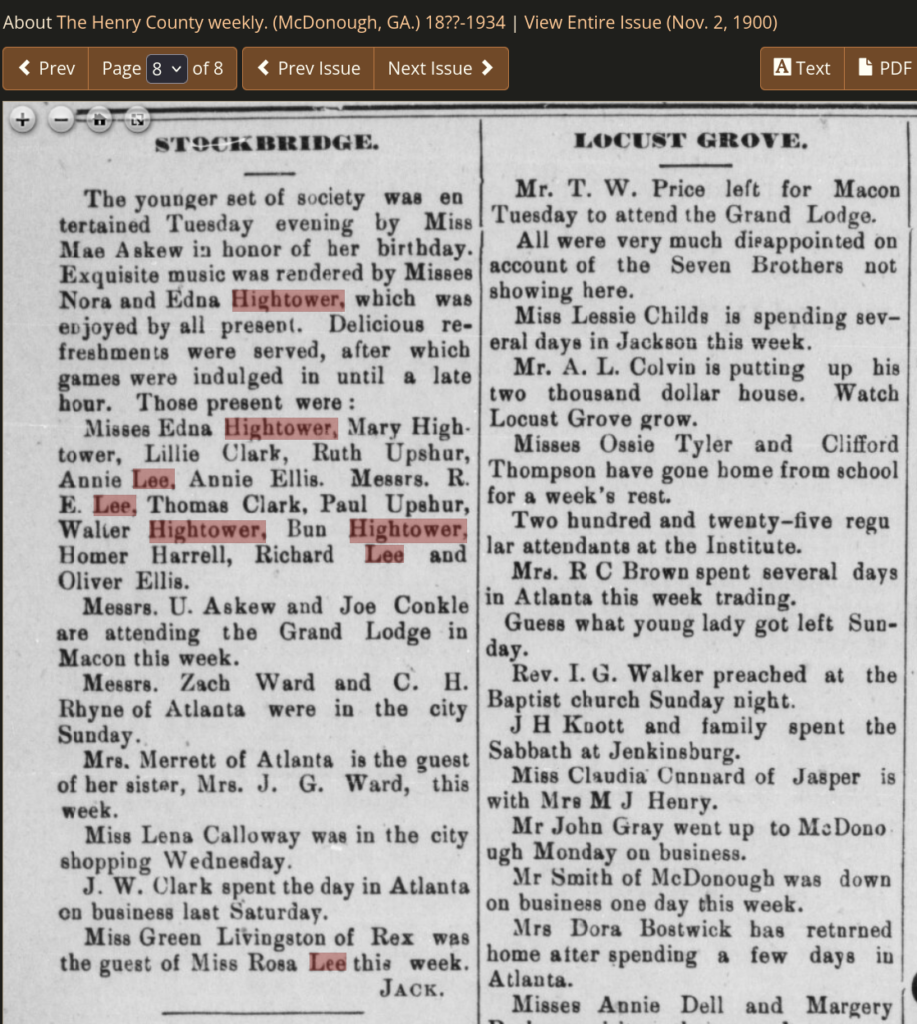
    It came up from nowhere but Elton Alexander’s tepid imagination at the behest of his handlers in Eagle’s Landing on Feb. 9 that Lee St, where I’ve lived all my life, is named for Confederate General Robert E. Lee. I dispelled that myth here and here. Further, here’s the history of the Old Zoar Church & The Hightowers (Lee relatives) in 1835. Stockbridge City is 100 years old. Stockbridge herself is much older.

    The city did a “controlled burn” and destroyed this house.

    The long intimidating agenda

    Come wait in line for two hours. And don’t you dare say a “disrespectful” thing.

    Now I have to switch gears on you right fast to explain something. I have no love for Pan-Hellenism, Greeks and despise the Ques. For what was done to Caleb Wilson, you deserve to pick up trash on the side of the road. We can’t set aside the “14 Loyal Sons from the Fists of Fury (2018)” as the Henry Zeta Mu Nu choose to call themselves. Not seeing as how Caleb was chest punched to death in some bizarre hazing ritual. It’s simple. If I was in a club that did shit like that I’d find a different club to be in. But you can’t leave because you’re not in a club, you’re in a cult. You a plumb line, brother. A smooth ashlar to be sure.

    All I needed was a Baptism. I’m a mile from where I received it, in fact. You got secret handshakes, hazing rituals and oath’s to dead gods most people don’t worship.

    So, if you want to speak out at the March 9th meeting against this Robert E. Lee lie. You’ll have tell a Black city council in a room loaded with HBCU fraternity brothers you don’t want a road proximal to your property value named MLK Jr. Way. You will wait while they’re awarded for being in a secretive, powerful club together before you speak up for your property value you worked on for 50 years.

    Preserved here for posterity is my phone call with three staff members today. For 18 minutes they admit the General Robert E. Lee shenanigans are just made up from rumors. My contention is, just as always, Eagle’s Landing Country Club residents wish to manipulate the price of real estate in my neighborhood. It was once Buddy Welch and his cohort. Now it’s Reggie Sylvain and his tough little club of very serious people.

    We can keep on with this Mexican Standoff of you keeping the price down and me not willing to take a $20-50K loss. But all that’s going to do for you is keep me here writing about you.

  • February 24 City Council transcript & public speakers.

    February 24 City Council transcript & public speakers.

    Social share card for: February 24 City Council transcript & public speakers.

    This is the Rock Quarry Road extension as proposed by the city in their own agenda. https://stockbridgega.portal.civicclerk.com/event/3594/files/attachment/10965

    An auto generated transcript of the meeting (made with OpenAI-Whisper). Errors are not the fault of this site or author.

    The February 24, 2026, Stockbridge City Council meeting focused on significant infrastructure planning, particularly the Rock Quarry Road projects, and was marked by discussions regarding administrative procedures and community concerns.

    Ceremonial and Procedural Actions

    A brief conflict arose when Mayor Pro Tem Alexander moved to add a vote on the Lee Street name change to the agenda. Councilwoman Barber opposed this, noting it was not a priority for her district and that staff needed more time to notify residents. The motion was eventually withdrawn after legal and staff clarification that a 15-day public hearing notification process was required and had already been advertised for March 9.

    Public Comments: Rock Quarry Road Extension

    Several residents from Duval Drive and surrounding streets expressed deep concern over a map they received—apparently from a private individual rather than the city—showing the Rock Quarry Road extension passing through their neighborhood. Residents voiced fears that the project would destroy their “quiet little street” and quality of life. City staff and council members clarified that they had not distributed the flyers and that no city-led discussion had prioritized a route through that neighborhood.

    New Business: Infrastructure and Funding

    The council addressed two major items regarding Rock Quarry Road:

    • Preliminary Design Task Order: The council approved a $167,900 task order with Falcon Design for the preliminary engineering of the Rock Quarry Road extension. The project’s representative, Adam Price, explicitly stated that the Duval Drive route had been eliminated and the proposed route would connect North Henry Boulevard to Old Conyers Road. While the full project could cost between $40 and $50 million and take up to 15 years to secure funding, the current goal is to create a “shovel-ready” design. The motion passed 4-0.
    • T-SPLOST Reimbursement: The council authorized the City Treasurer to reimburse Henry County $4 million for the ongoing Rock Quarry Road widening project. The payments will be structured as $2 million in 2026, $1 million in 2027, and $1 million in 2028. This widening project, separate from the extension, will result in a four-lane road with multi-use paths and sidewalks by 2028.

    Closing and Executive Session

    The council moved the executive session to the end of the meeting to accommodate the large number of residents in attendance. After reconvening, the Mayor announced upcoming events, including a Women’s History Month event and a Clergy Roundtable scheduled for March 2. The meeting was adjourned shortly thereafter.

  • June 26 Planning Commision Recap

    June 26 Planning Commision Recap

    Social share card for: June 26 Planning Commision Recap

    The recent Stockbridge Planning Commission meeting on June 26, 2025, highlighted a persistent tension between ambitious urban planning and the practical realities of development, particularly concerning pedestrian infrastructure and on-site amenities. As new residential projects come before the commission, a pattern of demanding extensive, costly features emerges, raising questions about who truly benefits and at what expense.

    A prime example surfaced with the proposed “Hanover Park” development on Flippen Road. The plans explicitly include a 10-foot-wide concrete sidewalk along the entire frontage of the road.

    This isn’t an isolated requirement. During the Zoning Modification Case for “Gadson’s Crossing” on Highway 42 North, the applicant’s agent, Brian Marshburn, voiced frustration over a similar demand. His initial proposal for a more modest 4-foot sidewalk with a 24-inch landscape strip along public streets was ultimately overridden by the staff’s, and commission’s, insistence on a 10-foot-wide sidewalk along the Highway 42 frontage. Marshburn bluntly described this as a “10 foot sidewalk to nowhere,” lamenting the lack of connectivity and questioning the practicality, a sentiment echoed by Commissioner Anthony Mitten, who jokingly asked if these “sidewalks to nowhere programs” were influenced by a “concrete lobbyist”.

    This raises a fundamental question: if the city’s “trailway master plan” mandates such expansive infrastructure in anticipation of future, undefined connections, why should the entire financial burden fall squarely on the developer and, by extension, the future homeowners? In essence, Stockbridge is compelling private entities to construct public infrastructure that serves no immediate, connected purpose, citing a theoretical long-term vision. This approach, where developers are forced to “pour” city-desired sidewalks for aspirational “trailways”, translates directly into higher costs for housing, making homeownership less accessible in a community that ostensibly aims to “provide additional housing options”.

    Beyond sidewalks, the insistence on elaborate “resort-style amenities” further exacerbates the issue of housing affordability. For Hanover Park, the plan boasts a pool with a clubhouse, golf putting green, tot lot, tennis/pickleball courts, and a community sports field. While admirable on paper, the applicant himself admitted the “investment alone in the amenity by this development group is going to be quite excessive”, and Vice-Chair Trameka Walker rightly pointed out that these costs would “fall on the backs of the single family”. Imagine pickling your balls at the height of a scorching Georgia June with a 116-degree heat index today. How much use will those outdoor putting greens or pickleball courts truly get?

    Such amenities, regardless of their theoretical longevity or “normal” HOA fees, become an additional, often largely unused, financial burden, unnecessarily inflating the cost of entry into these new communities. This top-down imposition of specific, high-cost features aligns with a “live, work, play” model that, when rigidly enforced, can feel more like a communist utopian ideal than a flexible, market-driven approach to community building. The city’s mission to “enhance the quality of life for citizens” and provide “a mixture of housing options” is noble. However, when every new development is required to conform to a singular, amenity-rich, wide-sidewalk vision, regardless of the direct utility or the target demographic’s actual needs, it dictates not just where people live, but how they live, and at what forced cost.

    Ultimately, the Stockbridge Planning Commission’s decisions reflect a desire for a particular type of growth and aesthetic. Yet, this vision, while grand, must be critically evaluated for its practical implications. If extensive, currently unconnected sidewalks and lavish amenities are deemed essential to the city’s future, the question of who truly benefits, and more importantly, who should financially bear the burden for these arguably underutilized “enhancements,” needs to be openly and transparently addressed. Rather than subtly passed on to every new homeowner in the name of a collective, sometimes detached, ideal.

    https://stockbridgega.portal.civicclerk.com/event/3484/files/attachment/9746

    Meeting transcript.