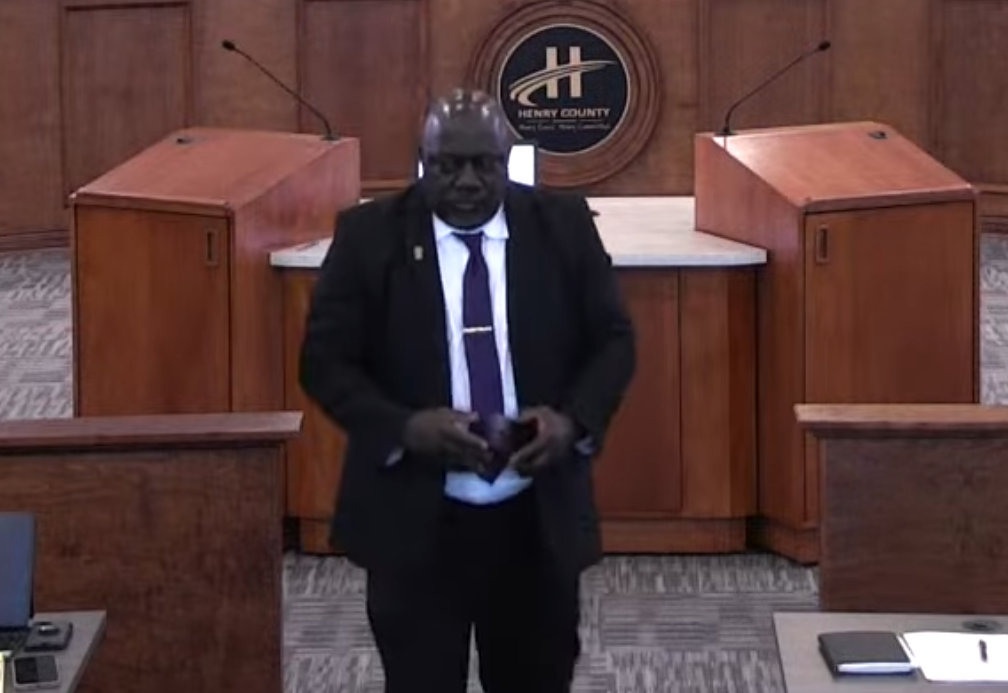
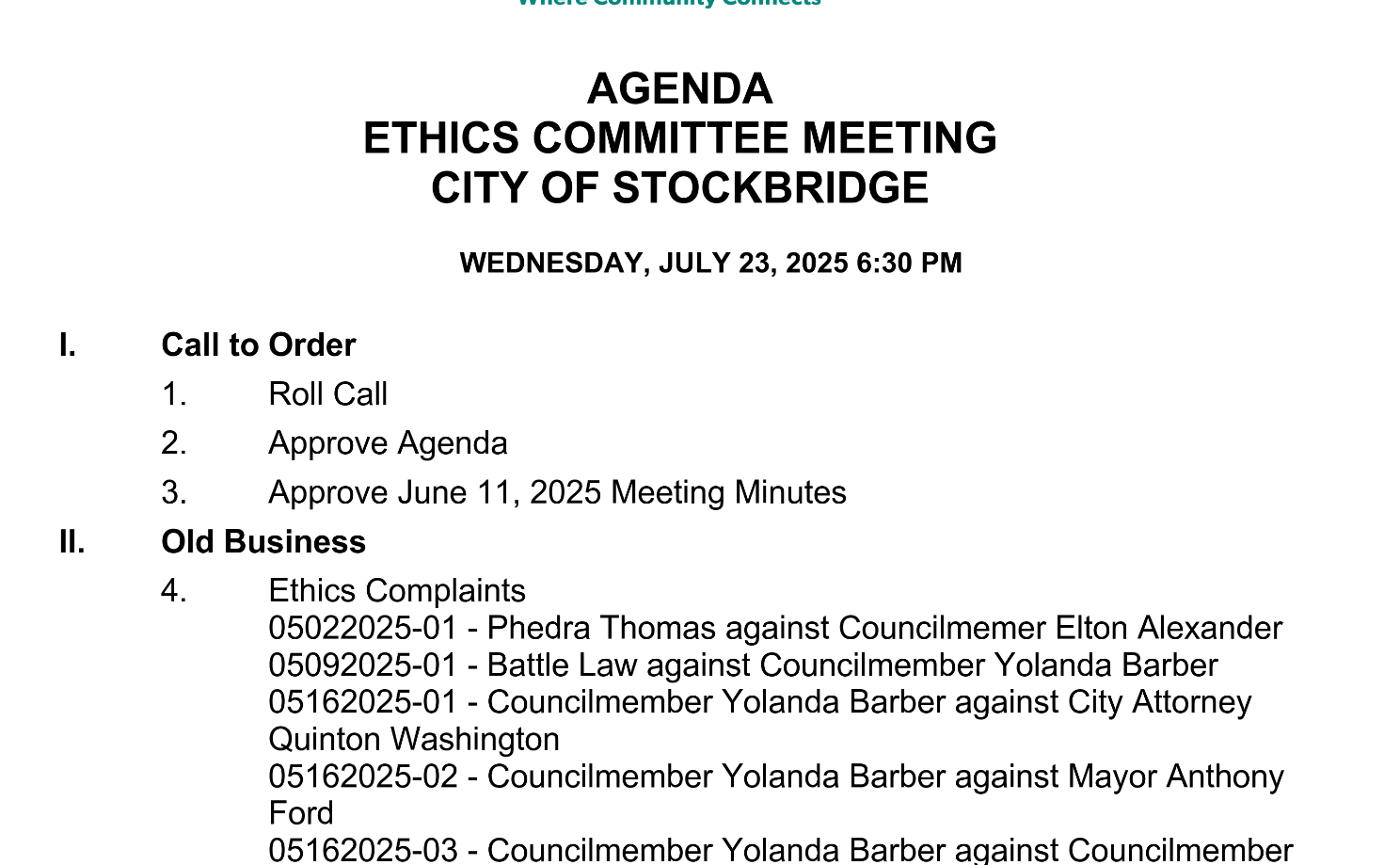
November 12 Henry County Ethics Board transcript (openai-whisper generated)
The penalties for this action are found on page 18 here. SB22 clearly states the Henry County Ethics Board has the right to subpoena witnesses. This meeting is a continuation of the ~8 hour October 29th meeting embedded below.
October 2029 Ethics Board Transcript (extracted from Youtube)
Complainant is John Doe; Respondents are Scott Morris (DOT Director), Roger Whitaker, Johnny Holland. The Henry County Board of Ethics is hearing the case under Georgia Senate Bill 22, which established procedures for ethical violations by county officials/employees.
Allegations: From Citation 1 and 5, the board found probable cause earlier (July 8th, 2025) for specific violations:
Scott Morris: 7.1C1 (failure to show impartiality), 7.1C3 (disclosure of confidential info), 7.1C4 (misuse of position). Roger Whitaker: 7.1C1 (impartiality). Johnny Holland: 7.1C3 (confidential info), 7.1C4 (misuse of position). Procedure: Hearing Officer Tyler Caspers presides (not deciding, just ensuring rules/procedure); board is the fact-finder (like a jury). Steps included: opening statements (complainant first, then respondents), presentation of evidence (complainant presents, respondents cross-examine; then respondents present, complainant cross-examines), board may ask witnesses questions, closing statements (respondents first, complainant, respondent rebuttal), decision based on preponderance of evidence (more likely than not).
Key issues in evidence: Focus on Scott Morris regarding employee Benjamin Trip. Allegations against Trip: fuse removed from tractor during off day, leaving work site without approval, revoking driving privileges, tobacco use, gate damage. Morris wrote up and suspended Trip; HR was involved. The complainant’s investigator (Miss Bullard?) had a preliminary recommendation: no violation for Morris, reserved on Whitaker, violation for Holland (for not filing an answer).
Respondents’ concerns: Morris argued the ethics board didn’t follow Senate Bill 22 procedures—investigation wasn’t done before preliminary hearings. For example, Whitaker was first contacted a week ago (Oct 22nd) before July 8th preliminary hearing; Holland never contacted until two days prior. They claimed misinformation presented to the board.
Witnesses: Benjamin Trip testified (sworn in), Jonathan Penn (executive director), Calvin McClendon (DOT superintendent). Testimony covered Trip’s discipline, Morris’ role, HR involvement.
Hearing Officer instructions: Board must decide based only on evidence presented (no outside info/social media), opening/closing statements aren’t evidence, consider all evidence (direct/circumstantial), cross-examination limited to direct exam scope.
Outcome not explicitly stated, but board will deliberate post-evidence to determine if violations occurred by preponderance of evidence.The Henry County Board of Ethics hearing involved John Doe (complainant) alleging ethical violations against three respondents: Scott Morris (DOT Director), Roger Whitaker, and Johnny Holland, under Georgia Senate Bill 22 (establishing procedures for county official ethics violations). Here’s a structured summary:
Core Allegations & Probable Cause The board previously found probable cause (July 8, 2025) for specific violations:
Scott Morris: 7.1C1 (failure to show impartiality), 7.1C3 (disclosure of confidential information), 7.1C4 (misuse of position). Roger Whitaker: 7.1C1 (impartiality). Johnny Holland: 7.1C3 (confidential information), 7.1C4 (misuse of position). Hearing Procedure Presided over by Hearing Officer Tyler Caspers (referee, not decision-maker); the board acted as fact-finders (like a jury). Key steps:
Opening Statements: Complainant first, then respondents (voluntary, non-evidentiary outlines of claims/defenses). Evidence Presentation: Complainant presented evidence (e.g., HR files on employee Benjamin Trip, disciplinary actions). Respondents cross-examined witnesses; board could ask questions of witnesses. Closing Statements: Respondents first, then complainant, with an optional respondent rebuttal (all limited to 10 minutes combined). Decision Standard: Board must find violations by preponderance of evidence (“more likely than not”) based only on in-hearing testimony/exhibits (no outside research/social media). Key Evidence & Disputes The focal point was Scott Morris’ role in disciplining employee Benjamin Trip, with allegations including:
Trip being written up/suspended for removing a tractor fuse during his off-day. Alleged failure to show impartiality in implementing new DOT policies (applied to all employees). Disputes over HR involvement: Morris claimed he coordinated with HR before disciplining Trip; the complainant’s investigator noted Morris was “fairly new” as director but did not act biasedly. Respondents’ Critiques: Morris and Whitaker argued the board violated Senate Bill 22 procedures—e.g., no proper investigation before preliminary hearings (Whitaker was first contacted a week before the July 8 hearing; Holland received paperwork only two days prior). They accused the complainant of presenting “misinformation.”
Investigator’s Recommendation The complainant’s investigator preliminarily recommended:
No violation for Scott Morris. Reserved on Roger Whitaker. Violation for Johnny Holland (for failing to file an answer). Outcome The board deliberated post-evidence to determine if violations occurred by preponderance of evidence, with decisions based solely on in-hearing testimony/exhibits. No final decision is explicitly stated in the citations.
The full text of Georgia SB22 Henry County Ethics Law, blah blah, whatever. You want page 18 for the penalties in question.
Section 1: Executive Findings and Conflict Summary
This expert legal report details the concurrent professional relationships maintained by attorney Zack Greenamyre during a period of active or imminent litigation against the City of Stockbridge, Georgia. The analysis focuses on the ethical constraints imposed by the Georgia Rules of Professional Conduct (GRPC) concerning the duty of loyalty and the prohibition against conflicts of interest. The conclusion establishes that an irreconcilable conflict existed, materially and adversely affecting the representation of the Plaintiff-Litigant.
Summary of Factual Background
The Plaintiff-Litigant, Coren Randazzo, was represented by Zack Greenamyre of Mitchell Shapiro Greenamyre & Funt LLP in matters arising from high-stakes political and civil disputes centered in Henry County and Stockbridge.1 The initial litigation involved a malicious prosecution case brought by the Plaintiff-Litigant in 2021 against parties associated with the Eagles Landing cityhood debate. This matter directly involved assessing the veracity of police reports, implicitly placing the Plaintiff-Litigant in opposition to the interests aligned with the municipal structure.1
The facts confirm that the representation involved subsequent planned or attempted adverse action against Stockbridge City itself, specifically a retaliation suit related to alleged police misconduct and noise nuisance emanating from the newly constructed Amphitheater, a key municipal project.
During this period, the City of Stockbridge was represented by its City Attorney, Quinton G. Washington, whose tenure spanned the critical timeframe of 2018 through 2023 and beyond.2 Mr. Washington is a principal in the firm Washington Dreyer & Associates.
Key Findings on the Attorney Intersection
A professional intersection of the highest level was concurrently maintained between Zack Greenamyre and Quinton G. Washington, the City Attorney representing the entity Greenamyre was suing:
Direct Adversary Client Relationship: Mr. Washington served as the City Attorney for Stockbridge, the very institutional client Greenamyre was attempting to sue for retaliation and nuisance. Mr. Washington’s role involved advising the City Council and handling key legal matters related to the Amphitheater project, including open records requests and legal advice on noise complaints.1
Joint Co-Counsel Relationship: Documents filed in the Supreme Court of Georgia confirm that Zack Greenamyre (Mitchell Shapiro Greenamyre & Funt LLP) and Quinton G. Washington (Washington Dreyer & Associates) served as joint co-counsel for the Plaintiff-Appellants in the politically significant Nikema Williams constitutional law litigation. Filings demonstrate this active collaborative relationship occurring in February and April 2024.5
Conclusion on the Existence and Nature of the Conflict
Based on the concurrent professional relationships, a severe Concurrent Conflict of Interest existed under the Georgia Rules of Professional Conduct (GRPC). GRPC Rule 1.7(a)(2) dictates that a lawyer shall not represent a client if there is a significant risk that the representation will be materially and adversely affected by the lawyer’s responsibilities to a third person, or by the lawyer’s own personal interest.7 In this scenario, Mr. Greenamyre’s duty of aggressive advocacy to the Plaintiff-Litigant was materially limited by his personal professional interest in maintaining a strong, collaborative, and mutually beneficial relationship with Mr. Washington in the high-profile Williams matter. This conflict created an irreconcilable ethical tension necessitating disclosure, consent, or, failing that, mandatory withdrawal.
Section 2: Establishing the Adverse Representation and Municipal Context
A thorough understanding of the conflict requires documenting the specific roles held by the attorneys involved and the political and economic landscape of Stockbridge City that framed the litigation.
The Adversary Client: Stockbridge City, Georgia
Quinton G. Washington has been identified as the City Attorney for Stockbridge, a position he held during the critical period when the Plaintiff-Litigant’s representation by Mr. Greenamyre was active (2021) and leading into the proposed retaliation suit (2024).2 Mr. Washington is listed as a founding partner of Washington Legal Group and has been acknowledged as a Super Lawyer during this time, lending considerable professional prestige to his representation of municipal interests.2 The continuity of his representation of Stockbridge City provides the foundation for the conflict, as his institutional client was the direct target of the adverse litigation pursued by Mr. Greenamyre.
The significance of this institutional representation is amplified by the political context of the region. The original litigation involving Mr. Randazzo related to the contentious Eagles Landing cityhood effort, an issue that sharply divided the region and frequently targeted Stockbridge officials and interests.1 Mr. Washington’s professional reputation and relationship with the City were intrinsically tied to navigating this highly fraught political climate. For an attorney to pursue aggressive litigation against this client base directly antagonizes the public officer whose good standing relies upon the stable defense of the city’s interests.
The Amphitheater Nuisance and Retaliation Claim Nexus
The impending retaliation suit against Stockbridge was prompted by police actions against the Plaintiff-Litigant related to the Amphitheater, which the Plaintiff-Litigant claims is a noise nuisance and is located adjacent to his residence in the redevelopment area. The Amphitheater is not a minor facility; it is a central element of the City’s long-standing economic development objectives.
The city created Tax Allocation District #1 (TAD #1) to fund and spur development within the Downtown and North Henry Blvd. Corridor.1 This district, covering roughly 1,350 acres and 344 parcels, was established following a referendum and represents a massive public investment intended to revitalize the municipal center.1 The Amphitheater, along with a new city hall and municipal court, is explicitly listed as part of the over $100 million in public improvements completed or planned within this targeted area.1
Any legal action against the City that targets the Amphitheater, particularly concerning police or retaliatory actions linked to its operation, is an inherent challenge to the City’s massive capital investment and the legal framework supporting it. Mr. Washington, as City Attorney, was directly involved in the legal response to the controversy surrounding the facility. Research shows that Mr. Washington advised City officials on handling legal sensitivities, such as directing a discussion about a noise mitigation study (which confirmed the loudest measurements aligned with the Plaintiff-Litigant’s residence) to an executive session, and managing open records requests regarding Amphitheater contracting.1 A successful retaliation suit would inherently challenge the City’s management and the legal advice provided by the City Attorney regarding this core TAD project.
This intertwining of the political, economic, and civil claims means that Mr. Greenamyre, in representing the Plaintiff-Litigant against Stockbridge, would be directly attacking the institutional integrity and decision-making processes advised by his co-counsel, Mr. Washington.
Mr. Greenamyre’s firm was actively representing the Plaintiff-Litigant in 2021, filing a Plaintiff’s Opposition to Defendants’ Anti-SLAPP Motion in the State Court of Henry County on September 30, 2021.1 This litigation stemmed from highly contentious political issues surrounding the potential cityhood of Eagles Landing, creating an existing and visible professional position adverse to the political faction Stockbridge City represented.1
The attempt to sue Stockbridge for retaliation in the amphitheater matter confirms the fundamentally adverse nature of Mr. Greenamyre’s loyalty to the Plaintiff-Litigant relative to Mr. Washington’s client (Stockbridge). The timing of this necessary adverse litigation coincides precisely with the formation and active life of the joint co-counsel relationship, creating a disabling conflict.
Section 3: Documenting the Professional Intersection (The Co-Counsel Relationship)
The existence of the conflict is predicated upon the demonstrable temporal overlap between Mr. Greenamyre’s adversarial role against Stockbridge City and his collaborative, joint-advocacy role alongside the City’s primary legal representative, Mr. Washington.
Identification of Firms and Principals
The professional intersection involves two distinct firms and their respective partners:
Quinton G. Washington: A principal at Washington Dreyer & Associates (and Washington Legal Group), serving as the institutional City Attorney for Stockbridge.2
Zack Greenamyre: A partner at Mitchell Shapiro Greenamyre & Funt LLP.5
The Nikema Williams Litigation
The professional link is explicitly documented in the high-profile constitutional law case Williams v. Powell, involving claims against legislative disruption statutes.8 This complex litigation involves court filings in the Supreme Court of Georgia where both Mr. Washington and Mr. Greenamyre are listed as counsel for the Plaintiff-Appellants, including Congresswoman Nikema Williams.5 Mr. Washington and Mr. Greenamyre are listed alongside David N. Dreyer, underscoring a joint strategic advocacy team.5
Temporal Overlap: Adverse Action vs. Joint Advocacy
The period during which Mr. Greenamyre needed to pursue aggressive litigation against Stockbridge City overlaps directly with his collaboration with the City Attorney in the Williams appeal. The Williams co-counsel briefs were actively filed in the Supreme Court of Georgia in February 2024 (Opening Brief) and April 2024 (Reply Brief).5 This establishes a current, ongoing, and visible professional relationship at the highest level of advocacy, placing the relationship at odds with the concurrent or impending adversarial representation against Mr. Washington’s client.
The following table confirms the chronology of conflicting legal roles:
Timeline of Critical Legal Representation Intersections (2021–2024)
Date Range
Action by Zack Greenamyre (Plaintiff-Litigant)
Action by Quinton G. Washington (Stockbridge City Attorney)
Intersection/Conflict Trigger
Sep 2021
Files Plaintiff’s Opposition to Anti-SLAPP Motion in Henry County.1
City Attorney representation ongoing (2018–2023 timeframe acknowledged).2
Direct adversity established (Plaintiff v. Municipal interest related police action).
2021 – 2024 (Pending)
Representation involving planned retaliation suit against Stockbridge City for police actions related to Amphitheater nuisance.
Provides legal guidance on Stockbridge Amphitheater matters (e.g., ORR-121-2024 review in Apr 2024).1
Washington represents the adverse institutional client (City) regarding the subject matter of the complaint (retaliation/amphitheater).
Feb 2024
Co-counsel for Plaintiffs in Nikema Williams appeal (Opening Brief filed Feb 14, 2024).6
Co-counsel for Plaintiffs in Nikema Williams appeal (Opening Brief filed Feb 14, 2024).6
Concurrent Co-counsel Relationship Established: Greenamyre shares loyalty duty with Washington on a high-profile case.
Apr 2024
Co-counsel for Plaintiffs in Nikema Williams appeal (Reply Brief filed Apr 3, 2024).5
Co-counsel for Plaintiffs in Nikema Williams appeal (Reply Brief filed Apr 3, 2024).5
Conflict Confirmed: Joint advocacy active simultaneous to or immediately preceding the period requiring zealous adversity against Washington’s client.
The Nature of Co-Counsel Loyalty
In litigation requiring joint appellate strategy, co-counsel assume a heightened duty of cooperation, shared risk, and mutual professional trust, often necessitating joint responsibility for the strategic direction of the case.5 Mr. Washington and Mr. Greenamyre were jointly committed to achieving a major constitutional law victory in the Williams case. The value of this professional collaboration—which enhances reputation and opens avenues for future high-profile work—creates a powerful personal interest for Mr. Greenamyre.
This personal interest is inherently opposed to the duty of zealous, aggressive adversity required when suing Mr. Washington’s key institutional client. The need to maintain professional courtesy and cooperation with Mr. Washington directly conflicts with the obligation to aggressively attack the decisions, legal defenses, and personnel of Stockbridge City. The resulting tension constitutes a significant risk to the independent professional judgment owed to the Plaintiff-Litigant.
Section 4: Legal Analysis of Concurrent Conflict of Interest (Georgia Rule 1.7)
The ethical standard governing this situation is GRPC Rule 1.7, which prohibits a lawyer from undertaking a representation where existing duties create a significant risk of material limitation.
Foundational Principles: GRPC Rule 1.7
A lawyer’s ethical obligations rest upon the foundational duties of loyalty and the exercise of independent professional judgment.7 GRPC Rule 1.7(a) defines a concurrent conflict of interest as existing when there is a significant risk that the representation of one client will be materially and adversely affected by the lawyer’s duties to another client, a former client, a third person, or by the lawyer’s own personal interest.
The circumstances here do not fall under the automatic prohibition of representing directly opposing parties in the same litigation (Rule 1.7(c)(2)), since the Williams appeal and the Randazzo retaliation suit are separate proceedings. However, the conflict is triggered under Rule 1.7(a)(2), specifically due to the interaction between Mr. Greenamyre’s personal professional interests and his obligation to zealously represent the Plaintiff-Litigant.
Rule 1.7(a)(2) Analysis: Material Limitation on Representation
Mr. Greenamyre’s dual roles created an acute conflict of duties:
The Adverse Interest (Duty to Randazzo): Representation of the Plaintiff-Litigant required initiating and vigorously prosecuting a lawsuit against Stockbridge City for official retaliation concerning the Amphitheater. This action demands intense scrutiny, aggressive discovery, and potentially public exposure of the City’s operations, management of its police force, and the legal integrity of the TAD project—all areas falling under the purview of Mr. Washington’s office.4
The Limiting Interest (Duty to Washington/Personal Interest): Mr. Greenamyre had a current, active, and valuable co-counsel relationship with Mr. Washington in the Williams litigation, a major appellate matter.5 Mr. Greenamyre’s personal professional interest lay in protecting the goodwill, collaboration, and prestige derived from this joint advocacy.
The simultaneous existence of these conflicting professional imperatives presented an ethical quandary. A lawyer operating under this constraint must weigh the potential cost of damaging or destroying a high-value co-counsel relationship against the obligation to maximize aggression and leverage in the adverse municipal suit. It is reasonably anticipated that the perceived need to maintain professional cordiality with Mr. Washington would compel Mr. Greenamyre to temper his adversarial approach toward Mr. Washington’s primary institutional client, Stockbridge City. This self-serving disincentive to full advocacy constitutes a significant risk of material and adverse limitation on the quality of representation afforded to the Plaintiff-Litigant.
The Standard of Direct Adversity in Unrelated Matters
The Rules and commentary recognize that loyalty conflicts extend beyond related proceedings. A lawyer generally “may not act as advocate against a client the lawyer represents in some other matter, even if the other matter is wholly unrelated”.9 In this case, although Mr. Washington is the attorney and Stockbridge is the client, Mr. Greenamyre’s co-counsel relationship with Mr. Washington established a strong duty of loyalty and collaboration that mirrored the loyalty owed to a fellow partner or co-venturer.
The fundamental conflict arises from the expectation that Mr. Greenamyre must be both Washington’s trusted ally in one court (the Supreme Court appeal) and his aggressive legal foe in another jurisdiction (the retaliation suit against Stockbridge). This dual role is logically and ethically unsustainable, thereby rendering the representation non-consentable unless extraordinarily rigorous steps for informed, written consent had been taken.
The Requirement for Informed Consent (Waiver Analysis)
Under GRPC Rule 1.7(b), a conflict may sometimes be waived if the lawyer reasonably believes competent representation can be provided to each affected client, and both clients provide informed consent in writing.10
Given the intensity of the political backdrop of the Randazzo litigation (rooted in contentious cityhood and police action) and the nature of suing a sitting municipal government for retaliation related to a major capital project (the Amphitheater in TAD #1), it is highly improbable that Mr. Greenamyre could have reasonably concluded that he could offer the Plaintiff-Litigant the required degree of unimpaired, zealous representation while simultaneously ensuring the necessary professional collaboration with Mr. Washington. Consequently, the conflict was likely non-waivable and demanded Mr. Greenamyre’s immediate withdrawal from the adverse suit.
Section 5: Nuanced Implications of the Conflict on Client Representation
The concurrent professional conflict had pervasive and detrimental effects on Mr. Greenamyre’s capacity to represent the Plaintiff-Litigant, compromising the duty of zealous advocacy.
Impact on Strategic Aggressiveness (Zealous Advocacy)
The conflict likely resulted in a “chilling effect” on the adversarial strategy required for the Plaintiff-Litigant’s retaliation claim. Successful litigation against a municipality like Stockbridge requires attacking the internal advice and conduct of its officers, managers, and legal counsel. This necessarily means challenging documents handled by Mr. Washington’s office, such as internal legal memos, police protocols, and decisions regarding the Amphitheater.1
A lawyer reluctant to cause acute professional embarrassment or jeopardizing a mutually beneficial professional relationship with co-counsel would naturally be inhibited from pursuing aggressive discovery tactics against that co-counsel’s institutional client. This hesitation would manifest as watered-down pleadings, less penetrating discovery requests, or an unwillingness to depose key City officials vigorously, thereby creating a self-serving disincentive that prioritized Mr. Greenamyre’s relationship with Mr. Washington over the Plaintiff-Litigant’s need for maximum leverage.
Compromise of Negotiation and Settlement Leverage
The conflict severely impaired Mr. Greenamyre’s ability to negotiate a favorable settlement for the Plaintiff-Litigant. The City Attorney, Mr. Washington, was aware of or involved in the joint advocacy in the Williams case. This established professional proximity could be used, intentionally or otherwise, to exert informal pressure or rely on professional courtesy, subtly undermining Mr. Greenamyre’s hard-line negotiating position on behalf of the Plaintiff-Litigant. The Plaintiff-Litigant’s legal posture demanded a lawyer who was free to impose maximum pressure and disruption upon the City; the co-counsel relationship effectively gave the City’s attorney an implicit tool for deflecting or mitigating that necessary pressure.
The Duty to Withdraw
The conflict was so entrenched, existing at the intersection of municipal politics, major capital projects (TAD/Amphitheater), and a high-profile constitutional appeal, that withdrawal was the ethically mandated course of action. The circumstances met the high threshold of GRPC Rule 1.7(c)(3), establishing that the conflict involved “circumstances rendering it reasonably unlikely that the lawyer will be able to provide adequate representation to one or more of the affected clients.” Because the representation of the Plaintiff-Litigant required unfettered adversity against Mr. Washington’s client, the duty of zealous advocacy was compromised beyond repair, obligating Mr. Greenamyre to withdraw.
Section 6: Conclusion and Detailed Recommendations
Definitive Statement on the Conflict’s Existence
The intersection of Zack Greenamyre’s professional roles created a clear and disabling ethical conflict of interest. The evidence confirms that Mr. Greenamyre served as co-counsel alongside Quinton G. Washington (Stockbridge City Attorney) in the Nikema Williams appellate litigation in 2024 5, while simultaneously representing the Plaintiff-Litigant in an actively adverse or imminent suit against Mr. Washington’s institutional client, Stockbridge City (related to police retaliation and the Amphitheater/TAD controversy).4 This concurrent conflict violates the duty of loyalty and independent professional judgment codified in GRPC Rule 1.7(a)(2). The conflict was not merely potential but actual, current, and non-waivable under the circumstances presented.
Matrix of Attorney Relationships and Conflict Exposure
Attorney
Client/Position
Role in Relation to Other Counsel
Conflict Exposure (GRPC Rule 1.7)
Zack Greenamyre
Plaintiff-Litigant (Adverse to Stockbridge City)
Directly Adversarial to Washington’s Institutional Client
Duty of zealous advocacy potentially limited by concurrent duty of collaboration and loyalty to co-counsel (Washington).
Quinton G. Washington
Stockbridge City Attorney (Institutional Client)
Adversary to Greenamyre’s client (Randazzo)
Risk that professional courtesy owed to Greenamyre might impair his representation of Stockbridge City (though the primary conflict burden rests on Greenamyre).
Greenamyre & Washington
Nikema Williams, et al. (Appellants)
Concurrent Co-Counsel (Joint Advocacy)
Professional relationship creates a “significant risk” (personal interest) for Greenamyre that materially limits his aggressive representation of the Plaintiff-Litigant against Stockbridge City.
Recommendations for Further Legal Review and Remedial Action
Given the gravity of this ethical breach and its adverse impact on the Plaintiff-Litigant’s representation, the following actions are warranted for legal review:
Expert Affidavit Preparation: The factual basis established in this report—confirming Mr. Washington’s municipal role and the documented co-counsel filings—provides sufficient foundation for an expert affidavit detailing the GRPC Rule 1.7 violation. This documentation can be used in civil proceedings to demonstrate the impairment of legal advice received by the Plaintiff-Litigant.
Ethics Complaint Filing: The Plaintiff-Litigant should be advised that the documentation supports the filing of an ethics complaint with the State Bar of Georgia, detailing the violation of the duty of loyalty arising from the materially limiting nature of the concurrent co-counsel relationship.
Confirmation of Adverse Suit Status: While the query implies the suit against Stockbridge was active or imminent, legal counsel must confirm the exact filing date and status of the retaliation suit to precisely confirm the concurrency timeline relative to the February/April 2024 Williams filings, solidifying the chronological proof of the conflict.
This will be my final story for many months to come. There’s not much we can do now but wait and see. Besides, I’m quite tired of all this and could just as soon leave. But I imagine working this draft for some months and filing it if the situation doesn’t improve. In a way it seems like the time to file has passed. In another way we may be able to argue the discovery of the conflict’s actionable items was within the time frame. Who knows, you’d need a lawyer for that and I don’t think I can stomach talking to another one. And, yes, the city council knows all about it.
Notice how the page numbers are off? 1,3,5? Quinton had something to say on the missing page 4. I wonder what it was?
“Point of order. Point of order. We’ve gone on now for 10 minutes. This is an offline conversation that can be had with the treasurer or the city manager in a group message instead of us sitting here listening to a document A, B, and C. The public is fully unaware of pretty much probably 90% of what we’re talking about. Why don’t you just set up a meeting with, why don’t we just have a separate meeting where we can finish what we’re doing.”
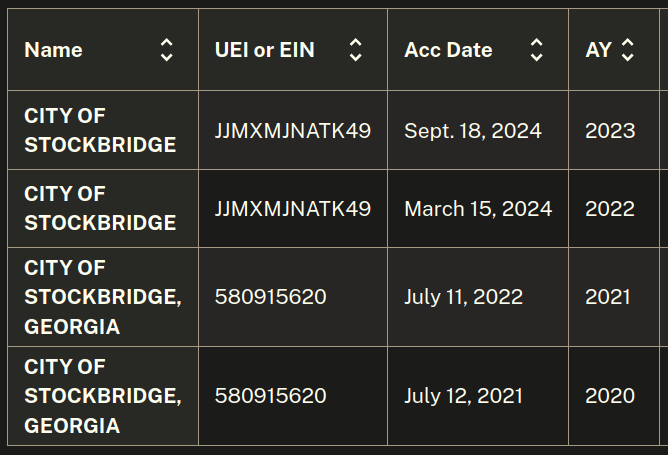
That’s what Alexander said just now at the public budget hearing. Barber needed 12 little old minutes as there’s 14 pages of corrections from DOJ on fac.gov for 2024. The incumbent winner Gantt also stated she would be setting up private meetings over her budget concerns, publicly, in the PUBLIC budget hearing.
PUBLIC, ffs, means on the record. Not whatever this display of yellow bellied cowardice is. If you have a concern about a personal civic matter, feel free to meet with the manager. If I find records of you having secret meetings over this 2026 budget, after all this year’s BS, I’m writing ethics charges. No, Barney-Duck won’t be involved because of her huge glaring conflict.
Fox 5 Special Producer’s and Kaitlyn Pratt owe us an apology for making 9 minutes and 30 seconds of pure bullshit on Elton’s behalf this past weekend.
As news cameras focus on Councilman Elton Alexander’s attempts at municipal cleanup, citizens and independent watchdogs must look past the superficial photo opportunity and toward the financial chasm consuming Stockbridge, Georgia. A performance of civic duty, such as picking up trash, will not conceal the widespread financial malfeasance, systemic ethical failures, and documented pattern of retaliation that has cost taxpayers millions and led to calls for a racketeering investigation.
The city’s financial wreckage far from being a simple administrative “failure of process” is a compounding crisis stemming from pervasive Management Oversight.
The public relations narrative of a city getting its house in order sharply contradicts the cold reality of official financial audits and public records:
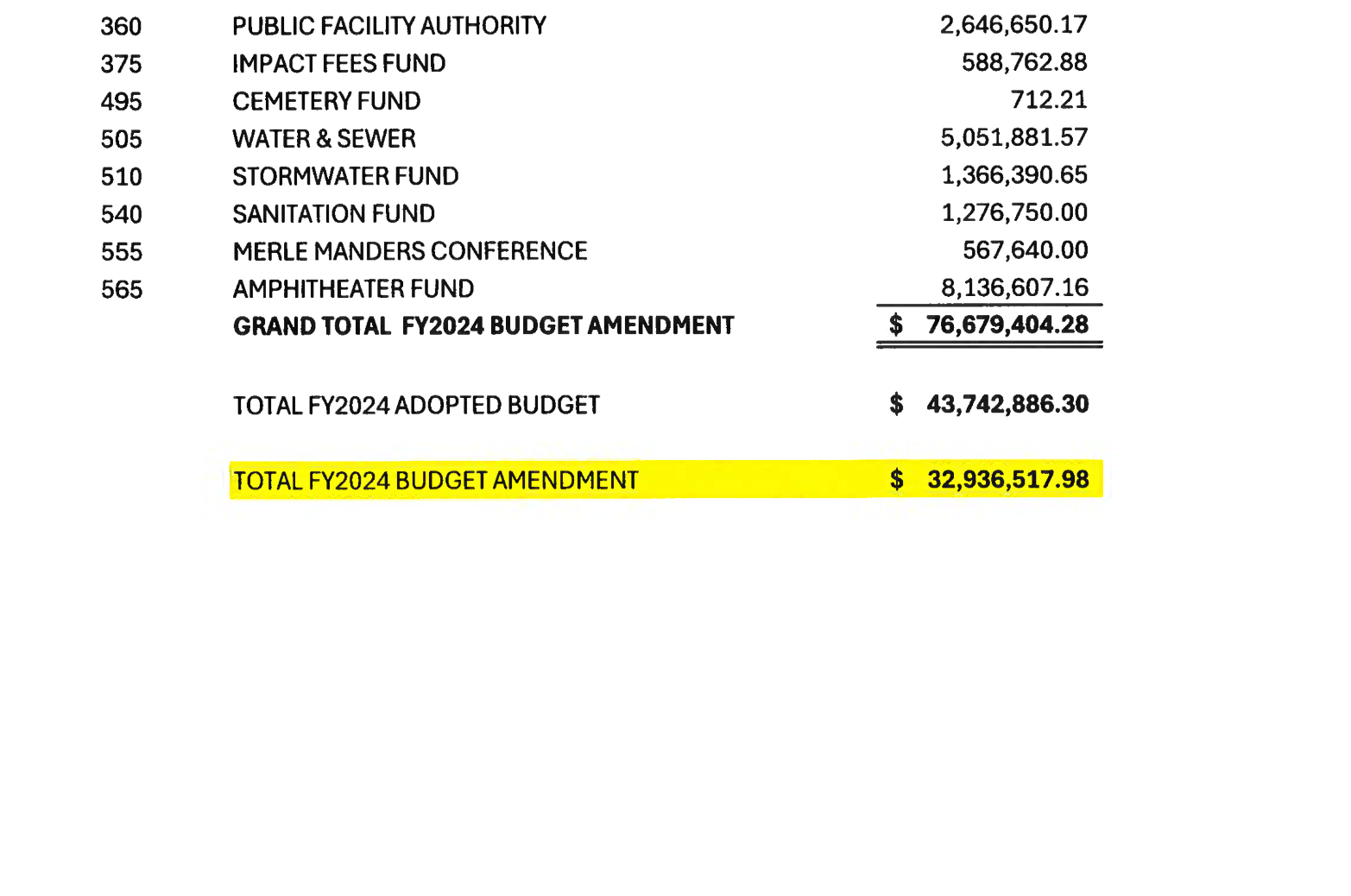
Massive Budget Shortfalls: The City Council had to amend its budget by $32.9 million to account for documented “mismanagement” of funds. The city’s finance director confirmed the severity of the crisis, publicly stating that the council was relying on flawed data: “We misled you.”
Amphitheater as the Epicenter: The Stockbridge Amphitheater, designed to be self-sufficient, has consistently operated at a loss. Its expenses reportedly soared from 2 million to 8.1 million. Audit findings repeatedly flagged significant adjustments needed to the General and Amphitheater Funds due to improper expenditure recording and a lack of missing supporting documentation and approvals. The following notes from the 2024 audit that was released in October, aren’t part of this year’s previous $32,900,000 budget amendment of 2022-2023 shortfalls into the 2024 budget. We’ll have to amend the 2025 budget to address this year’s $2,000,000 amphitheater shortfall. We haven’t built the soundbooth yet, in four years time. The booth will be another $400K.
Revenue & Receivables Management (Finding 2024-001): Significant adjustments were required across multiple funds (General, ARPA, Grants, SPLOST V, Solid Waste, Conference Center, Hotel/Motel Tax) to correctly state revenue, receivables, unearned revenue and allowances for doubtful accounts. The total impact was substantial.
Interfund Activity (Finding 2024-002): Interfund receivables, payables, and transfers were improperly stated requiring adjustments across many funds including General, ARPA, Grants, City-wide Capital Projects, Downtown Development, City-wide Development, Public Facilities Authority, Stormwater, Conference Center, Cemetery, SPLOST IV, and Urban Redevelopment.
Prepaid Assets & Expenses (Finding 2024-003): Adjustments were needed in General, ARPA, City-wide Development, Water/Sewer, Stormwater, Solid Waste, Conference Center, Amphitheater, and Hotel/Motel Tax funds to properly record prepaid assets and expenses.
Inventory (Finding 2024-004): The Water & Sewer Fund required an adjustment due to a lack of reconciliation between the general ledger and physical inventory counts.
Amphitheater Expenditures (Finding 2024-006): Significant adjustments were needed to the General and Amphitheater Funds due to improper expenditure recording, lack of approvals, and missing supporting documentation. This was a major finding with large dollar amounts.
Accrued Liabilities (Finding 2024-007): Adjustments were required in the SPLOST IV fund for improperly stated accrued liabilities.
Depreciation (Finding 2024-008): Depreciation was incorrectly recorded in the General Fund, which is not appropriate under modified accrual accounting.
Capitalization of Assets (Finding 2024-009): Capital items were excluded from capital asset details in both governmental and business-type activities.
CSLFRF Reporting (Finding 2024-010): Multiple quarterly financial reports for the COVID-19 Coronavirus State and Local Fiscal Recovery Fund Grants were submitted late.
COPS Grant Reporting (Finding 2024-011): Multiple quarterly and semiannual reports for Public Safety Partnerships and Community Policing Grants were submitted late, improperly supported, or contained incorrect expenditure reporting.
Prior Year Findings: Most of the findings from the 2023 audit (001, 002, 003, 004, 005, 006) remain Unresolved or Partially Resolved as of December 31, 2024.
Click here for PDFs of the 2022-2024 FAC.GOV Financial Statement Findings & proof of late filing.
Despite all this, the city decided to spend tax money on hundreds of comped tickets to an amphitheater show. It was a $180,000 loss scheduled purposefully to coincide with the early voting stage of the election.
Concealment of Funds: Records suggest a pattern of deliberate concealment of amphitheater expenses, with costs shifted to unrelated funds “without the City Council’s knowledge or approval.” as the city has put it. This idea fails under scrutiny when you realize a councilperson, Barber has been asking for the Mauldin & Jenkins financial report for years. I know fac.gov audits are supposed to be filed yearly. And yet they weren’t, a fact noticed by hundreds of Stockbridge citizens. Finally, I find it hard to believe these people didn’t know huge catered parties they attended for four years cost tens of millions of dollars. Nor does Fox5’s Kaitlyn Pratt’s producer’s boss, evidently.
Any attempt to recast Councilman Alexander as a responsible public servant must confront his history of alleged misconduct and the resulting burden placed on Stockbridge taxpayers.
In 2021, the city’s insurer paid a massive 1.7 million settlement to Arick Whitson, owner of Georgie Championship Barbecue Co. The settlement resolved a federal lawsuit alleging deprivation of constitutional rights and retaliation. The dispute began in May2016 after Alexander allegedly visited the restaurant, ordered 60 worth of food, and then refused to pay. When asked for payment, Alexander allegedly told Whitson, “I thought you wanted to do business with the city?” before leaving without paying.
Whitson claimed that after this interaction, Alexander initiated a year-long vendetta. This harassment campaign included code enforcement officials frequently visiting the restaurant, and Whitson facing difficulties obtaining a liquor license or sign permit. Furthermore, Alexander was accused of escalating the harassment by filing false complaints and making false claims that Whitson was on the National Sex Offender Registry. Alexander even admitted in a 2019 deposition that he had used fake names online to criticize his opponents.
This scandal was so damaging that Mayor Anthony Ford and council members LaKeisha Gantt and John Blount publicly called for Alexander’s resignation, stating that the $1.725 million settlement had “brought shame to the city of Stockbridge”. Alexander, who does not support the settlement, has been subject to a “continuous pattern of disciplinary actions,” including being censured twice and facing six different ethics investigations since January 2016. More recently, he was reported to be “posted up at Merle Manders polling place bothering the mayor elect.”
The Failure of the Fourth Estate: Atlanta’s PR Machine
The focus by outlets like Fox 5 on a non-story like trash pickup, while ignoring the verifiable trail of financial devastation and alleged corruption, is a symptom of a larger regional crisis in accountability journalism.
This trend is epitomized by media that operate as little more than public relations conduits. For example, Game Changers Media Network, which promoted the Mayor’s narrative of steady governance, has demonstrable links to city officials: the proprietor’s wife holds a real estate license at METRO BROKERS INC, the same realty firm where Councilperson Elton Alexander holds his license.
This dynamic ensures that instead of conducting essential, in-depth investigations into the blatant concealment of public funds, the systematic evasion of procurement law, and the pattern of alleged extortion and retaliation that demands a racketeering inquiry, too much of the Atlanta-area media is focused on crafting PR to rehabilitate unlikable candidates with bad records. The financial facts and the systemic ethical rot in Stockbridge are the real story, not a manufactured photo opportunity meant to scrub the reputation of an official accused of long-term misconduct.
Stockbridge Amphitheater, second verse same as the first.
The ink is barely dry on Harold Young’s termination letter, but the questions surrounding his business dealings are multiplying. A story that began with a financially troubled amphitheater in Stockbridge has now intertwined with a controversial charter school in Macon, revealing a cast of characters whose connections stretch into the corridors of state government. At the center of it all are two public-private ventures plagued by allegations of mismanagement and fraud, with Harold Young, Macon Tubman museum director and ex-Stockbridge Amphitheater GM. As well as Donie Hogan, owner of the Alexander Ballroom. Both Harold and Donie are involved in both “VyStar at the Bridge” Amphitheater and The Infinity Charter School.
The Stockbridge Amphitheater was meant to be a crown jewel, but it has become a financial millstone for taxpayers. Under the management of Harold Young, the venue’s budget spiraled out of control, exceeding its $2 million allocation for the 2022 & 2023 concert seasons to reach a staggering $8.1 million. This wasn’t a one-time issue; the amphitheater repeatedly went millions of dollars over budget for multiple years under Young’s tenure. The financial “mismanagement” became so severe that in July, the Stockbridge city council had to amend its budget by a total of $32.9 million to account for the amphitheater and voluminous other instances of financial malfeasance.
Beyond the budget overruns, serious questions have been raised about procurement practices. There was no competitive sealed bid process for vendors or naming rights at the amphitheater for any year since its opening in 2021. The facility itself was plagued with issues, including being built without a proper sound booth, forcing operations to be run from a tent for four years, which resulted in poor sound quality. So, they decided to try and sneak a $390,000 sound booth around the law. Which states public works construction contracts valued at $100K or more are subject to Chapter 91-36 of the Official Code of Georgia.
Young, who also serves as the executive director of Macon’s Tubman African American Museum, was terminated for breach of contract on June 16, 2025. He has since claimed his name was “slandered” and that he has hired an attorney to explore “legal remedies” for his dismissal.
The Infinity Academy: A Petition Marred by “Deeply Concerning” Allegations
While Young was managing the troubled amphitheater, his name and that of Donie Hogan, owner of the Alexander Ballroom, appeared on the governing board of a proposed charter school in Macon: The Infinity Academy. This venture, however, is now at the center of a scandal that Bibb County school board members have called “deeply concerning.”
The most glaring issue is an allegation of fraud. The school’s petition to the Bibb County School District included a notarized affidavit supposedly signed by its governing board chair, Pamela Burkhalter. Upon seeing the document, Burkhalter stated unequivocally, “That is not my signature. Period. I am stunned”. She claims she resigned from the board in May, long before the petition was being finalized, and never authorized anyone to sign on her behalf. The school’s founder, Christopher D. Holmes, claimed Burkhalter gave him permission to sign for her, an assertion she flatly denies. Mr. Holmes seems to be involved in many corporate entities according to Georgia Secretary of State. Too many to name.
The fraud allegation was just one of many problems. The Bibb County School District ultimately issued an official denial of the charter petition on August 1, 2025, citing a litany of “material deficiencies.” The entity was found to not be registered with the IRS as a nonprofit. Concerns were also raised about their financial planning; specifically, an unrealistic budget allocating only 20,000 for facility improvements estimated to cost between 4.7 and $5.7 million. The proposed building itself presented issues, appearing too small and lacking key facilities like a gym or cafeteria, in addition to significant safety concerns regarding entry points, student drop-off zones, and fire evacuation routes. Finally, the evaluation revealed a lack of clarity concerning governance structures alongside an inadequate staffing plan geared towards effectively serving students with ADA required accommodations.
The Players and Their Potential Connections
Christopher D. Holmes is the founder of the Infinity Academy. I think he’s Alpha Kappa Psi from hand signs he throws up in pictures. A teacher, academic coach, and K-12 curriculum coordinator for the Bibb County School District. In 2018, he took on a new role as a curriculum and instructional interventionist for the state’s Department of Juvenile Justice. He has also worked as a Research Assistant for the Georgia State Charter School Commission and runs his own education consulting firm.
Andy Welch is an attorney and former Republican member of the Georgia House of Representatives for District 110. A key part of his legislative work involved his role as a member, and former subcommittee chairman, of the House Juvenile Justice Committee. Andy also held a long standing position on the Georgia Juvenile Justice Board. He’s currently Locust Grove City Attorney, I’m sure, among many other positions.
The amphitheater was built in large part by Eagle Excavation. Who, during construction were represented by Mr. Welch’s law firm partner, Republican candidate for Attorney General of Georgia, Senator Strickland. Andy does business with the amphitheater as well. The local Tabernacle of Praise church is represented by Mr. Welch in corporate filings and made use of the amphitheater facilities for a show this year.
Professional overlap
Holmes is a state employee working within the Department of Juvenile Justice, a department that falls under the legislative purview of the former committee & juvenile justice board on which Welch served. While this doesn’t confirm a personal relationship, it establishes a direct professional connection where a state legislator & board member would (or should) be acquainted with the operations of selecting curriculum.
Harold Young and Alexander Ballroom owner Donie Hogan were named as board members for the Infinity Academy, a proposed charter school founded by Christopher D. Holmes whose petition was denied amid allegations of a forged signature and deep financial and operational flaws. During this same period, Young was managing the Stockbridge Amphitheater, a publicly funded venue that exceeded its budget by millions of dollars, leading to his termination. We also know that the charter school’s founder, Holmes, has worked for the Georgia Department of Juvenile Justice, an agency that a powerful state legislator, Rep. Andy Welch, had potential oversight of through his committee & board assignments. We know Andy, Brian and SWWW are deeply entrenched in amphitheater business.
Perhaps “coordinated network” is a better choice of words than “overlap,” strictly speaking. For in the case of (State Rep.) Williams vs. Powell. You’ll find my lawyer, Mr. Greenamyre and Stockbridge City Attorney Washington’s firm partner (at the time), David Dreyer on that case together. As the city at large knows by now. We desperately needed to sue the city. So, then. Did this perceived network interfere in my affairs to that acute degree. In my opinion, yes.
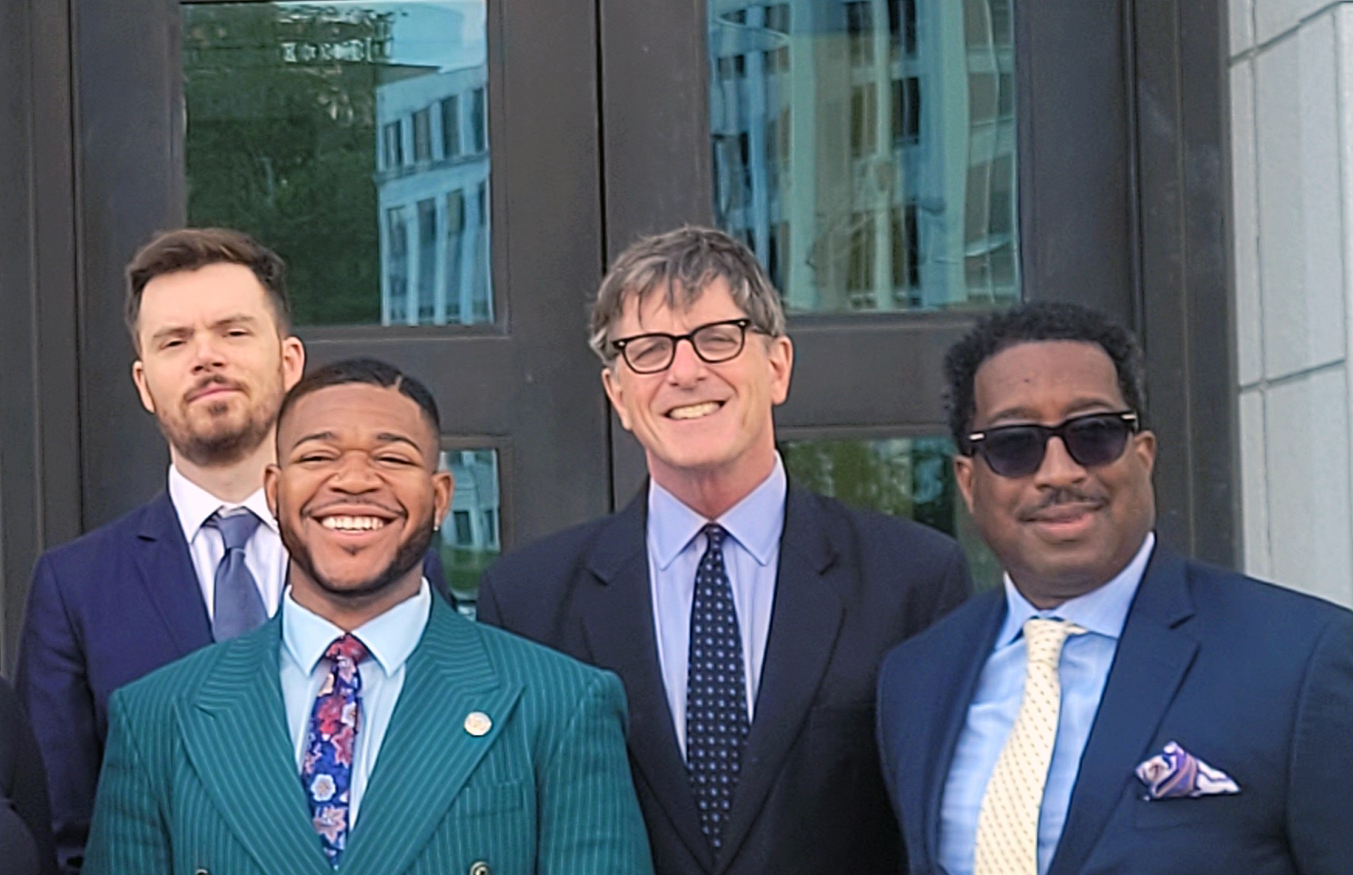
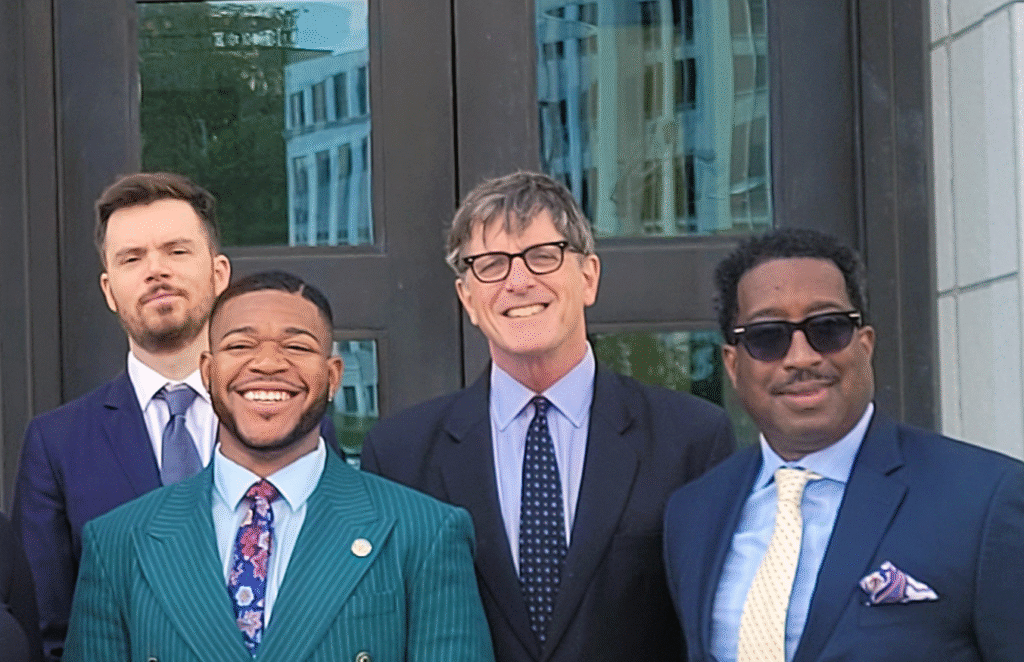
Left to right; My former attorney, Zack Greenamyre, Devin Ward, Gary Weber, lead counsel for SCHR & Stockbridge City Attorney, Quinton Washington.
Of note: City Attorney Washington’s police station deal with Jeff Grant. If you’re new in town. Mr. Grant and Mr. Welch’s firm go way back. And if you don’t know about my lawsuit. You won’t be surprised it was Greenamyre representing me against Strickland.
The further questions
• Did SWWW, LLP (Andy’s firm), as registered agent for Tabernacle negotiate a contract with Harold Young in the course of scheduling this years first gospel show?
• Which of Quinton Washington’s three legal entities handled, if any at all, amphitheater business. Such that there was involvement further than Washington & Dreyer’s e-mail concerning the amp. financial open records.
• What accountability measures were in place at the City of Stockbridge that allowed the amphitheater’s budget to be exceeded by millions of dollars for several consecutive years?
• What, if any, is the connection between Rep. Andy Welch and the Infinity Academy project, given the professional overlap between his legislative & board duties and Christopher Holmes’s state employment?
• Are these two cases, a mismanaged amphitheater and a fraudulent school petition simply isolated incidents, or do they point to a broader pattern of insiders leveraging public trust and taxpayer funds for poorly planned ventures?
• The receipts for the $8.1 million amphitheater budget amendment?
In closing, a bit of Shakespeare I find pertinent, “O judgment! thou art fled to brutish beasts, And men have lost their reason. Bear with me; My heart is in the coffin there with Caesar, And I must pause till it come back to me.”
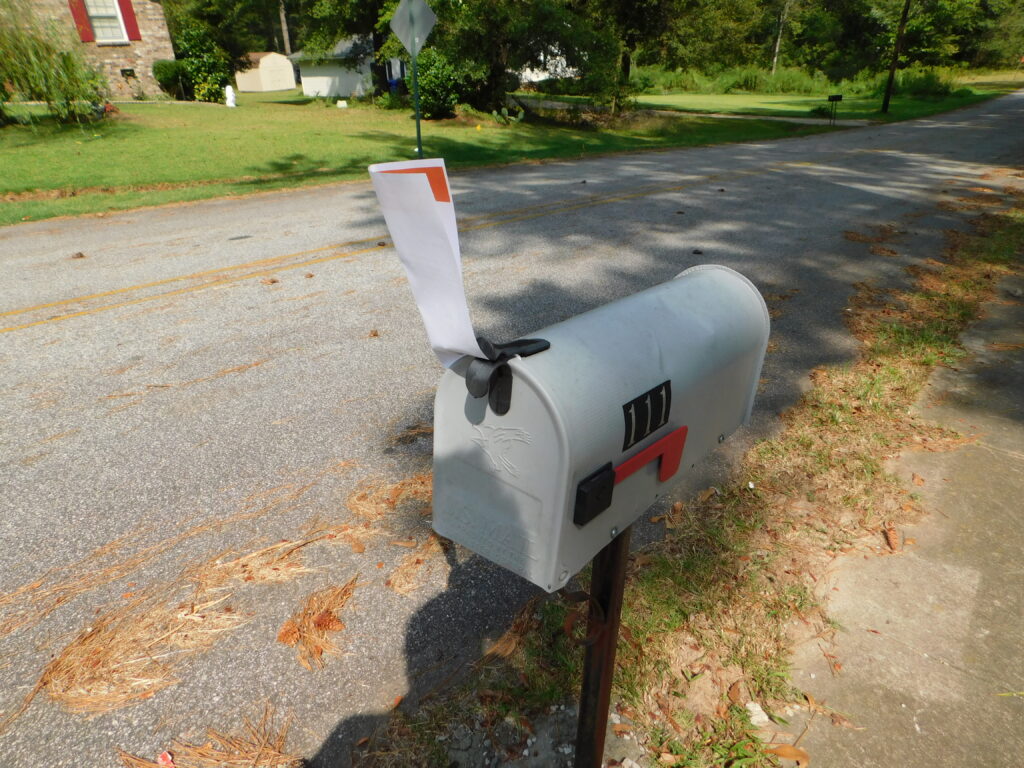
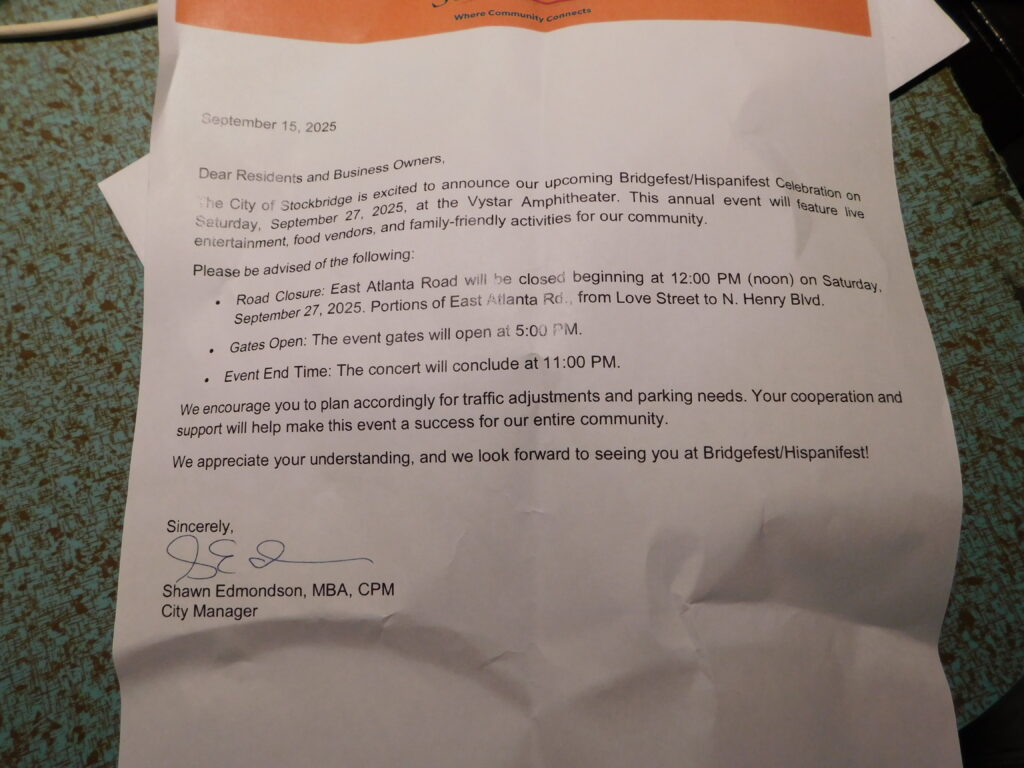
This is how the Bridgefest street closure notice was found in my mailbox. They did this, even though I was yelling out the window not to touch my mailbox. But this isn’t about my mailbox, folks. Not really. This is about you being bothered by something that hasn’t happened yet. Normally you’d come home on a Friday to rest up, eat & share time with those you love.
Normally, in your free time you’d seek to forget the monstrosity in our backyards. But you won’t this weekend.
You’ll come home and think of the traffic and noise next weekend, for all of this weekend. Just after finding trash shoved in, on or around your mailbox.
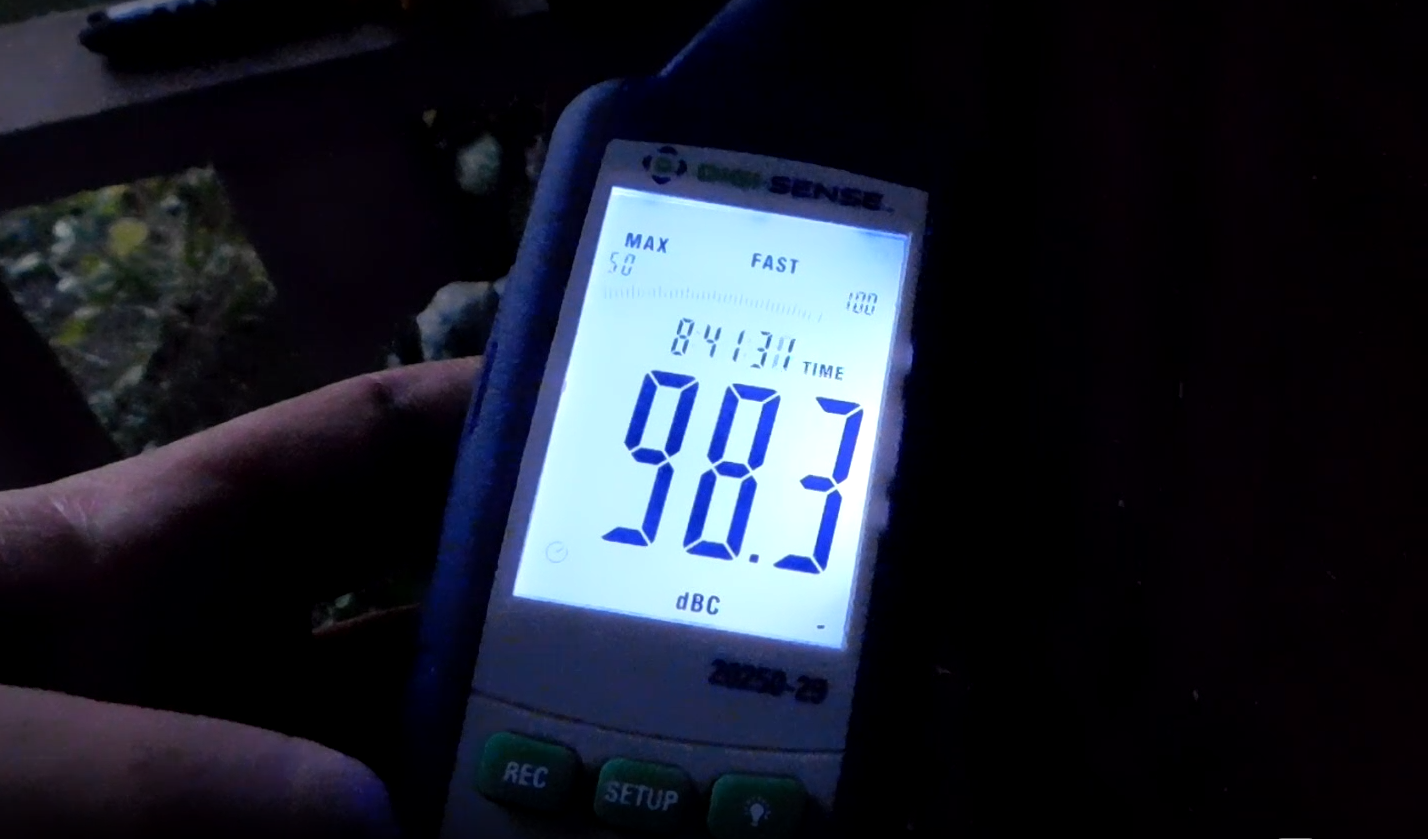
Let me stop you right there at “cooperate”, Shawn Edmonson. As to our problems on Bryant St, Lee St & surrounding environs. You seem to be worse at this than the last guy. At the 9-13-2025 show, you (or whoever), let MC Stanford Lightfoot & the gang over there go hog wild on the board. The only other thing that’s approached 98.5 dB(C) is the fireworks. You, nor the city have my cooperation or support. You want me to support you in taking my private property, and bothering me while you do it? My man. You must have bumped your head?
Control the noise. Don’t ever “inform” people of an event in this manner, as you did today, ever again. Don’t open our mailboxes. Don’t place your “fuck you” announcement to us on the mailbox. Put the son of a bitch in an envelope, then give it to the mailman. That’s how mailboxes work. Moreover, that’s how respect works.
The behavior in the video above, Shawn, is not respectful. It’s not legal, if you set aside the city can exempt itself from the law on a mere whim. The most offensive part is the flag at half staff on 9-13 when the city decided to pull the loudest show of the year.
In closing, I’d like to say fuck VyStar, Stockbridge, Hispanifest, Bridgefest and finally, candidate for Georgia attorney general, Ga. Senator Brian Strickland, Esq. for building the amphitheater, after he strong armed a “historically black city council” with the Eagle’s Landing Cityhood, SB268-2018.
Do you remember when Mark Hennessey funded the Stockbridge Amphitheater, as it was named in 2022? It was the Jon Pardi show, at least. I’ve never done open records on the subject. The conflict arises when you notice Hennessey was a false elector given immunity by Fulton County DA office where the Ethics Board Chair is, or was employed. This isn’t that small of a world.
Video credit; Thanks D.B.The Pardi 2022 promo video.
Side note; the $70,000,000+ we landed on finally with the ~$33,000,000 2024 budget amendment is much larger than the April “un-audited” amounts.
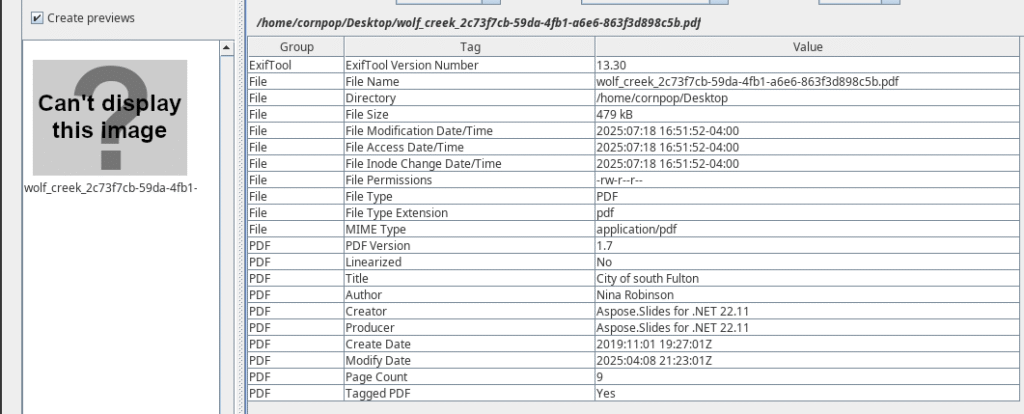
As it concerns April 12, 2025 Stockbridge council meeting agenda items. That PDF file is named 2c73f7cb-59da-4fb1-a6e6-863f3d898c5b.pdf and matches the image of the metadata you’ll find in the PDF. This was to be presented (can’t remember if it was) by Mr. Milazi. This PDF was found on the city server at https://stockbridgega.portal.civicclerk.com/event/3380/files/attachment/9085
Inspect the PDF in the operating system properties or EXIF tool of your choice. Then don’t look at me for answers, because they don’t like to explain things. So, who made that document, Mr. Milazi, Stockbridge Staff or Nina Robinson? Did I just find old Wolf Creek adjacent documents in our pile down here?
Another EXIF related mystery surrounding the erasure of two people’s comments. They won’t explain who edited the May 12 video? I can name them.
Why is taking my property and injuring my neighborhood with your nuisance your only goal in life, Stockbridge City?
It’s Hunter Thompson’s birthday today. Truly I have the Fear & Loathing today as well.
It seems to me. Immediately after executive session. Gantt, Alexander & Ford go right back to talking about holding events, being on the stage, etc. The next day, July 16 we were sent the following contracts by a source. It seems the only thing truly worrying Mayor & Council is preserving their access to that stage. I assume the purpose is electioneering. What did they fire Harold for? The answer to firing Harold for breach of contract is to investigate whether these instruments were negotiated in bad faith.
Is this racketeering by any code section? Is Harold Young getting kickbacks from these contracts? We plebs seem to be the only people concerned with that part of the amphitheater calculus.
Why would I speculate on the faith & conditions these contracts were negotiated under. Well, we have Harold, while amphitheater manager. Also paying his own corporation, Macon it Better, LLC an extra $15,000.
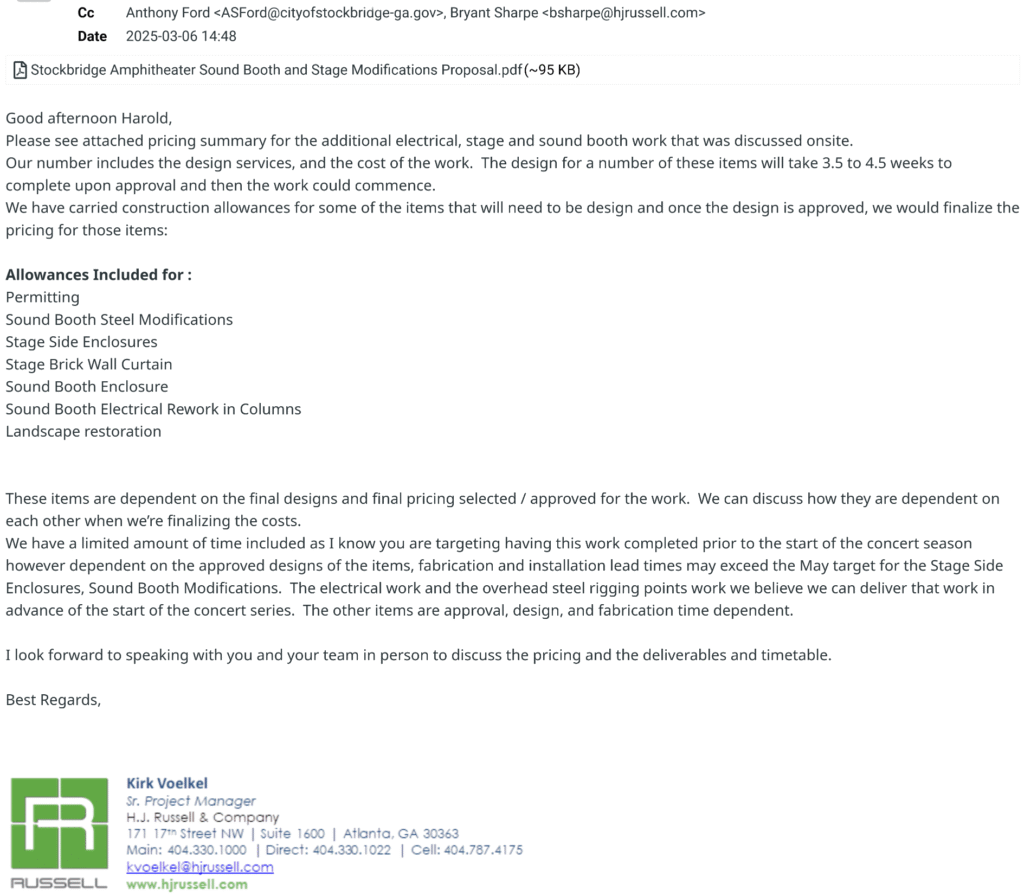
When I say stolen. I mean exactly that. Somewhere in that $32,000,000 could be many code section violations, state & federal. An OCGA violation I’ll name as most likely right now. Public works construction contracts subject to Chapter 91-36 of the Official Code of Georgia valued at $100K or more. Given the “proposal” and $400K price tag from HJ Russell for the sound booth at the amphitheater. The city, under no circumstances, should have a price sent to the city council outside of the bid process of the City of Stockbridge & 91-36.
Now, what amounts lead to these sort of criminal cases. Just ask Dean Alford who made some fake invoices to his own company. These invoices were to be billed to his employer from his own corporation outside his contractual terms. Dean is doing 12-14 years, I don’t quite remember.
One amount I remember “missing” from Atlanta “effected” by Mitzi Bickers was $700,000 and she’s doing 12-14 years, I don’t quite remember. She lived over on Spivey Lake, worked for Vic Hill and was lauded by Bruce Holmes in Henry Herald. He said she was going to bring, “biomedical cybersecurity” whatever the fuck that means. Vic did prison time for a slew of torture chair and false imprisonment convictions.
Elton Alexander attempted to extort Arick Whitson thus costing the city $1.7 million just in the settlement.
In South Fulton a guy was just arrested for $30,000 improperly routed dollars. That one didn’t even touch taxpayers funds. It was a developer tree fund. Straight to jail. Pending trial, allegedly of course.
In Troup County. Allegedly, a payroll clerk was paying into one of 3 external accounts from one of ~40 others belonging to Troup County retirees. She routed a direct deposit from a retired Sheriff’s Deputy’s account. The Deputy noticed the activity. The injury to the taxpayer in total was listed as $500,000 by the GBI in their press release.
Guess what? Jail.
So why would I speculate and call for a forensic audit to look for many, many possible code section violations? It’s not like racketeering code sections haven’t been applied to the music business before. No, no. That would be completely novel, and we shouldn’t speculate. Stop wondering everyone.
The single source of truth, Elton Alexander, has spoken. Our unquestionable moral authority, Lakeisha Gantt, has spoken.
Why do you have to have hearings for to set a $~41 million budget. But you don’t have to have hearings to vote to increase it $32,000,000 in the middle of a late night after months of gaslighting citizens? And how dare any one on that dais, or in this town to say “we couldn’t have known, the numbers presented to us are wrong.” You attend the shows. You hold secret “retreat” meetings far outside the posted retreat schedule, outside the council chambers to discuss spending $390,000+ on a sound booth.
You eat lamb chops on our dime. Brag about it. Then call us irrational and insubordinate. Well, the purpose of a system is revealed in it’s results. Proof is in the pudding, as it were.
***
Doc sent me a tip. Merci, beb. Atlanta Media’s contribution to our endeavor July 16, 2025 is pure PIO bullshit. Was this made by the same jokers that made Christie Ethridge Diez’s hit piece on me in the Eagle’s Landing days? I’ll have to find out if it’s her, an 11Alive reporter’s husband’s media firm. Georgia Strategy Group.
While we wait on me to write the long piece on Atlanta New’s PR Machine. Let’s listen to Jonathan Martin’s producer’s PIO/PR product. Listen to them ignore 33,000,000 and lie, as if they don’t know the amphitheater is destroying 300 people’s lives.
Fuck you, Jonathan. You look like you on juice. You look moist, bro.
Please note. The first effect of publishing “news” like this is all the google searches lead to me. And also, this story begins with Elton Alexander and the Mayor. And it ends with vanity shots of Elton’s Crown PIzza Bar he’s advertising downtown and the Mayor, Anthony Ford in a fluff piece of propaganda about literally nothing. Newcomers may be shocked to find the realtor councilperson Elton Alexander has an advertising “business.” But that’s just the sort of skullduggery you find here in ye olde Stockbridge.
I need a Writ of Shenanigans. Your Honor, I need to psyche that from the record.
Copyright Disclaimer under Section 107 of the Copyright Act 1976: This material is used for purposes of criticism, comment, news reporting, teaching, scholarship, and research. Fair use is a use permitted by copyright statute that might otherwise be infringing. And besides federal law, I’m pretty sure Stockbridge Taxpayers payed to produce and run this. If I can get it by OCGA 50-18-70 I can publish it. If we paid for it, (it won’t be) but it should be retrievable by OCGA 50-18-70. I digress.
In simplest possible terms. You’re waiting on the Clerk’s Office to landscape the cemetery.
Of course, they don’t admit that or fulfill the records. They just sort of say words at your general direction without fulfilling anything. There’s always another test you have to pass. They only ever present another lock to pick, with the only directions being their uncivilized lies.
The goal of all this is demoralization. The playbook is very simple and much older than you might think. It’s called the Simple Sabotage Field Manual. If you read the following, in understanding the games they play with your life, it may free you somewhat from the power they think they hold over you. You’ll learn to barrel through it, thus. I’m a pretty good saboteur myself.
She thinks she’s not attaching what I want to an e-mail. But since the clerk’s office does business with landscapers by e-mail. And where no-bid contract landscapers have no more rights than me. I’ll sue them after tomorrow if they don’t fulfill after some ~35 days.
Georgia Open Records laws say to fulfill open records by the same methods as you do other business. JustFOIA is a choice a citizen can make. “JustFOIA or paper” is not a stipulation that Vanessa Holiday’s mismanaged Clerk’s office can foist upon anyone. It’s just more bullshit to aggravate people with. Read pages 18 & 19, if you please. This will inform your experience with city workers.
Now, seeing a screenshot from ACCG’s own open records manual. Let’s think about what the most economical way to copy a PDF is? It’s not a copy machine. And it’s not JustFOIA. And it’s not the mailbox or going to city hall. It’s e-mail just like they use all day everyday. 50-18-70(b)(1)(B) is why you too can use e-mail. Because they can’t force you into paying for copies that don’t have to be made.