
You’re welcome.
Author: Coren Randazzo
-
Henry Herald: Stockbridge considers renaming street to honor Thomas
That isn’t what’s happening. Yes, they’ve evoked Mr. Thomas’ name. Yes, what they say about him is true. Let’s remember him in some of his last words.With that said. What is happening here with road renamings? It’s quite simple. RAGS LLC wants the price in downtown to be at a certain level. So, when Pinehurst Catering entered the market at $500K an acre. I imagine Mr. Sylvain called Mr. Alexander to put the kibosh on downtown winning & escaping this madness. In the April 13 meeting Alexander said he used the name General Lee as an anecdote. Well, no. February 24 he said, “that road is definitely named for General Lee.” Then city staff enshrined that sentiment in the agenda for March 9.
March 31. Even though there were numerous speakers over many meetings against the renaming from downtown & the only two speakers for the renaming were from many miles outside of downtown. The new triumvirate of Cloud, Alexander and Gantt voted for the street name change. Nevermind the lies, Confederates, aspersions, etc. Now it was about honor. Truth be told, it’s only about city hall, “showing us who’s boss” after we ran roughshod over them all year. When you can’t build a pedestrian bridge, trail, alleyway, fire station redevelopment, cultural arts center or splash pad… when you can’t do that for a decade. You rename things for attention.
When you have one disastrous name change lambasted in the press. You have to do another and pretend this is what you were doing all along. Remember to stay sentimental about honor & justice while functionally only being a detriment to the people downtown right now. You got old ladies crying on camera? Better knock out that camera angle totally. Tell the people, “they’re working on it” until they go away and stop asking questions. Never admit to hypocrisy.
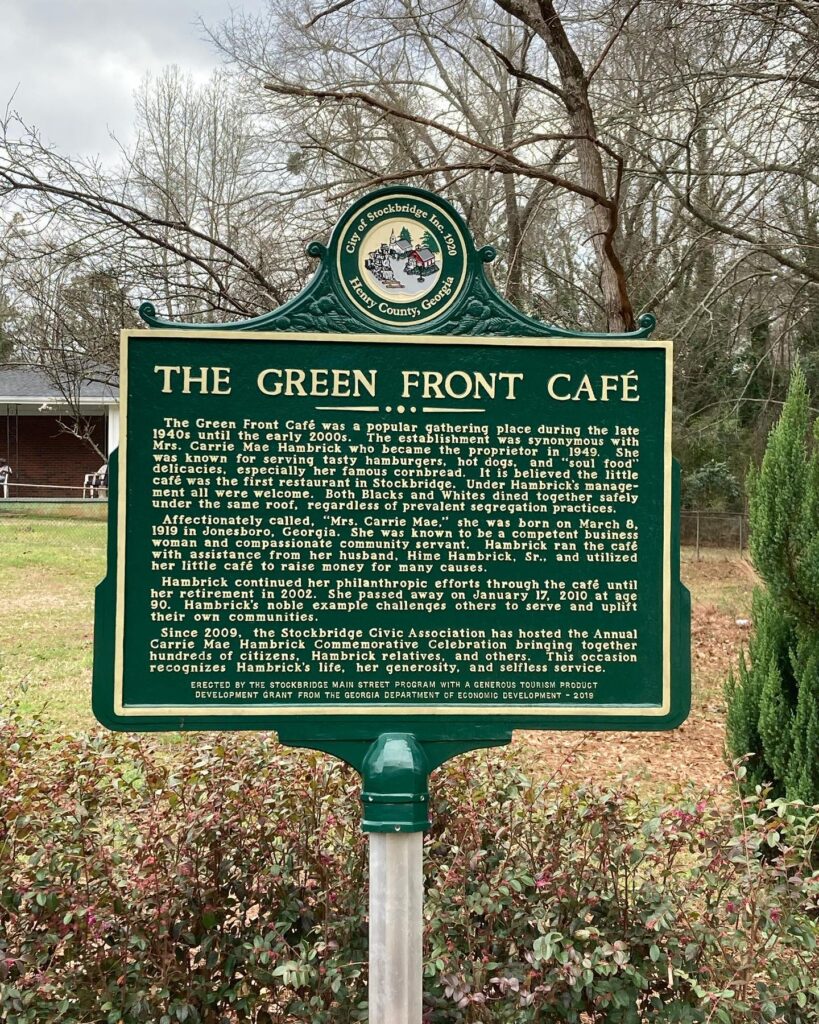
So, I hear what you say about Thomas. When he renamed a street he had a committee, a body of research & calls with the King family. Most importantly, the man had credibility behind his Green Front Cafe historical endeavor.
This embodiment of the council is incredible. What they’re doing right now is an extension of everything that’s been happening downtown since the 2004 eminent domain battle. This city was hollowed out. As the same time, the DDA and J.T. Williams vacuumed up millions of dollars to build, essentially, the crap behind Dairy Queen near the hospital. You see, in the April 13, 2026 meeting Mr. Anderson revealed downtown is the new priority. But he could barely mention this side of town before Mr. Atlanta-South interjected some horns-waggle about Eagle’s Landing Parkway.
The road renamings are meaningless as to prosperity in the long run. They’re meant to distract you from what’s really happening. That is the picking of your pocket by Eagle’s Landing once again as is the 25 year tradition of this city.
Anyway. Thanks for participating, Henry Herald. Watch out for them bad ‘ol Confederates hiding out in the high chaparral… -

April 13 Council Meeting Notes
Well, first let’s clear up the Lee St. timeline. Last night, Elton said he used the words General Lee as an anecdote. No, he said April 24, “that street is definitely named for General Lee.” Then, March 9 Linda Logan put in the agenda packet a slide that said the road was named for General Robert E. Lee. In the interim I called Ryan Anderson for a curt conversation in which he said, “they got their mind made up.”
Now. I don’t know if he was referring to management or the city council. But I don’t have to care about that part. My job is to point out that this city hasn’t changed.
We have a $300,000 limit per artist. Per artist, and not per show. There’s ~3200 usable seats. No one in this city can pay enough to make that profitable. No one can ever make $300K “artists” break even. There is no clause in place to stop E.g. Brett Michaels. Who never performed here in 2025, but that no-show show cost us $110,000 and got the city sued for $8000 due to Ga. Radio Alliance for advertising. The potential for fraud is as high as it ever was. Their willingness to lie about serious subjects is present, here, now in this road renaming gambit.
Someone at City Hall last night said, “we’re just getting started.” The thing is. You work for the people and the people haven’t brought any of this forward. You need to be performatively Black with a capital B for the new mayor and city manager. Well, I’m sorry, this isn’t Campbellton Road. We don’t want to live in “Black” downtown. We just want a normal downtown like Roswell. As the Mayor opened with a proclamation about bookstores. If someone wants to open a bookstore, I hope it would have Langston Hughes alongside Isaac Asimov. More likely than not, it won’t have Hughes or Asimov. It’ll stock Kamala’s Diary and half the store dedicated to the Clinton Family.As to the road renaming. Council blames Staff. Anderson blamed staff. Elton blamed Vanessa & staff. I here, now blame Shawn Edmonson. This is his play at, ‘showing them who’s boss.’ At the end of the day. Whether it was staff, council, inside, or outside of the city hall. The fact remains that this road renaming was designed to torpedo the Pinehurst Catering real estate listing. Set aside that renaming something does absolutely nothing, in the real sense of the word “doing.”
If anyone of you built something new and wanted to name it for Mr. Thomas no one would stand in your way. But what you’re doing is using time honored dead people to do stupid, unpopular things. “align the corridor” is the stupidest excuse in all this. This isn’t your “corridor.” It’s my neighborhood. Until the city comes up with a plan for the 330 people affected & entourage effects created by the TAD & Redevelopment plan, sic semper tyrannis.
Let me illustrate: I don’t work for you, Shawn. You don’t own my house, Shawn. There ain’t no bossing us around over here in these neighborhoods. Change any street name you want. We own this neighborhood. Until you pay for the relocation of these resident as the law proscribes, we will continue to own this neighborhood.
Put that in your Black Bookstore and read it, partner. -

Lee Street Renaming 2026 History
The city’s own research on the March 31 agenda provides a decent factual basis for why Lee St was named for the Local Lee family. The issue was tabled 3 times to produce the 32 pages of research. But it wasn’t presented at the March 31 meeting so the city could save face.
Well. Elton looks like he doesn’t know what he was talking about either way you cut the mustard. The city followed him down a deep dark alley of lies, then covered up the bankrupt narrative behind weasel words about honoring legacies.
So, here in their own words. They admit simultaneously they know the facts in 32 pages. But say to the news and to the March 31, 2026 dais, “there’s no proof.”March 9 they said it was named for Genera Lee.
March 31 had actual research, but wasn’t presented. Authored by Gordon Linton, as I see in the metadata. Credit where credit is due, this is a good report the city shouldn’t have ignored.
A transcript of every meeting stitched together.
-

Open letter to The King Center, IPM licensing, et al.
Intellectual Properties Management (IPM)
449 Auburn Avenue, NE
Atlanta, Georgia 30312
RE: Formal Notification of Unauthorized Use and Political Exploitation of the Name and Likeness of Dr. Martin Luther King Jr. and Martin Luther King Sr.
Unauthorized Commercial and Political Exploitation of the King Likeness
This letter serves to formally notify Intellectual Property Management (IPM) that the City of Stockbridge, Georgia, has moved forward with the renaming of Lee Street to Doctor M.L.K. Jr. Way and the erection of a statue of Martin Luther King Sr. While the city presents these actions as a tribute, the factual record suggests a clear misuse of the King name and likeness to provide a “good headline” that distracts from deep municipal failures.The Georgia Supreme Court has long recognized a right of publicity regarding Dr. King’s likeness—specifically to prevent unauthorized commercial and promotional exploitation. The City is currently utilizing these names to brand a Tax Allocation District (TAD #1), a commercial redevelopment effort designed to attract over $300 million in private investment and apartment developments.
We believe this use of the King legacy as a marketing tool for municipal real‑estate speculation, without the authorization of the Estate, constitutes an actionable misuse of intellectual property.
Erasing Historical Dissent for Political Optics
The justification for the name change on Lee Street is predicated on a false historical narrative. City leadership claimed Lee Street was a tribute to Confederate General Robert E. Lee that required purging. However, historical research reveals the street was named for a prominent local family whose patriarch, Samuel G. Lee, was a Unionist mill owner who openly preached against secession during the Civil War. His great grandson, Mayor Robert E. “Uncle Bob” Lee (1927‑1952), was responsible for the physical modernization and electrification of the city. Under Bob lee’s Mayorship in the late 1940’s and early 50’s, all races ate together at Carrie Mae Hambrick’s Green Front Cafe. Those words are quite literally written upon the historical marker found there. Mayor Bob Lee never interfered with the operations of Floyd Chapel Baptist. It is true to say, he was the mayor of the town where the King Family movement began.
By fabricating a “Confederate” history to justify the use of Dr. King’s name, the City Council is not only infringing on the King intellectual property but also erasing a local legacy Lee family & other Piedmont Dissenters voicing 2/3rds opposition to seceding the Union in this area. Those are the same values of constitutional loyalty that Dr. King himself championed.
The ethical standing of two proponents of the triumvirate vote that enacted this, Council members Lakeisha Gantt and Elton Alexander, raises further concerns regarding the integrity of this “tribute.”
Councilwoman Lakeisha Gantt: In 2019, the Supreme Court of Georgia issued a Review Board Reprimand to Councilwoman Gantt for professional negligence. She admitted to violating professional rules regarding reasonable diligence and communication after an adoption matter she was hired to handle in 2014 was not completed until 2018, causing a three‑year delay for her clients.
Councilman Elton Alexander: Councilman Alexander’s tenure has been defined by a federal lawsuit alleging he used his office to harass a local small‑business owner. After Alexander reportedly demanded “$60 in free food from a barbecue restaurant and was asked to pay,” he allegedly used code enforcement to retaliate against the owner. This resulted in a $1.7 million settlement paid by the city’s insurance.
For the sake of brevity, we’ll set aside their domestic violence arrest records.
Misuse of the King Name to Mask Financial Crisis
The push for these symbolic gestures appears to be a calculated attempt to use the Reverend’s name to cover deep financial problems. Stockbridge is currently still reeling from a $32.9 million budget amendment to cover the losses from the amphitheater. The city’s Finance Director, Frank Milazi, admitted in a public session that the council had been provided with “two sets of reports” and said, “So we misled you.” These misleading reports mask staggering overruns for the city’s amphitheater, which constantly faces staggering shortfalls every year and was constructed without the required competitive sealed‑bidding for vendors or naming rights.
The financial climate prior to these amendments was so reckless that former City Manager Frederick Gardiner warned the council he was not willing to risk a “orange jumpsuit” or go to jail for their decisions before he departed the city’s employ 6 months later. I characterize the renaming as a “deception” used to generate positive press during a time of intense scrutiny over allegations of mismanagement and embezzlement.
Misuse of the King Name to Hide False Blight Designation
Perhaps the most egregious action being masked by the city’s symbolic tributes is the calculated use of the Redevelopment Powers Law to target a diverse neighborhood where Black and White residents have historically lived in a rare spirit of fellowship. While the council focuses on the “political optics” of renaming streets, the actual implementation of Tax Allocation District #1 marks approximately 323 existing housing units—representing the homes of hundreds of Stockbridge citizens—for potential “rehabilitation” or displacement. These residents, specifically those on Bryant and Lee Streets, are currently at risk of losing their homes because the city has officially designated their community as a “blighted or distressed area” characterized by “pervasive poverty” and “substandard” structures. By using these powers to facilitate over $300 million in private real estate speculation, the city is effectively “redlining” legacy neighbors under the guise of progress. This designation serves as a convenient tool to cover up the true intent of the plan: manipulating real estate values in the historic core while using Dr. King’s name to provide a “good headline” that distracts from the potential uprooting of an integrated community.
Absolutely none of what they say about mine or my neighbors homes, local crime, delinquency or the character of my neighborhood bears one single iota of evidence upon inspection of my community.
We urge Intellectual Property Management to investigate this matter and take the necessary steps to ensure that the name and likeness of the King family are not exploited to provide cover for municipal malfeasance.
-

Rebuttal to CBS Atlanta Lee St. renaming story.
The CBS Atlanta coverage of the Lee Street renaming is a textbook example of corporate media stenography, where “official” narratives are parrotted without a shred of investigative scrutiny. By framing the conflict as a simple “debate” fueled by “mixed emotions,” the broadcast ignores the factually bankrupt foundation upon which the City Council built its case. While the news outlet focuses on the “political optics” of removing a supposed Confederate namesake, it fails to perform the basic historical due diligence that would have revealed Samuel Lee as a Unionist who risked social standing to “openly preach against secession”. This isn’t just a failure of reporting; it is complicity in the “errors of erasing history”.
The media’s silence on the true motives behind this renaming is particularly egregious. While CBS presents a sanitized version of cultural progress, independent records suggest the move is a deception designed to provide a good headline to distract from deep-seated municipal rot. The news story completely omits the $32.9 million budget crisis, the staggering shortfalls of the local amphitheater, and the admission from the Finance Director that the council had been “misled” with “two sets of reports”. By ignoring the music business embezzlement lurking behind the scenes, CBS acts as a PR firm for a government currently reeling from allegations of financial mismanagement.
Furthermore, the “official” news narrative carefully avoids the redlining implications of the city’s growth strategy. There is no mention in the CBS report of the “Tax Allocation District (TAD #1)” or the “Redevelopment Powers Law” being used to designate the Bryant and Lee Street (now MLK Jr. Way) neighborhood as a “blighted or distressed area”. This designation allows for the displacement of residents to facilitate $300 million in private real estate speculation, a predatory maneuver now hidden behind the stolen moral authority of the King family name. The media fails to report that the city is utilizing Dr. King’s likeness for municipal real-estate speculation without authorization, an actionable misuse of intellectual property.
Ultimately, the CBS story functions as a tool for the convenient fabrication of history. It treats the council’s retreat into “procedural delay” and “tabling” the issue as standard governance rather than an admission that their “Confederate” narrative had crumbled under not only public scrutiny. But in the words of their own Community Development Director. By refusing to challenge the government’s political posturing, the media helps bury the memory of men like Samuel Lee, Francis E. Manson, and E. B. Arnold. Those dissenters who prioritized “constitutional loyalty” and “regional stability” over the radical tide of revolution. In the hands of official media, the “Plain Folk’s” history of courageous “No” votes is traded for a cheap symbolic renaming that protects the interests of the few elite set to profit from lower real estate values downtown.
The most telling editorial choice they made is including none of the many speakers and local property owners that spoke against this. The quote spoken to the council in the story is by Charles Marshall who lives miles away from this neighborhood behind the gates of Eagle’s Landing Country Club. CBS didn’t make note that there were only two speakers for. One being the the mayor we just unseated Mr. Ford and Charles Marshall. Mr. Ford also lives many miles away from downtown on the other side of Highway 75 at the edge of Clayton County.
https://www.cbsnews.com/atlanta/video/street-renaming-sparks-debate-in-stockbridge/#x -
Final thoughts on erasing core downtown history.
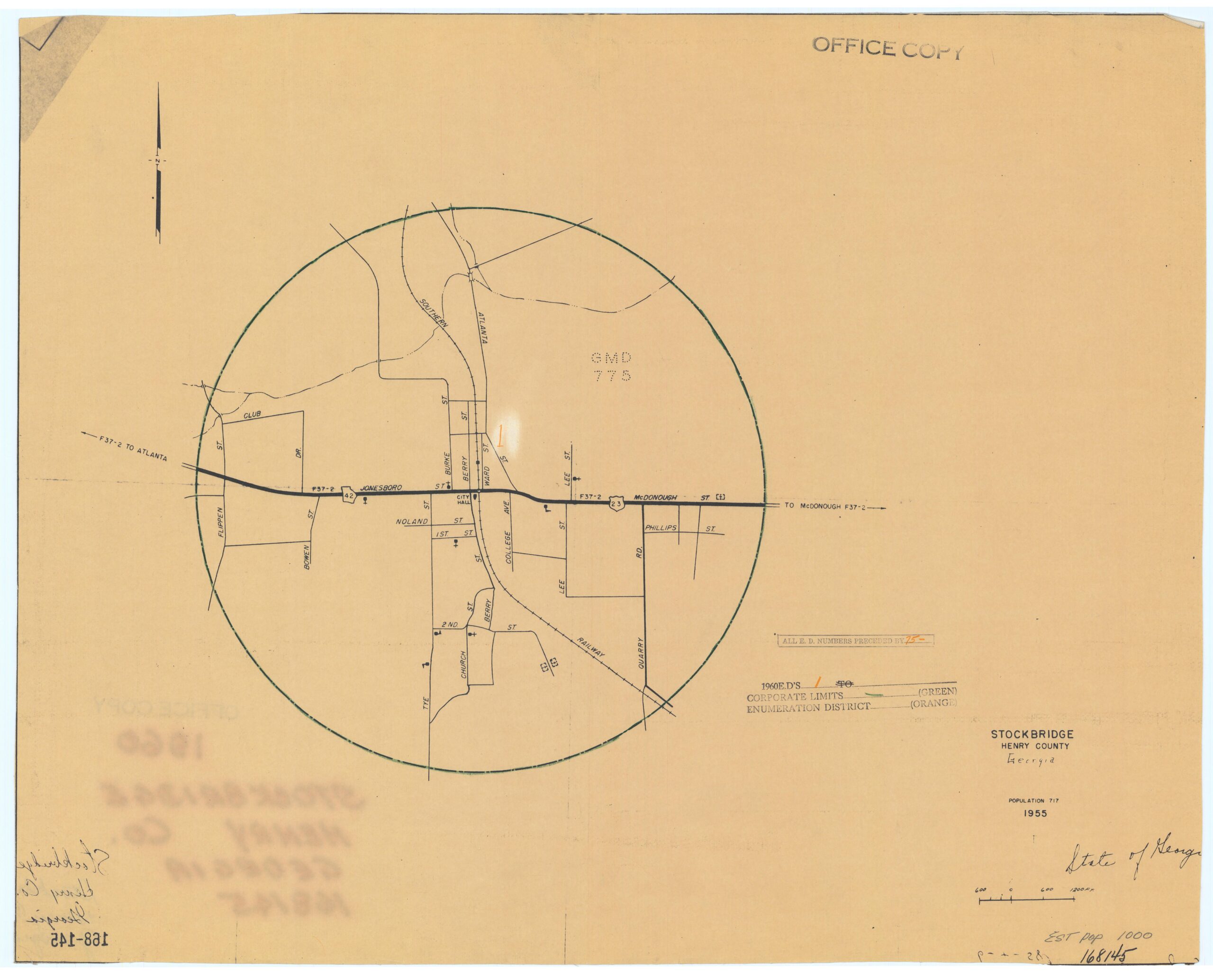
There’s no real point in telling you about how these people voted and preached against the secession of 1861. This renaming happened to interfere with a lucrative real estate market offer on the now renamed street. So, knowing this only has to do with love of money and distaste for legacy downtown residents. Anyway, here’s what they took away from you.
In the heart of Stockbridge, a city currently wrestling with a multi-million dollar “failure of process” and the fallout of its own growth, a modern-day battle for the soul of history is being waged on the asphalt of Lee Street. What began as a high-minded proposal to honor Dr. Martin Luther King Jr. has instead exposed a startling lack of historical due diligence by a City Council more focused on “political optics” than the complex, nuanced reality of the very land they govern.
For months, the narrative pushed from the podium at City Hall was a familiar one: Lee Street, a central corridor in the historic downtown, was a relic of the Confederacy, a tribute to General Robert E. Lee that required purging to align with the city’s evolving cultural values. City staff initially claimed that research pointed toward the street being named after the Confederate general, a sentiment echoed by those seeking to remove symbols of the Old South. However, as the light of investigative scrutiny was turned toward these claims, the “Confederate” rationale crumbled, revealing that the city was prepared to erase a legacy of a entirely different sort: a history of fierce Piedmont Dissent and a family that stood for the Union when the rest of the state was marching toward revolution.The Unionists the Council Almost Erased
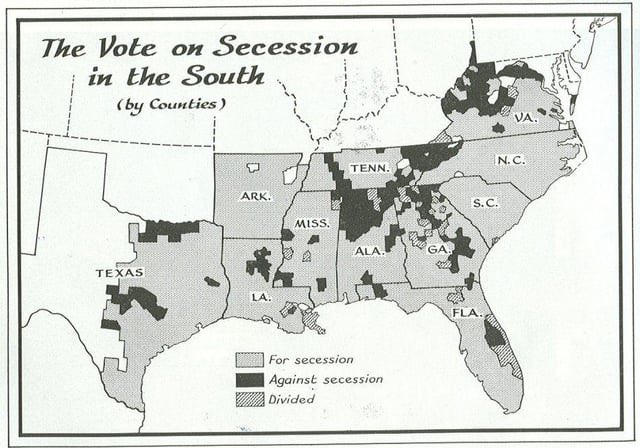
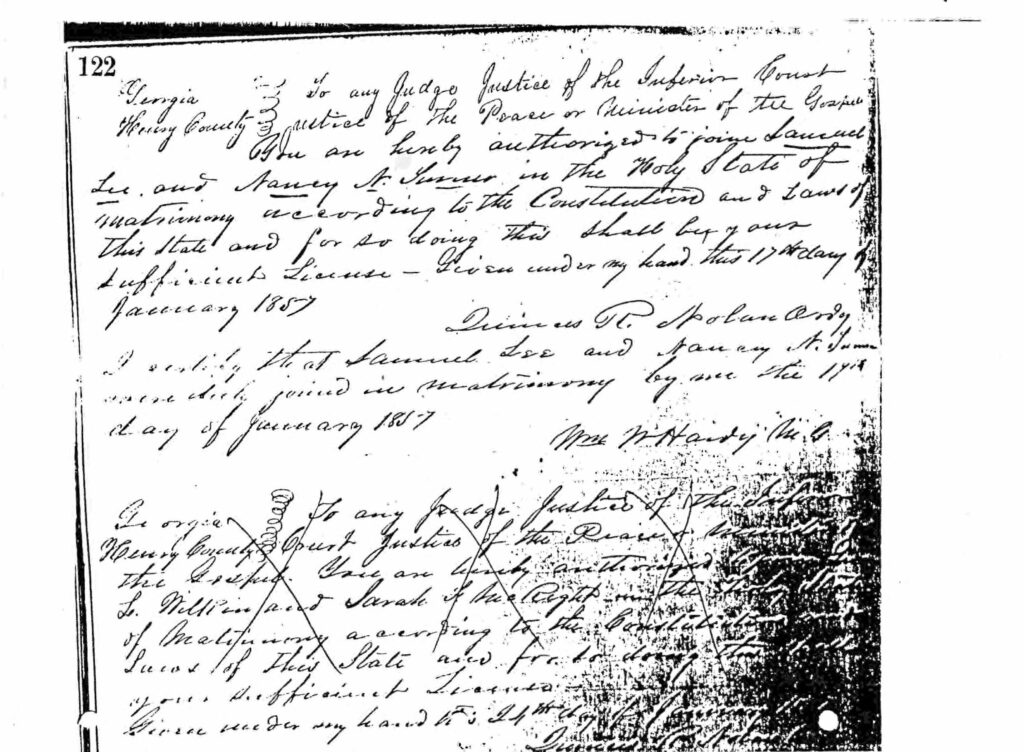
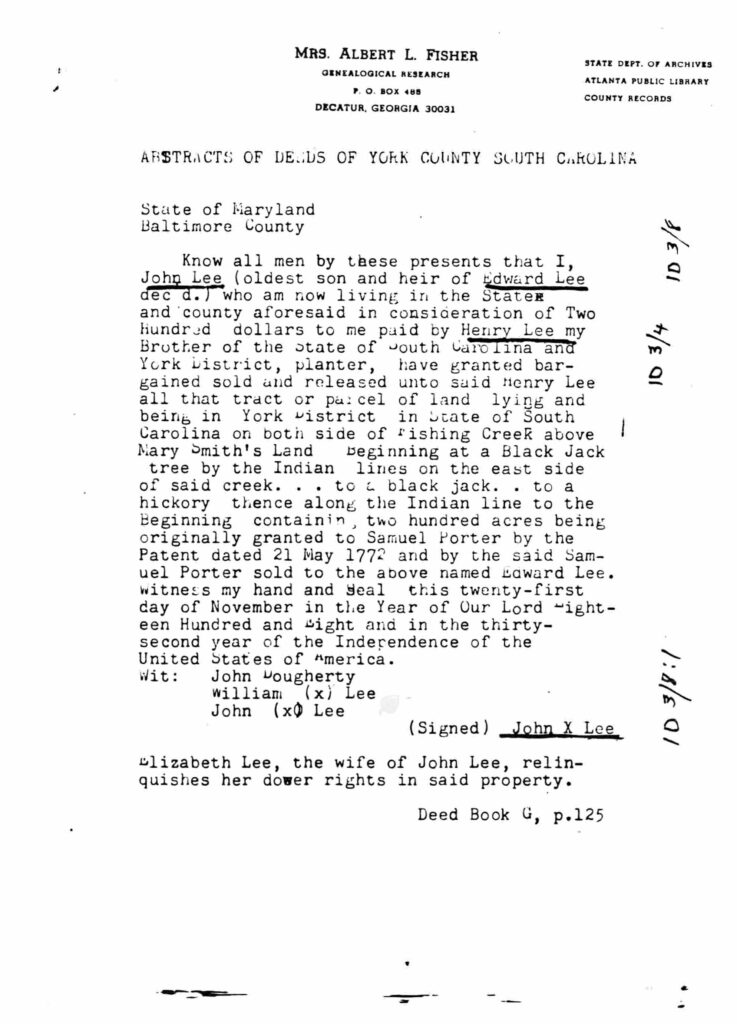
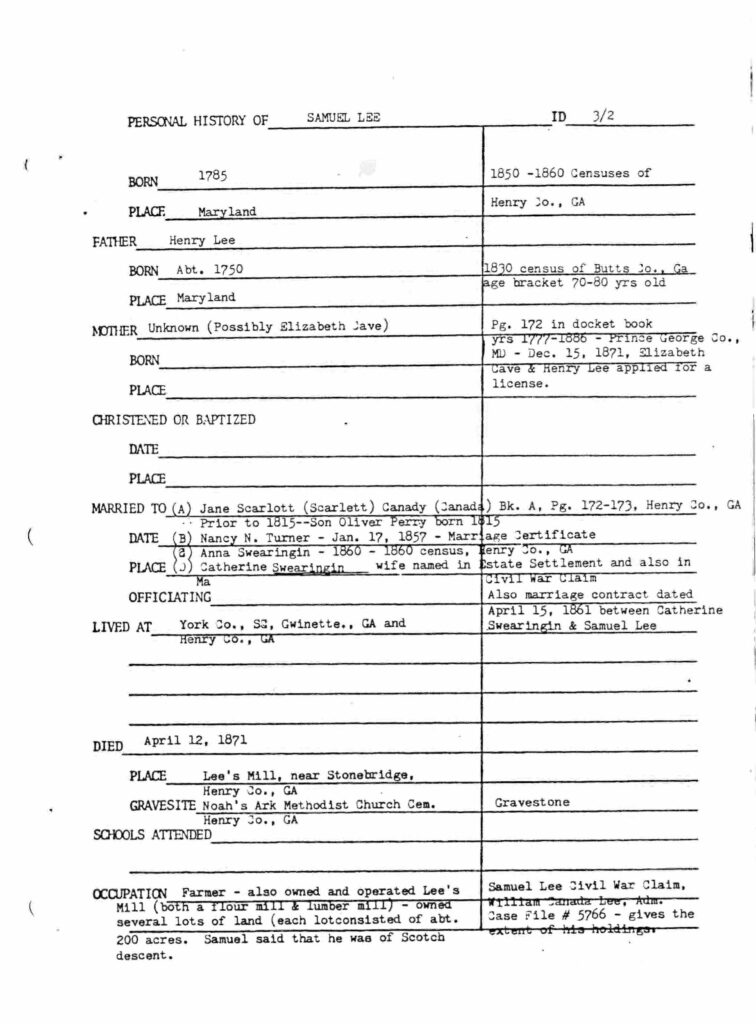
The historical record—long ignored or mischaracterized by city leadership—reveals that the “Lees” of Henry County were not the standard-bearers of the Confederate cause. Samuel Lee (1785–1871), the family patriarch and mill owner, was documented as “militantly Unionist” during Georgia’s secession crisis. Far from a silent observer, Lee was known for “openly preaching against secession to his neighbors,” a dangerous act of dissent in the 1860s. His convictions were formally memorialized in his post-war Civil War Claim, a record typically reserved for Southern loyalists who maintained their allegiance to the United States throughout the conflict.
This was not an isolated sentiment. Henry County itself was a bastion of “cooperationist” philosophy. In the critical popular election of 1861, county voters initially sent a delegation to Milledgeville that was two-thirds opposed to immediate secession. Two of those delegates, Francis E. Manson and E. B. Arnold, remained steadfast, casting courageous “No” votes against the Ordinance of Secession under immense social pressure. When the Council proposed renaming Lee Street under the guise of removing a Confederate namesake, they were inadvertently proposing to bury the memory of the very people who shared the Unionist values they now claim to champion.
The confusion deepens when examining the mid-twentieth-century figure most closely associated with the street’s development: Mayor Robert E. Lee, affectionately known as “Uncle Bob,” who served from 1927 to 1952. While sharecroppers like James King—father of “Daddy King”—were struggling under the weight of the New South’s racial injustices, Mayor Lee was the man who “electrified, gasified, irrigated, and paved Stockbridge”.
The council’s rush to rename the street ignored the unique geographic unity of this era. Mayor Lee lived adjacent to Floyd Chapel Baptist Church, where Martin Luther King Sr. preached his first sermon. Residents have pointed out that under Lee’s mayorship, the Green Front Cafe operated as a place where people of all races ate “together under the same roof,” a rare island of fellowship in a fractured era. To rename the street is to damage a legacy that saw the birth of the King family’s influence alongside a mayor who helped build the city’s physical foundation.
The “Table” of Shame
When these facts were finally presented to the Council, the reaction was not one of humility or a pivot to historical preservation, but a retreat into procedural delay. Council members, realizing the “Confederate” narrative was factually bankrupt, moved to “table” the issue, claiming a need for more research despite staff admitting they had already “exhausted all measures” and found no evidence linking the street to the Confederate general.
This maneuver has been criticized by residents as a “deception”. As one resident, me, noted during public comments, when a city “lies about why a street needs renaming,” it suggests the change is more about political posturing than genuine honor. The Council’s decision to postpone rather than reject the motion on its merits demonstrates a refusal to reckon with the “errors of erasing history”.
The City’s own 2026 report eventually conceded that the street existed by at least 1918, long before the commemorative trends of the mid-century, and was almost certainly tied to local land ownership and the prominent Lee family who occupied the corridor for over 70 years.
By trading a locally rooted history of Unionist dissent and municipal street name for a symbolic renaming based on a false premise, the Stockbridge City Council risks repeating the greatest error of the eras they study: the convenient fabrication of history to suit the narrative of the present. True honor for Dr. King, as residents argued, requires more than a new sign; it demands an honest confrontation with the truth of the ground Stockbridge is built upon.
To understand the true character of the man the Stockbridge City Council so nearly erased, one must look past the lazy assumptions of modern naming debates and into the “militantly Unionist” heart of 1860s Henry County. Samuel Lee was not a silent dissenter; he was a man who used his standing as a mill owner and farmer of “Scotch descent” to vocally challenge the revolutionary fever that was tearing his state apart.
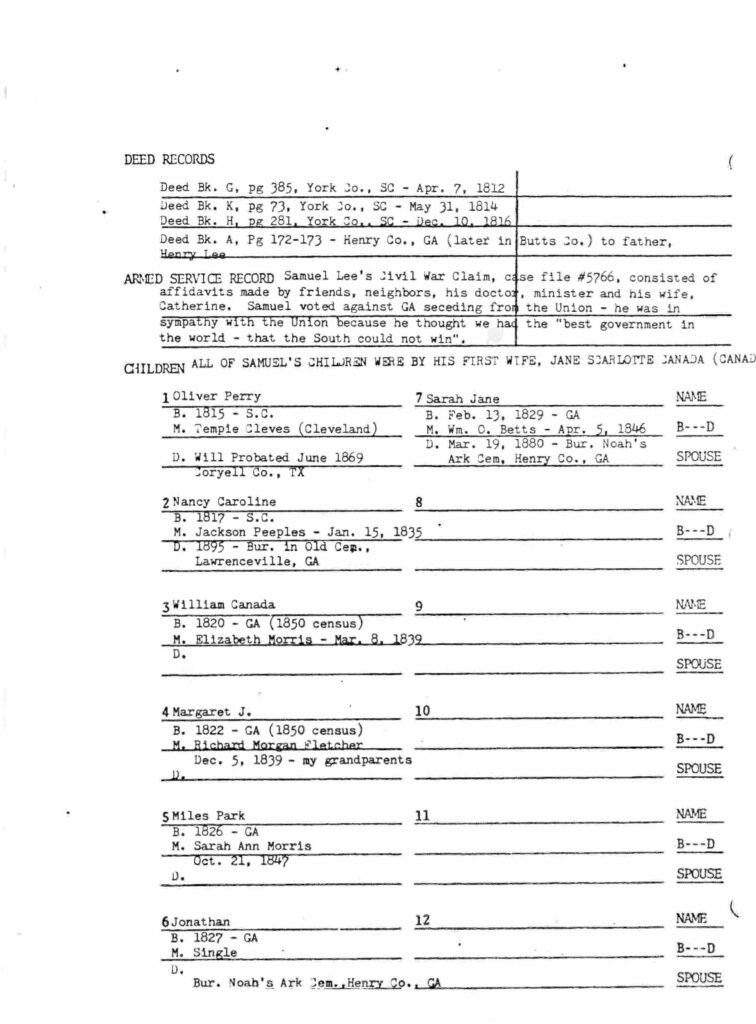
The historical record—specifically his post-war Civil War Claim (Case File #5766)—reveals a legacy of “openly preaching against secession to his neighbors”. This was no small feat in a time of radical fervor. Lee’s voice represented what historians call the Piedmont Dissent, a sophisticated and often dangerous opposition to the coastal planter elite who were driving the state toward a conflict Lee believed was both unnecessary and unwinnable.
The Philosophy of the “Best Government”
Lee’s “preaching” was rooted in two primary convictions. First, he was a constitutionalist who believed that the United States was the “best government in the world”. For him, Unionism was not merely a political preference but a commitment to the American compact that had provided the stability for his family and his business to thrive.
Second, Lee was a hard-eyed pragmatist. While others were swept up in the romanticism of a Southern revolution, he told his neighbors plainly “that the South could not win”. His dissent was a warning to his community that they were trading a proven, functional democracy for a high-risk gamble led by radical voices that did not share the interests of the Middle Georgia “Plain Folk”.
The Dissenters of the Piedmont Region
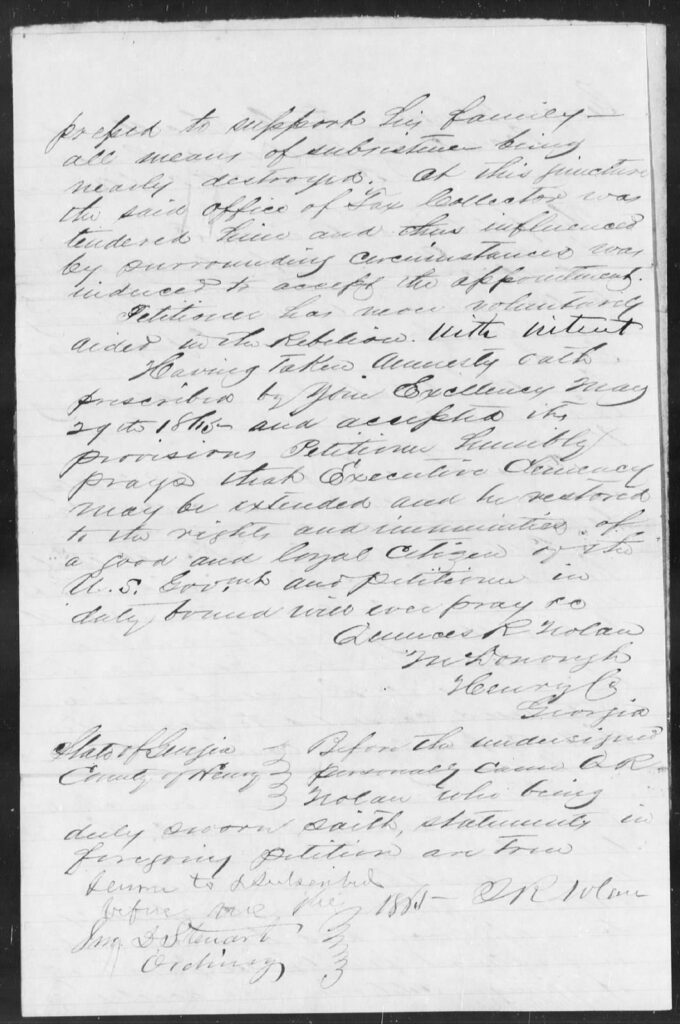
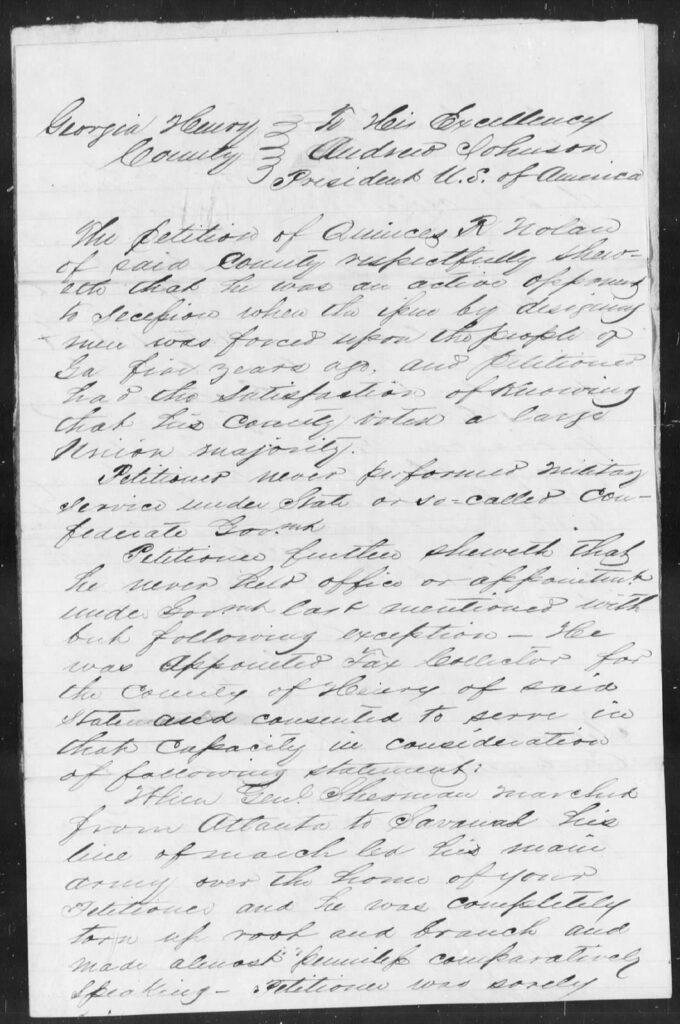
- Quincey R. Nolan: A fierce opponent of the “designing men” who forced secession upon Georgia, Nolan identified early and explicitly with the Union Party. He took great satisfaction in the fact that Henry County initially voted for a “large Union majority” when the issue of secession was first put to the people. His home was eventually “completely torn up roof and branch” by the very Union army he had sympethized with, leaving him almost penniless. He only consented to serve as a Confederate Tax Collector under extreme duress to support his family after his means of subsistence were nearly destroyed.
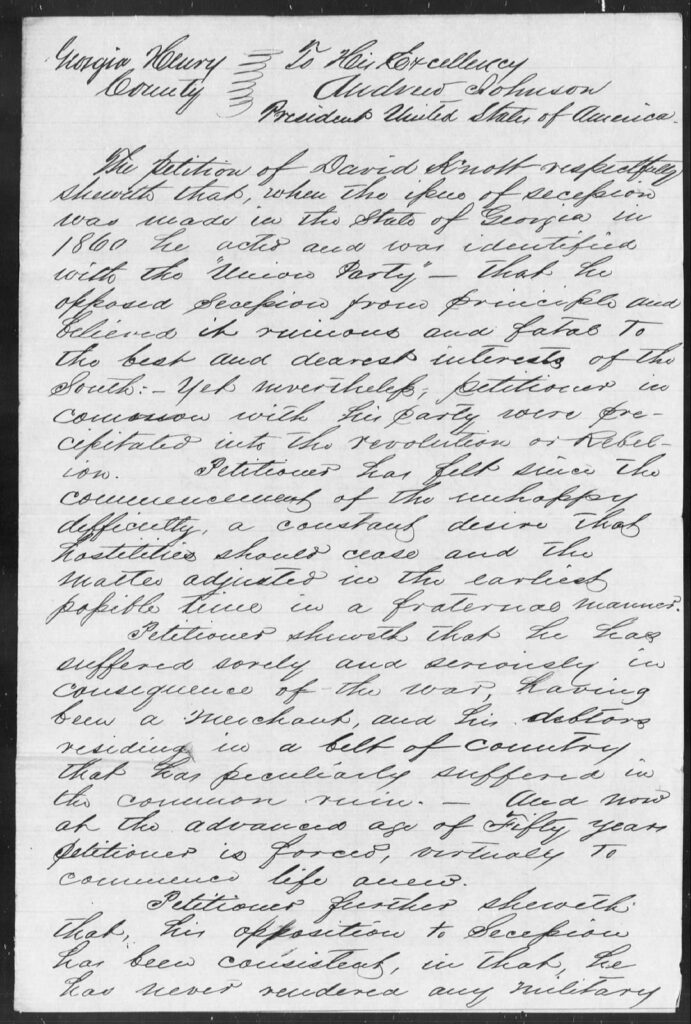
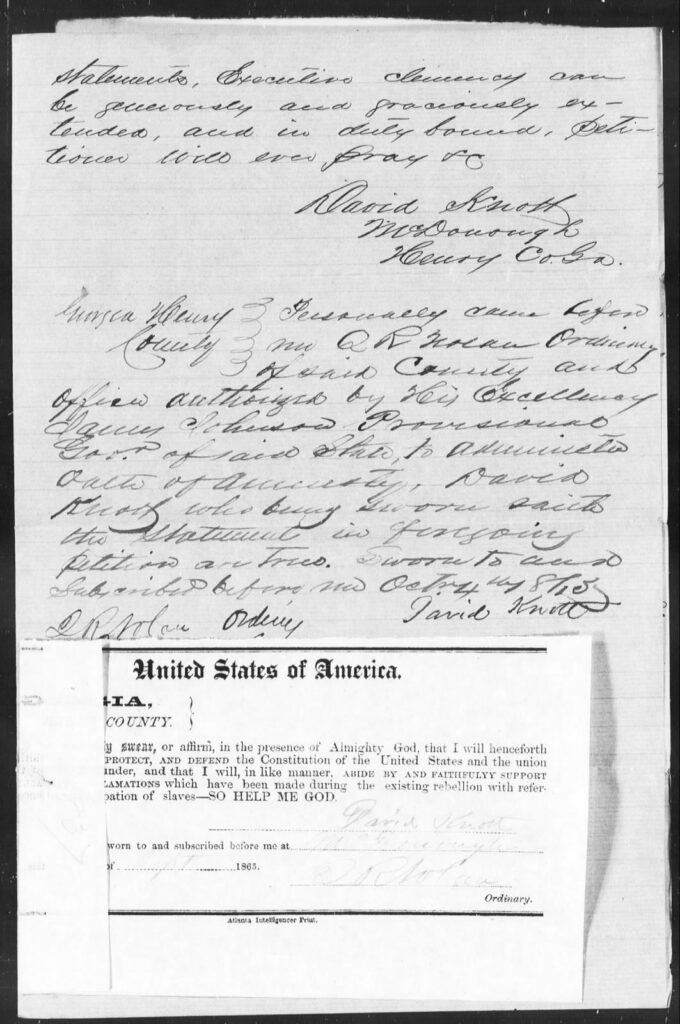
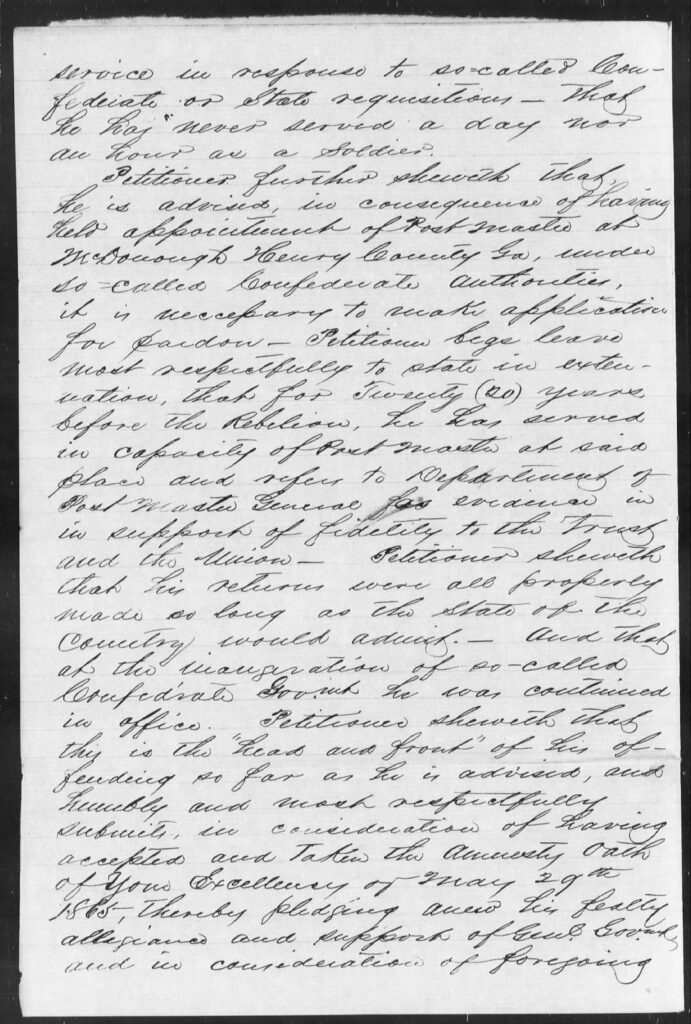
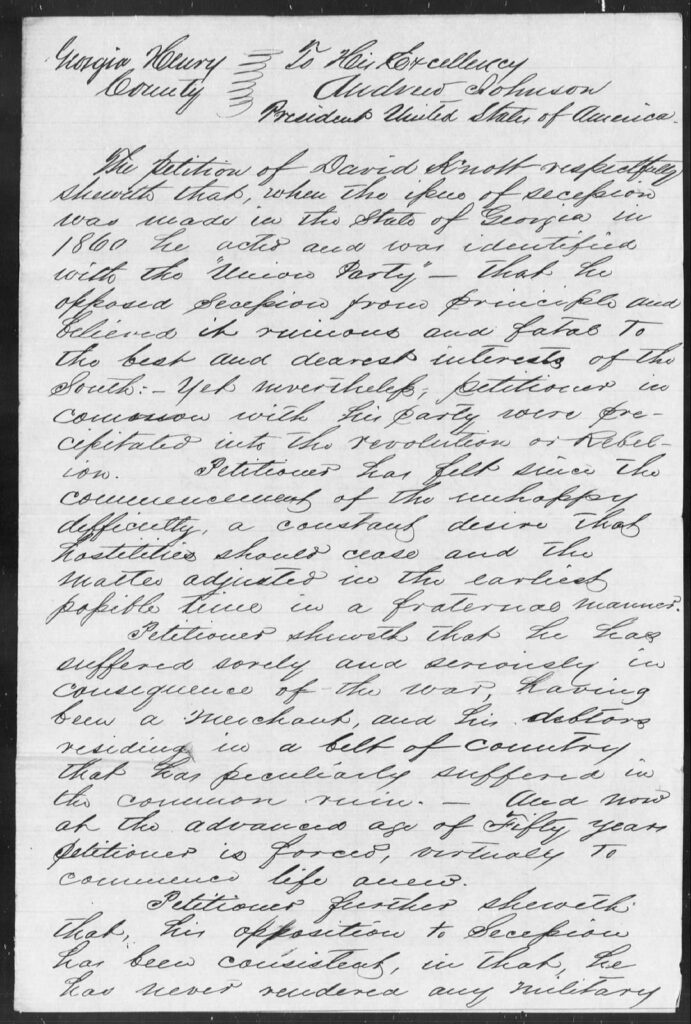
- David Knott: A McDonough merchant who identified with the Union Party in 1860, Knott argued that secession was a “ruinous and fatal” policy for the best interests of the South. He maintained a record of consistent opposition, never serving even “an hour as a soldier” for the Confederate cause. Knott’s primary “offense” in the eyes of the Union was continuing his 20-year career as Postmaster under Confederate authorities, a role he had faithfully performed for the United States long before the rebellion. He viewed the Confederate government as merely “so-called” authorities and pledged his renewed fealty to the Constitution as soon as the conflict ended.
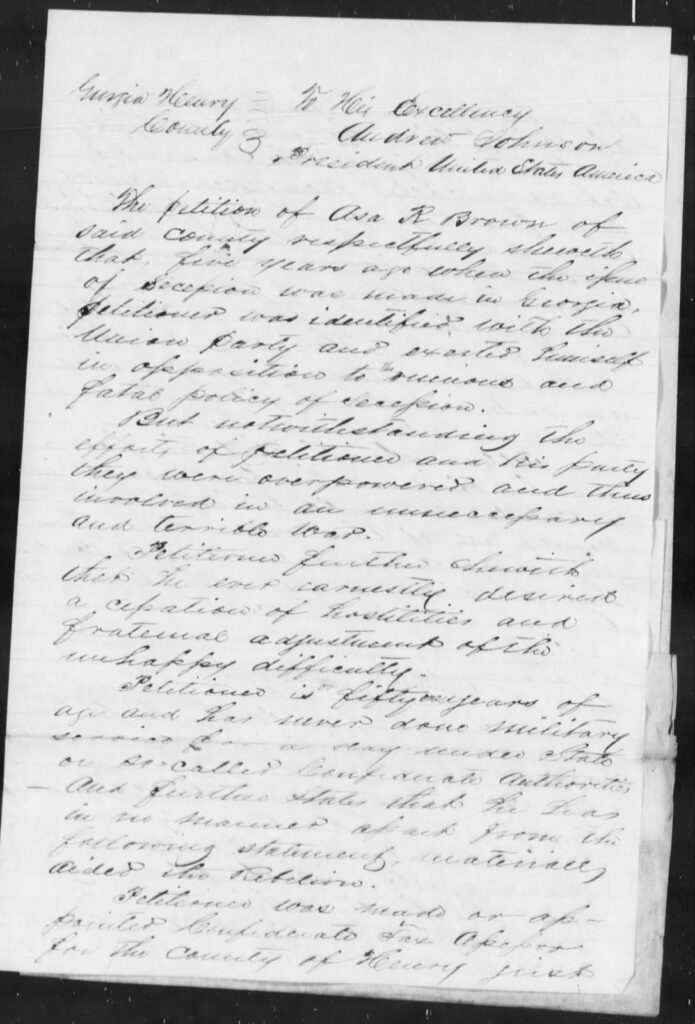
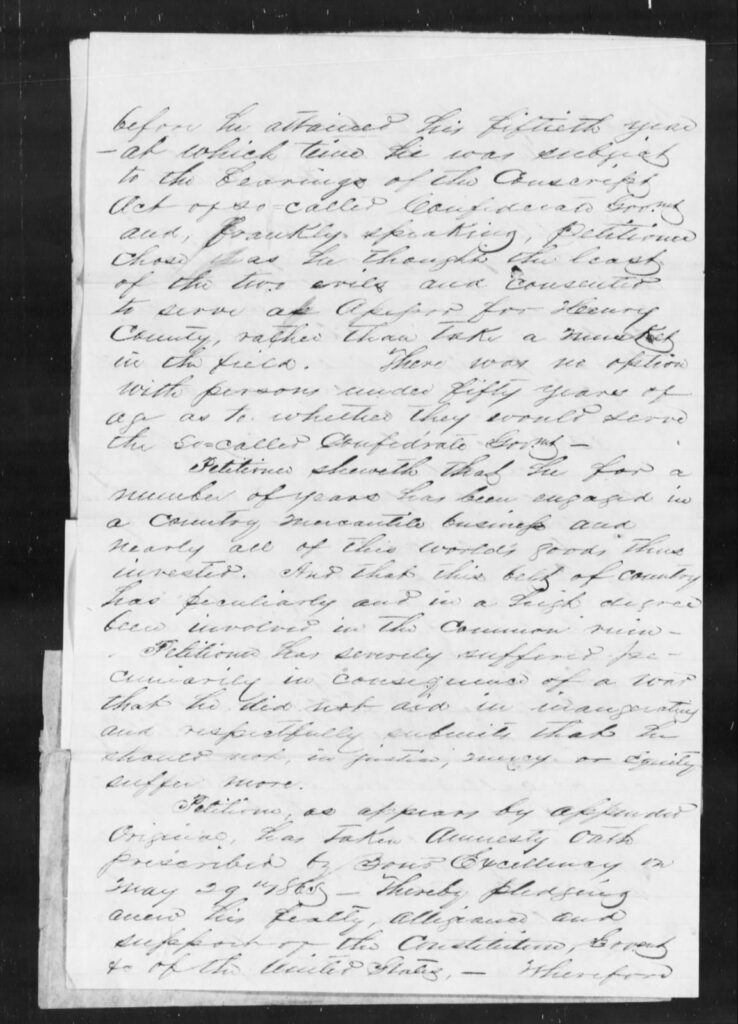
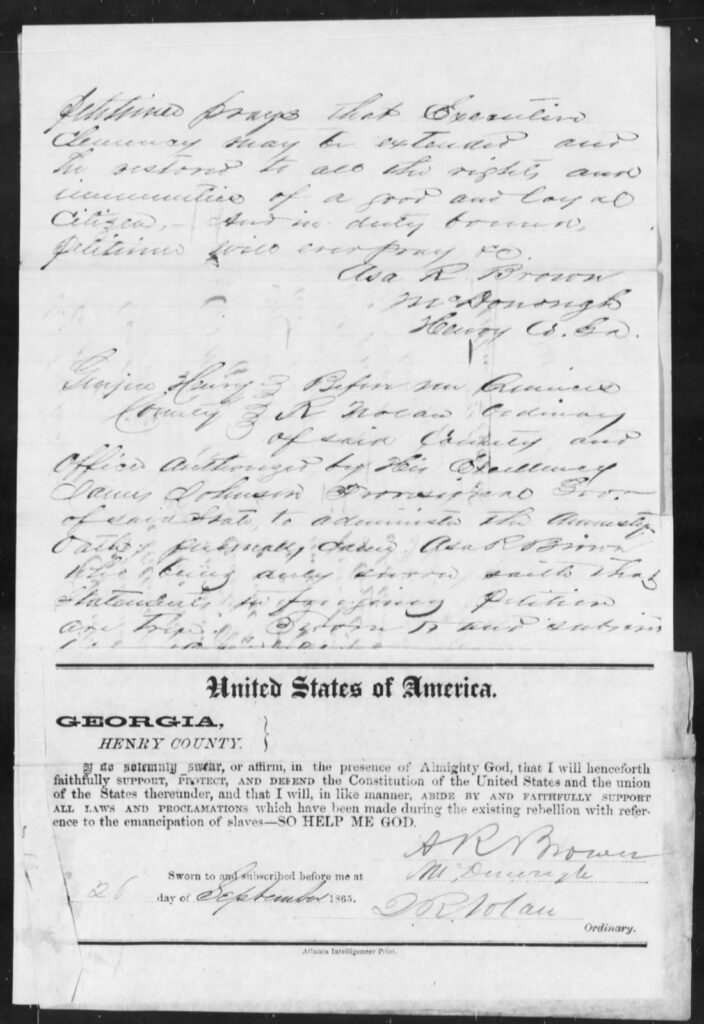
- Asa R. Brown: Another stalwart of the Union Party, Brown exerted himself in vocal opposition to secession, which he viewed as a disastrous error. He reached his fiftieth year during the conflict without ever performing a single day of military service for the “so-called Confederate Authorities”. Brown admitted with refreshing bluntness that he only accepted an appointment as a Confederate Tax Assessor to escape the “Conscript Act,” choosing civilian service as the “least of the two evils” over taking a musket into the field. He pleaded for executive clemency on the grounds that he had been a victim of a war he did not aid in inaugurating.
- Francis Epps Manson and E. B. Arnold: These men were the political vanguard of Henry County’s “cooperationist philosophy” during the 1861 popular election. Sent to Milledgeville as part of a delegation that was two-thirds opposed to immediate secession, they remained steadfast when others faltered. On the final, critical vote for the Ordinance of Secession on January 19, 1861, both Manson and Arnold cast “No” votes. They were part of a courageous minority of 89 delegates who refused to endorse the dissolution of the Union despite immense social and psychological pressure.
- Edwin A. Wright: A member of an influential family that included Confederate Congressman Augustus Wright, Edwin represented the extreme end of Piedmont dissent. While his brother Augustus eventually chose to “go with his state,” Edwin and his brother Moses vowed never to support the Confederacy. Edwin eventually fled north to Cincinnati in early 1865, where he took the radical step of enlisting in the Union Army for three years. His family was so embarrassed by this voluntary defection to the North that they spent decades constructing a “Lost Cause” mythology to hide the truth of his Unionist service.
Lee was not a lone voice in the wilderness. His preaching aligned with a powerful “cooperationist philosophy” that dominated Henry County during the secession crisis. In the popular election of January 1861, county voters initially sent a delegation to Milledgeville that was two-thirds opposed to immediate secession. Lee’s neighbors, Francis E. Manson and E. B. Arnold, were among the courageous minority of 89 delegates who remained steadfast, casting final “No” votes against the Ordinance of Secession under immense social and psychological pressure.
The weight of Lee’s Unionism is formally preserved in the affidavits that supported his post-war claims. Friends, neighbors, his doctor, his minister, and his wife, Catherine, all testified to his unwavering loyalty to the United States throughout the conflict. These documents represent a rare victory for historical truth, proving that he maintained his allegiance even as the world around him succumbed to the tide of revolution.
The Error of Erasing Dissent
For a modern City Council to initially characterize a street named after such a family as a tribute to the Confederacy is a profound “error of erasing history.” By failing to do the due diligence—until citizens brought the facts to the podium—they nearly buried the memory of a man who actually stood for the very values of unity and democratic integrity they now claim to represent.
Samuel Lee’s grave at Noah’s Ark Methodist Church Cemetery serves as a final testament to a man who prioritized regional stability and constitutional loyalty over the “radical tide of Confederate revolution”. His life reminds us that history is rarely a monolith; it is often found in the dissenting voices of the “Plain Folk” who had the courage to preach for the Union when the rest of the state was marching toward ruin.
Bibliography
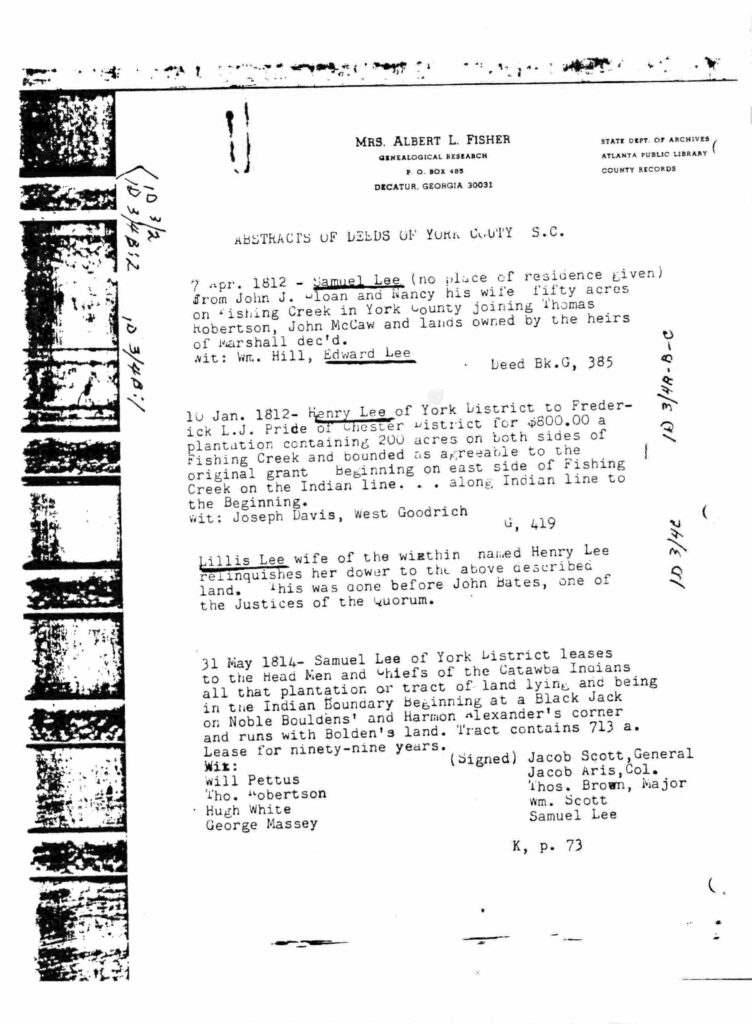
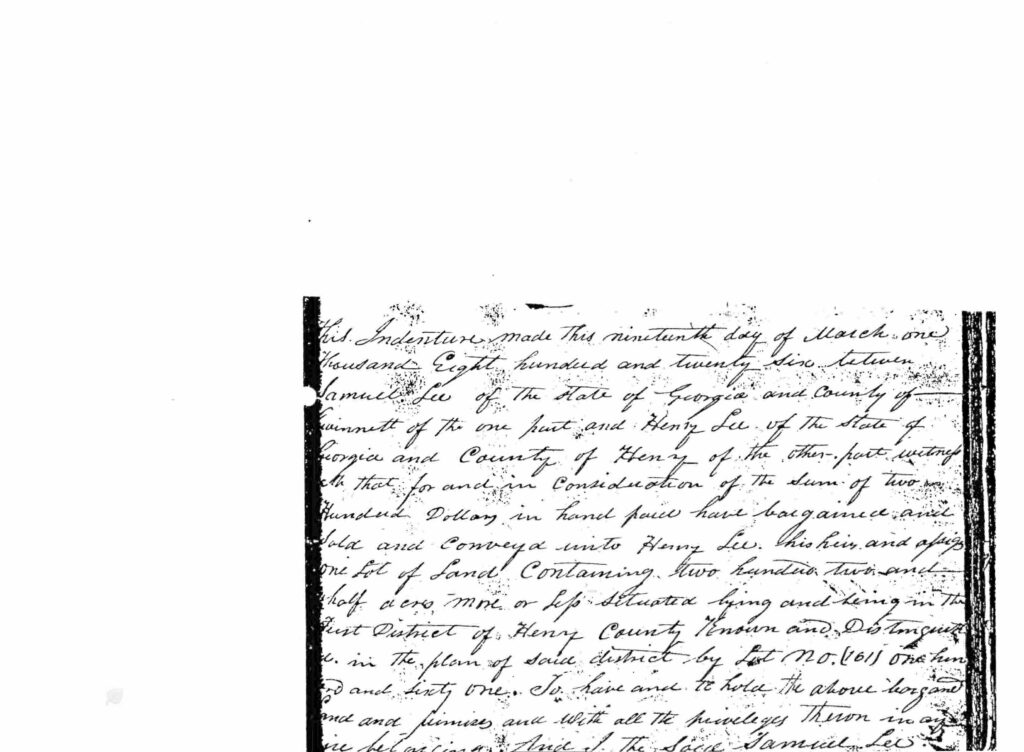
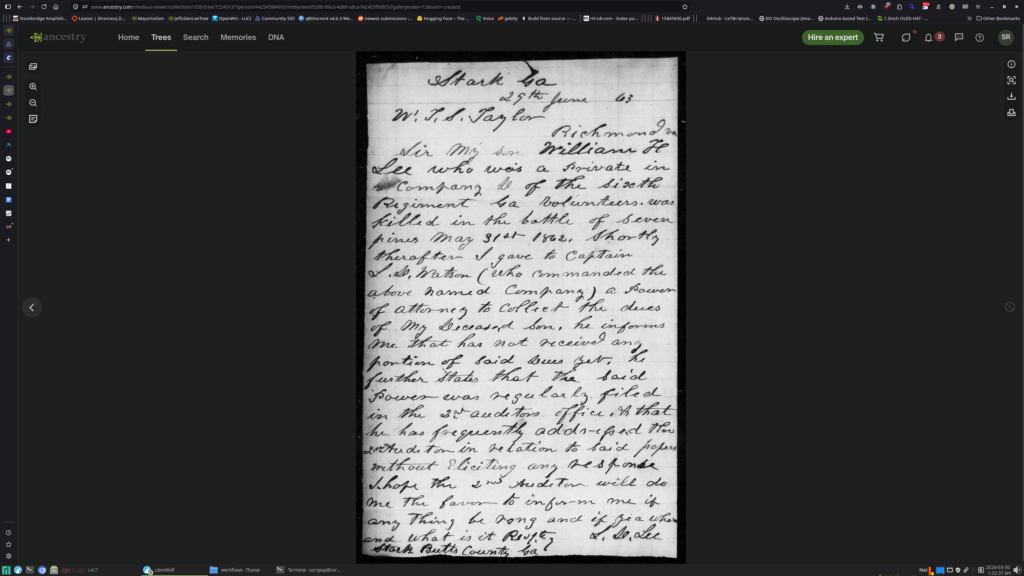
Just a few sources I used to get to know these people. It doesn’t go unnoticed our Community Development Director can’t pronounce the word Genealogy. The presentation and history report found in the March 31 agenda wasn’t presented or discussed.
The Documentary Record of Stockbridge and Henry County
- AbeBooks. “Henry County, Georgia: The Mother of Counties by Vessie Thrasher Rainer.” https://www.abebooks.co.uk/Henry-County-Georgia-Mother-Counties-Vessie/32405657083/bd.
- Access Genealogy. “Native American History of Henry County, Georgia.” https://accessgenealogy.com/georgia/native-american-history-of-henry-county-georgia.htm.
- Atlanta History Center / Kenan Research Center. “Tye family Finding Aids.” https://aspace-atlantahistorycenter.galileo.usg.edu/agents/families/293.
- Emerging Civil War. “The Hero & The Ghost: An Account of a Divided Family.” https://emergingcivilwar.com/2020/03/21/the-hero-and-the-ghost-an-account-of-a-divided-family/.
- FamilySearch. “John Lewis Tye (1859–1935) – Ancestors.” https://ancestors.familysearch.org/en/KZ7C-2DJ/john-lewis-tye-1859-1935.
- Georgia Department of Community Affairs. “DADDY KING: STOCKBRIDGE SHAPES A LEGACY OF LOVE.” https://dca.georgia.gov/document/newsletters/november-2016-reflectionspdf/download.
- Georgia Historical Society. “The Orphan Brigade, Henry County.” https://www.georgiahistory.com/ghmi_marker_updated/the-orphan-brigade-henry-county/.
- Georgia Historical Society. “The Right Wing at Stockbridge.” https://www.georgiahistory.com/ghmi_marker_updated/the-right-wing-at-stockbridge/.
- Georgia Historic Newspapers. “The Henry County Weekly, April 24, 1908, Image 17.” https://gahistoricnewspapers.galileo.usg.edu/lccn/sn89053246/1908-04-24/ed-1/seq-17/ocr/.
- Georgia Historic Newspapers. “The Henry County Weekly, April 24, 1908, Image 21.” https://gahistoricnewspapers.galileo.usg.edu/lccn/sn89053246/1908-04-24/ed-1/seq-21/.
- Georgia State Parks / Department of Natural Resources. “Pickett’s Mill Battlefield State Historic Site.” https://gastateparks.org/PickettsMillBattlefield.
- HB Brantley Enterprises. “PROJECTS.” https://hbbrantley.com.
- Henry County Times. “Henry County As It Was.” https://www.henrycountytimes.com/2019/01/17/henry-county-as-it-was-15/.
- History of the Georgia National Guard. “The Macon Volunteers: 1825-2025: The Macon Volunteers in the American Civil War.” http://www.georgiaguardhistory.com/2025/04/the-macon-volunteers-1825-2025-macon.html.
- The Macon Melody. “Tubman Museum director booted from Stockbridge amphitheater management job.” https://maconmelody.com/tubman-museum-director-booted-by-stockbridge-city-council-as-amphitheater-manager/.
- Stockbridge City Council. “September 30, 2025 Meeting Agenda / Financial Documents.” https://stockbridgega.portal.civicclerk.com/event/2910/files/attachment/10351.
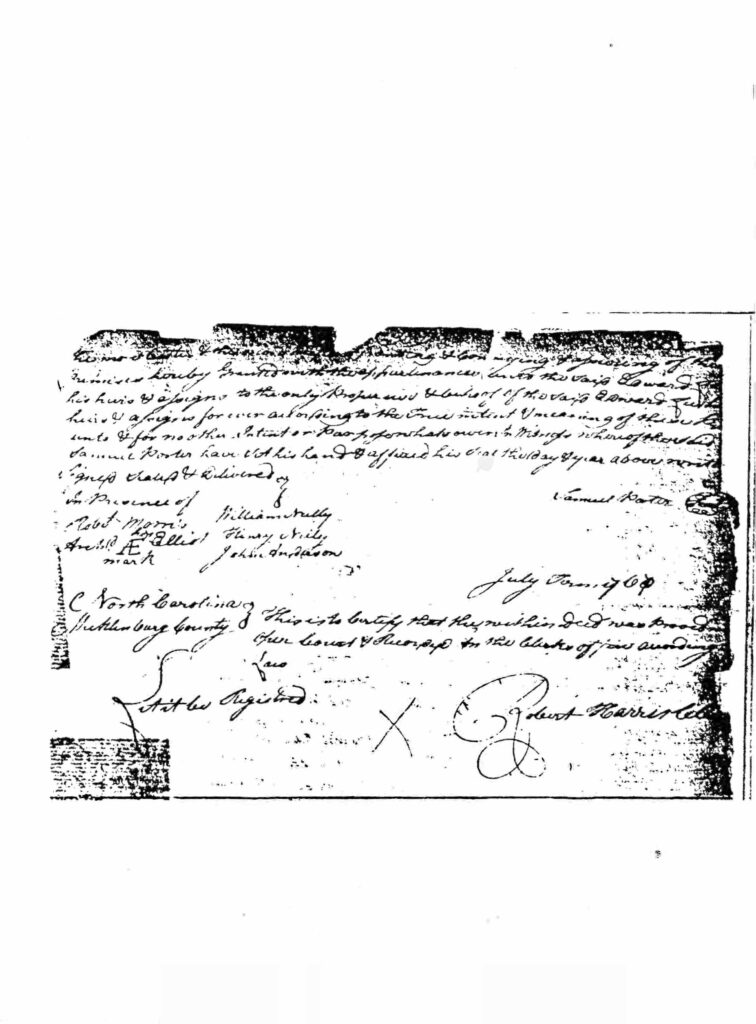
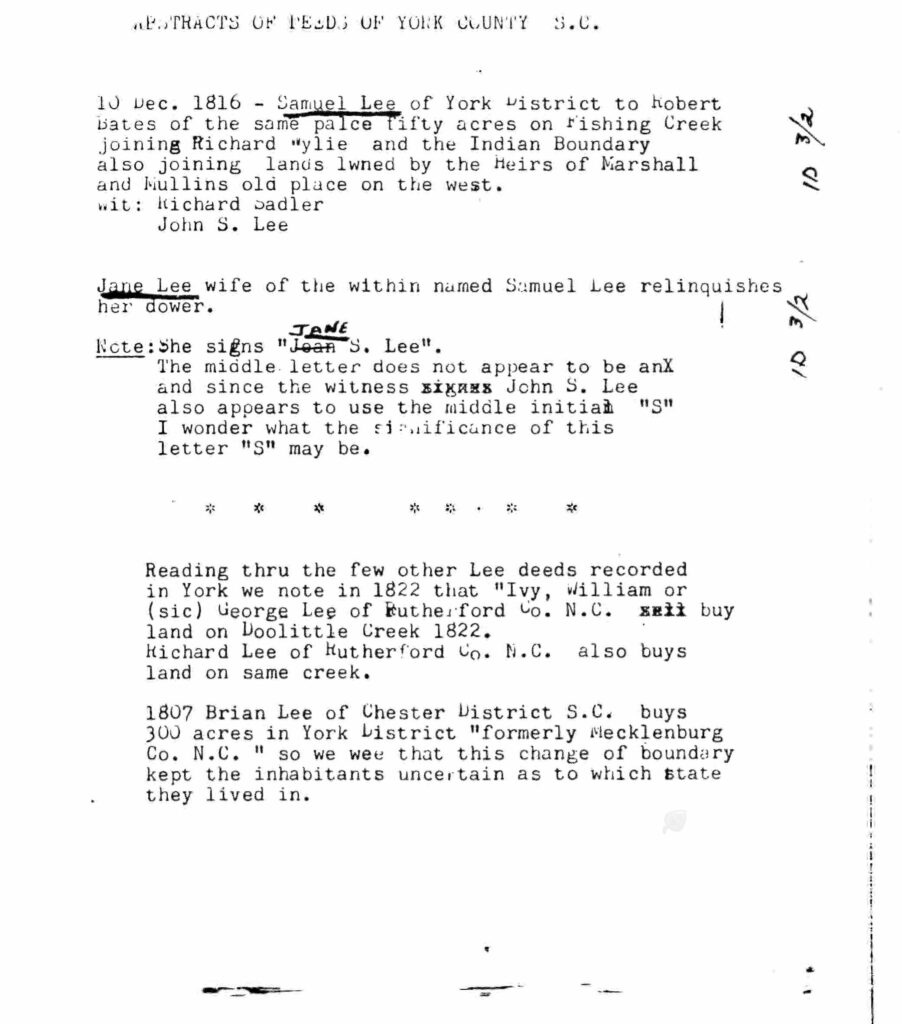
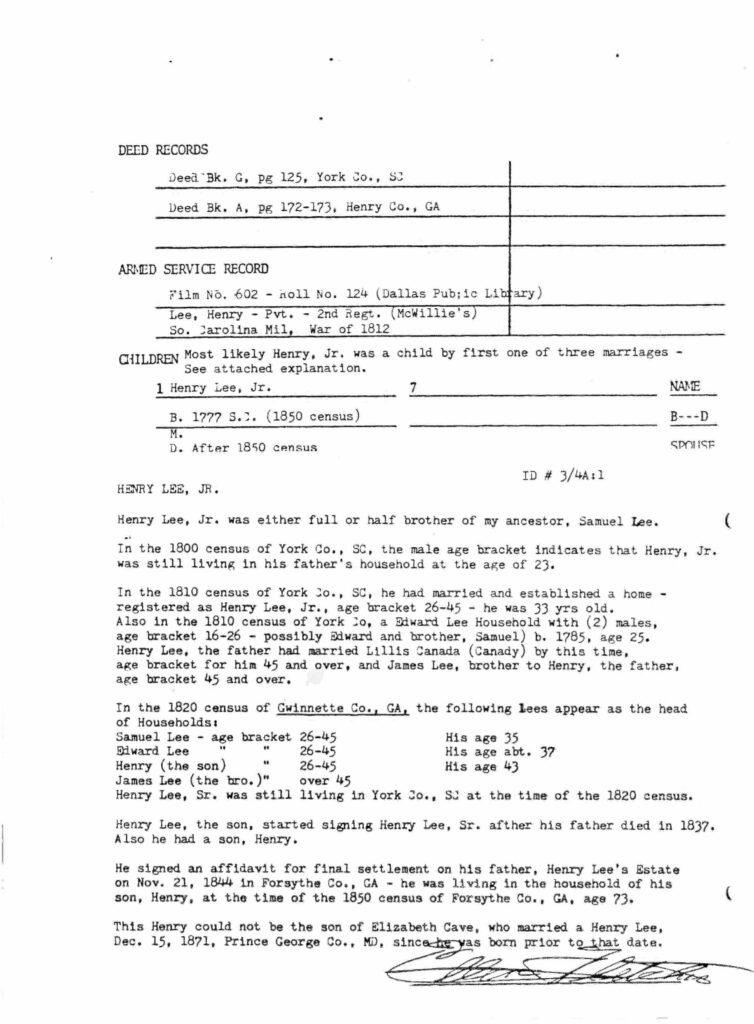
-
Assessing Sam Lee’s family legacy & local war weariness.
Samuel Lee (1785–1871) was a prominent farmer and mill owner in Henry County, Georgia, whose legacy is inextricably linked to the “militantly Unionist” undercurrents that persisted in the Georgia Piedmont during the secession crisis. A man of Scotch descent, Lee operated Lee’s Mill—which included both a flour and lumber mill—and held significant land holdings near Stockbridge. His status as a dedicated Unionist is formally preserved through his post-war Civil War Claim (Case File #5766), a record typically filed by Southern loyalists who maintained their allegiance to the United States throughout the conflict.
While Lee was not a delegate to the state’s Secession Convention, he was a member of a community that was deeply fractured over the decision to leave the Union. In the popular election of January 2, 1861, which selected delegates to decide the state’s fate, Henry County voters largely favored a cooperationist philosophy, which sought to avoid immediate, unilateral secession in favor of continued deliberation within the Union. This sentiment was so strong in the county that its delegation to Milledgeville was initially two-thirds opposed to immediate secession, comprised of Francis Epps Manson, E. B. Arnold, and James H. Low.
Samuel Lee’s public stance of openly preaching against secession to his neighbors aligned him with the regional dissent common among the “Plain Folk” of Middle Georgia. These residents often resisted the radical fervor of the coastal planter elite, viewing the revolutionary movement as a threat to the stability of their family households and local economies. Lee’s personal convictions reflected the broader Piedmont Dissent, where Unionism was not a “binary choice” but a sophisticated debate over the timing and legal nature of the American compact.
The political representation of Lee’s home county in the Georgia Secession Convention of 1861 ultimately validated his dissenting views:
- In the critical final vote on January 19, 1861, two of the three Henry County delegates—Francis E. Manson and E. B. Arnold—remained steadfast in their opposition, casting their votes against the Ordinance of Secession.
- They were part of a minority of 89 delegates who refused to endorse the immediate dissolution of the Union, representing a significant portion of the Georgia electorate whose “No” votes were courageous acts of dissent under extreme social and psychological pressure.
Samuel Lee’s grave at Noah’s Ark Methodist Church Cemetery in Henry County serves as a final testament to a man who, like his neighbors Manson and Arnold, prioritized regional stability and constitutional loyalty over the radical tide of Confederate revolution.
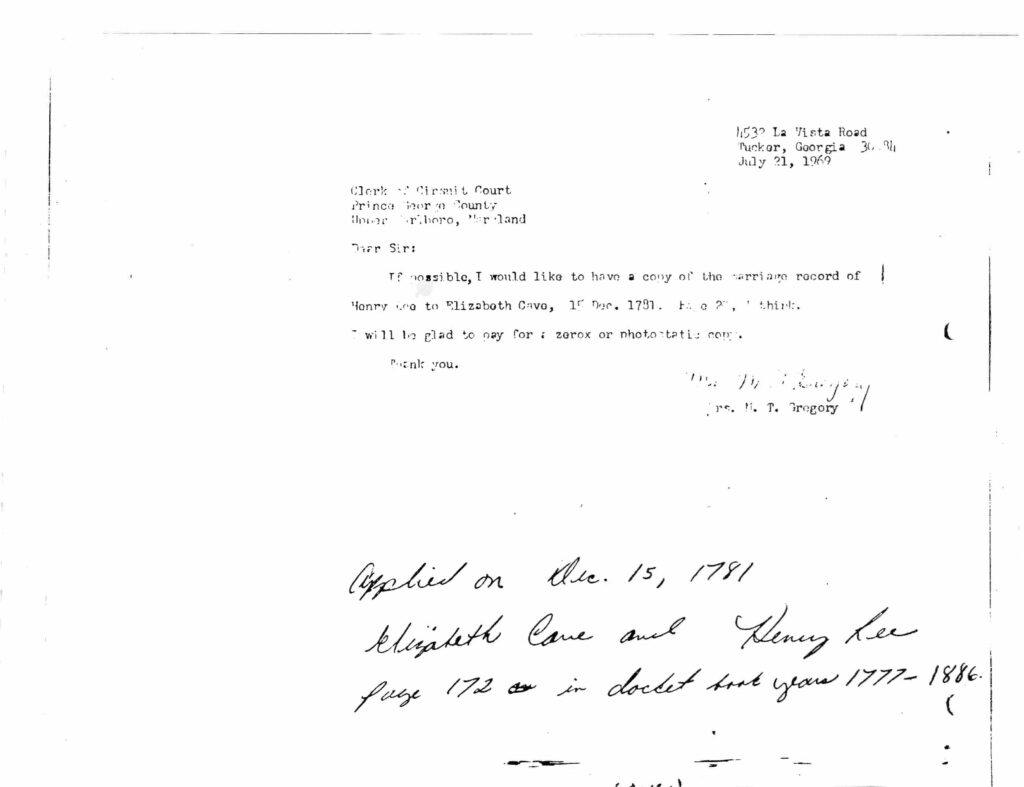
As to his son, Stockbridge Mayor Robert E. Lee 1927-1952. We’ve covered in previous stories (and now the city’s new report) how he electrified, gasified, irrigated and paved Stockbridge. Who the man was is evident in his family and the deep religious nature of this place. Mayor “Uncle Bob” Lee lived in unity next to Floyd Chapel Baptist Church. That’s the one the Honorable Mr. Thomas commemorated for Martin King Sr. in downtown. Not only that, but he enshrined on the Green Front Cafe memorial sign that during Carrie Mae’s ownership & operation. While under the Mayorship of Mayor RE Lee. People ate there together under the same roof.
Stockbridge as I was raised was a place of fellowship. That sentiment has seemed to wane in the recent years. It’s my fervent belief that to change the name of Lee St. will damage the legacy of what makes Georgia and Stockbridge a great place to be. By renaming the name of Lee St. to any other name we damage the legacy that made this grow to begin with.- Footnotes:
- Georgia Secession Convention of 1861, https://www.georgiaencyclopedia.org/articles/government-politics/georgia-secession-convention-of-1861/
- The Civil War and Reconstruction in Georgia, Part 1 – Brambleman, https://brambleman.com/the-civil-war-and-reconstruction-in-georgia-part-1/
- Republic of Georgia. Ordinance of secession, passed Jan’ry 19, 1861. with the names – Loc, https://tile.loc.gov/storage-services/service/rbc/rbpe/rbpe01/rbpe014/01402600/01402600.pdf
- Journal of the Public and Secret Proceedings of the Convention of the People of Georgia, Held in Milledgeville and Savannah in 1861, Together with the Ordinances Adopted – DocSouth, https://docsouth.unc.edu/imls/georgia/georgia.html
- Our Good and Faithful Servant: James Moore Wayne and Georgia Unionism – SciSpace, https://scispace.com/pdf/our-good-and-faithful-servant-james-moore-wayne-and-georgia-4gi0nmxikq.pdf
- Secession – New Georgia Encyclopedia, https://www.georgiaencyclopedia.org/articles/history-archaeology/secession/Causes of the War – GPB GA Studies, https://georgiastudies.gpb.org/units/unit-5/chapter-13/section-1
- The 11th Day of January, 1861 – LOUIS, https://louis.uah.edu/cgi/viewcontent.cgi?article=1323&context=huntsville-historical-review
- Baptists and the American Civil War: January 19, 1861, https://civilwarbaptists.com/1861-january-19/
- South Western Baptist. – Samford University Library, https://library.samford.edu/digitallibrary/tab/1861/1861082901rc.pdf
- List of signers of the Georgia Ordinance of Secession – Wikipedia, https://en.wikipedia.org/wiki/List_of_signers_of_the_Georgia_Ordinance_of_Secession
- The Civil War: Here at Home | City of Ringgold, GA, https://www.cityofringgoldga.gov/our-past/civil-war-here-home
- Georgia’s Secession Convention, https://www.georgiahistory.com/ghmi_marker_updated/georgias-secession-convention/
- Georgia in the American Civil War – Wikipedia, https://en.wikipedia.org/wiki/Georgia_in_the_American_Civil_War
- Tennessee secession election returns from Henry County – Education Outreach, https://teva.contentdm.oclc.org/digital/collection/p15138coll18/id/2355/
-
Dispelling Duvall Drive & Rock Quarry Extension Rumors
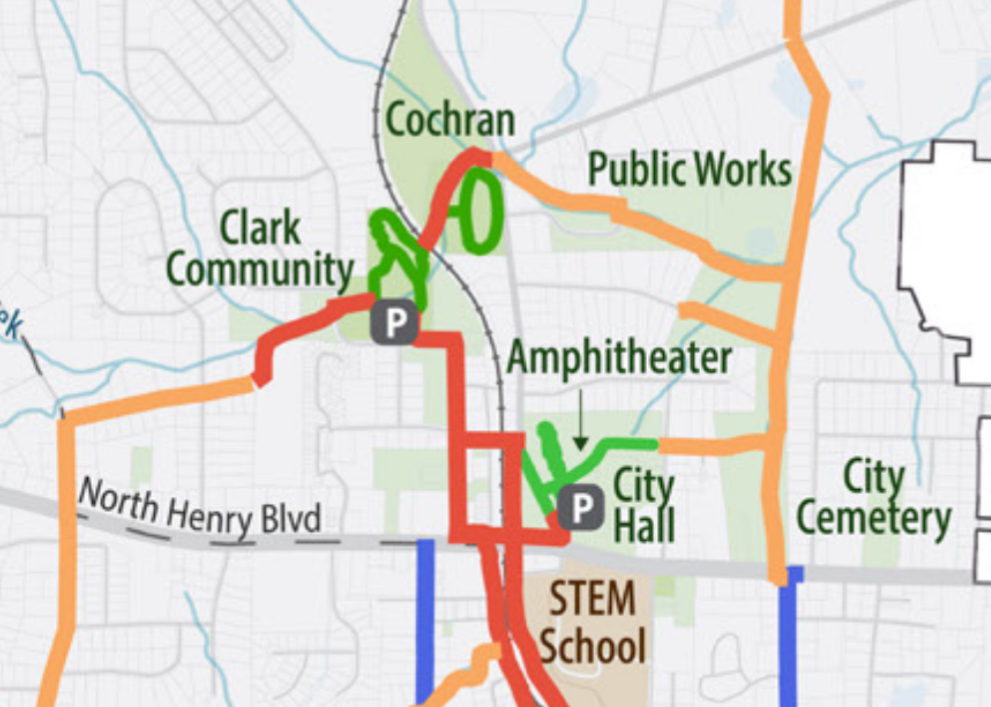
When I made neighbors aware of the potential of the Rock Quarry Road extension being connected to Duvall Drive. The Henry Herald had this to say: “Public attention during the meeting centered on the proposed Rock Quarry Road Extension after residents from the Duvall Drive area reported receiving what they described as misleading information about the project’s potential route.” This was in response to me distributing a printed map of the second route thru Duvall and a note that read, “this issue tonight may effect you.”Let’s examine who is misleading whom. The City of Stockbridge Trails Plan shows Duvall Dr. as part of the trail on February 25, 2025
Stockbridge Trail Plan Map as presented February 25, 2025 Starting with the extra cost of the first option that crosses the watershed thus connecting to Old Conyers. Ending on the second option, stating the Duvall Dr. route “screams East Atlanta to me.” On August 26th, 2025 Falcon Design outlined the following in concert with Mayor Ford.
212 Price
00:12:11,280 –> 00:12:13,900
And then the bridge option will add 10 million to that.213
00:12:13,900 –> 00:12:16,300
I mean, it’s just, you know, it is a lot.214
00:12:16,300 –> 00:12:17,300
Yeah.215 Alexander
00:12:17,300 –> 00:12:19,360
I mean, that’s our whole budget for the year.216
00:12:19,360 –> 00:12:24,700
So, again, it would take T-SPLOST or regular SPLOST a significant amount.221 Mayor Ford
00:12:31,920 –> 00:12:42,660
I think the ultimate goal, one ultimate goal of this is to have some type of road network to connect us to the hospital, per se,222
00:12:42,740 –> 00:12:45,800
to have some type of relief on Rock Quarry as you get to the hospital.223
00:12:45,800 –> 00:12:49,480
And so, my thought process is that what would make better sense?224
00:12:49,560 –> 00:12:54,620
Are people going to come off of East Atlanta or are they going to come off more of Old Conyers in reference to this?225
00:12:54,700 –> 00:12:59,300
I mean, it’s a fruitful thought because I’m thinking along those lines, that’s one of the reasons why we want to do this.226
00:12:59,540 –> 00:13:02,840
We have a major hospital and it rose to the expanded.227
00:13:03,120 –> 00:13:06,300
So, where would people be more or less connected to out of that?228 Price
00:13:07,980 –> 00:13:10,020
It screams East Atlanta to me.“It screams East Atlanta [through Duvall Drive] to me.” Adam Price of Falcon Design said. In the same meeting they discuss the route to Old Conyers will cost $10 million more. Then they came here and told you that Duvall Drive was never considered as an option. Even though we have a map of Duvall as an option, here and in the trail plan, and in their own words. They came here February 24 2026 and denied “it screams East Atlanta” and the discussion of added cost. Then trashed me and “misquoted” my neighbors in the local “real” newspaper.
00:05:50,540 –> 00:05:53,780
As has been stated before, that has not –78
00:05:53,780 –> 00:05:57,180
that has never been a preferred route or a route.79
00:05:57,300 –> 00:06:01,320
At some point, as we do these concepts, Mr. Price and Mr. Ryan,80
00:06:01,360 –> 00:06:06,020
every option is presented when you’re talking about a project81
00:06:06,020 –> 00:06:10,840
that might be 15 or 20 years from here, but when that was presented to the council,82
00:06:10,960 –> 00:06:15,300
the council was like, no, we didn’t want to do that, and that was taken off the table.83
00:06:15,500 –> 00:06:18,780
So everybody here can rest assured that that was not the plan, correct?84
00:06:19,700 –> 00:06:20,740
Yes, sir, that’s correct.The timestamps apply to the relative place in the work session discussion. The full transcripts and proposed route are below. Who reads the Henry Herald anyway? Yet again I bid the editor of Neighbor Papers, Alice Queen, “Thou call’dst me dog before thou hadst a cause, But since I am a dog, beware my fangs.”
And, finally. 50 minutes of both discussions in video.
-

Stockbridge Public Works & Water
I called them 18 hours ago about blinking street lights. I requested the street sweeper go down Bryant. They’re already done with the street sweeper. I believe the lights will be changed quickly. The sidewalk feels much less slippery after they hit is with the brush a few times.
Thanks, Public Works. Listen…
Next time, y’all can take your time. This site has never had a problem with public works. If the city is telling you, “hurry, ITS THAT GUY!” you can freely ignore them and schedule as you usually would. We’re not tyrants or trying to skip the line.