Update as of 10-15-2025 is Henry Herald has decided to participate in the willful ignorance pervading the city at large, yet again. The Herald quotes, “We’ve heard different public comments and it’s political season — it’s election time,” [Stockbridge City Council Candidate Gantt] added. “And even the statements tonight were untrue and I don’t know where some of it came from.”
She says quite alot. Indeed, you do know where it came from.
Many others independently came to my conclusions long before I started publishing, as I should have done 5 years ago. You can read the Henry Herald’s attempt to keep up with me by publishing pure bullshit, again, here in an archive.The author is some kid who’s published ~20 press releases from the police as a school project. That’s cute.
To be crystal clear, and I can’t believe I have to stoop this low. “Paid off” means you would have a sound booth. “Paid off” does not mean you owe someone $400,000.
The City of Stockbridge lies. That’s the only truth we can prove so far. Perhaps start clearing it up by telling us why Harold Young paid his own corporation, Macon it Better, LLC an extra $15,000 on top of his lucrative $180,000 per year salary.
A more apt but still flawed comparison to reality.
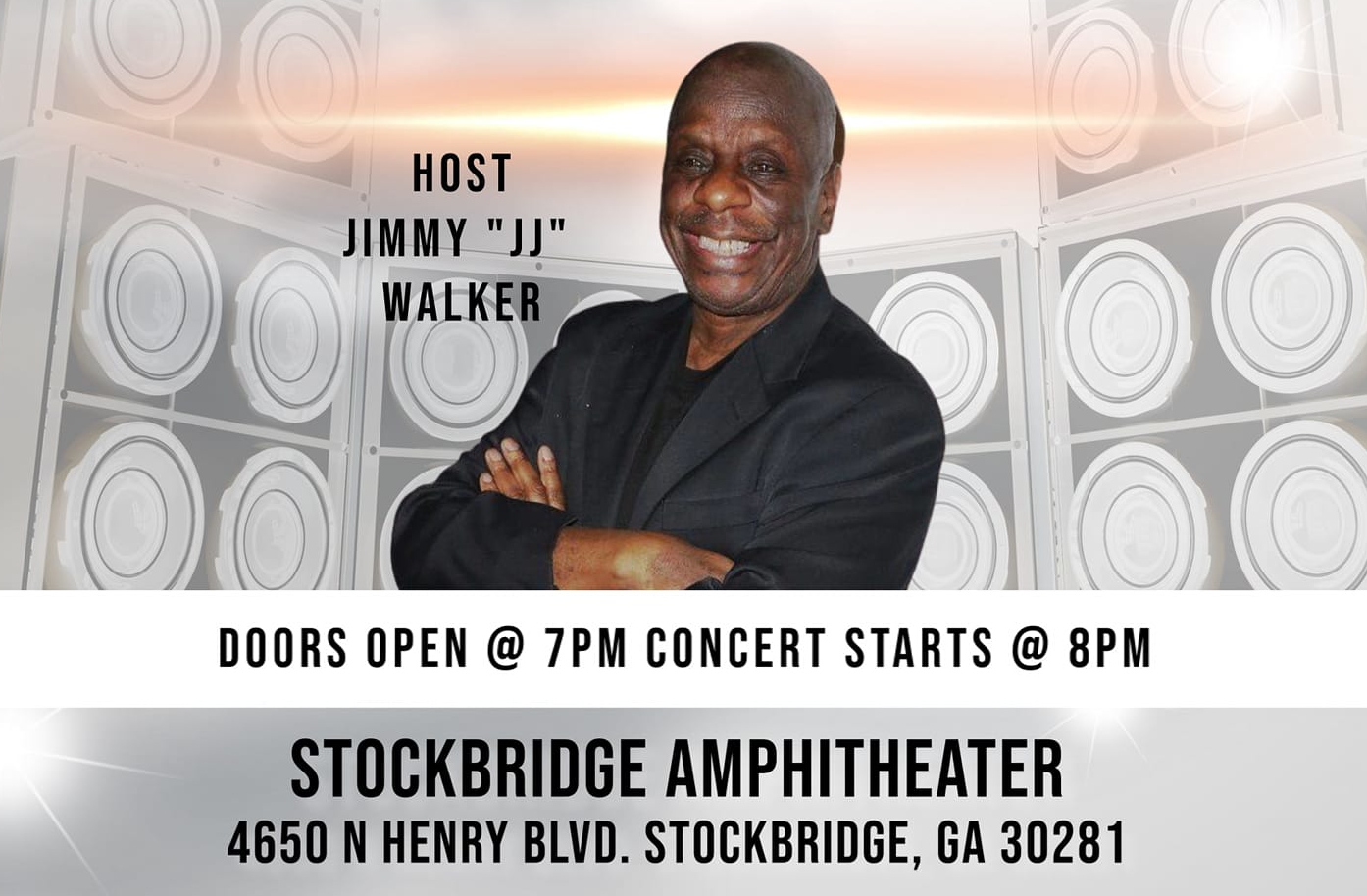
Answering LaKeisha Gantt’s latest notion that, “Stockbridge isn’t Mayberry.” Yes. We know that already. We remember JJ Walker himself being on the amphitheater stage, because we remember paying him to be there.
I’ve been here since 1982 or so. Stockbridge wasn’t Mayberry back then either. I support the new school construction. I support building out the downtown. The truth is the city stood in the way of business downtown since 2004 with the Meeks eminent domain case. A city which, when black people came to power, continued right on with the same exact plans as the last group of people. If downtown is Mayberry, this council, and the last, and the last for 20 years have caused downtown to look tired and dated.
Neither J.J. Walker nor Sheriff Andy ever mentioned eminent domain, a de-annexation like Eagle’s Landing, a murder in the Mayor’s neighborhood, a serial killer at the Kroger, a spree killer in Hampton or a Sheriff going to prison the next county over. So, thank you. We know it’s not Mayberry or Good Times in the city of Stockbridge. It’s been a far sight worse than any of the old tropes from these boobtube towns of yesterday. The council moved on from Old Crackers, but the new ones are just a bunch of Jive Turkeys, ya’ dig…
(“boobtube” means TV, Gen Z, if you’re reading this.)
Dimension
Mayberry – The Andy Griffith Show (1960‑67)
Good Times – The Chicago Housing Project (1974‑79)
Geographic & Visual Setting
• A tiny, fictional town in the foothills of North Carolina. • Picturesque Main Street, a one‑room jail, a general store, a small schoolhouse and a church. • The visual palette is warm, pastel‑toned, almost story‑book like; everything feels “within walking distance.”
• A densely packed public housing project on the South Side of Chicago. • Brick walk‑ups, narrow alleys, concrete playgrounds, and an omnipresent city skyline in the background. • The color scheme is more muted, gritty, with occasional bursts of bright clothing that signal personal style amid a drab environment.
Population & Demographics
• Predominantly white, middle‑class, multigenerational families. • A stable, relatively homogenous citizenry where everybody knows each other’s name (and sometimes their business).
• Predominantly African‑American working‑class families. • Residents are a mix of single parents, extended kin networks and close friends who form a surrogate “family.”
Economic Base
• Agriculture, small‑scale local businesses (general store, barber shop), modest tourism (“Mayberry R.F.D.”). • Unemployment is rarely mentioned; most characters have steady, if modest, jobs.
• Limited formal employment opportunities. Many adult characters work low‑wage service or factory jobs, or are unemployed and rely on welfare. • The series foregrounds the struggle to make ends meet (e.g., “The Check” episode).
Social Structure & Governance
• A single sheriff (Andy Taylor) who doubles as de facto mayor and moral compass. • Town council meetings are informal; community decisions often happen over a cup of coffee at the diner.
• The housing authority, a building manager, and a few “community leaders” like James Evans (the father). • Decisions about rent, repairs, or community events are negotiated in the living‑room or at church gatherings.
Core Values & Moral Themes
• Emphasis on “good neighborliness,” personal responsibility, respect for authority, and a gentle sense of humor. • Episodes often end with a moral lesson delivered by Andy or Aunt Bee (e.g., honesty, humility).
• Emphasis on resilience, family solidarity, self‑respect, and confronting systemic injustice. • Moral lessons revolve around dignity in the face of poverty, standing up to racism, and maintaining hope despite adversity.
Family Dynamics
• The Taylor family is a nuclear unit: widowed sheriff Andy, teenage son Opie, occasional visits from Aunt Bee. • Extended kin appear occasionally (the barbershop’s “Uncle” characters).
• The Evans household is an extended family: James (father), Florida (mother), their three children, plus frequent help from relatives and neighbors (e.g., Willona Woods, J.J.). • The show frequently uses the “family as community” motif—neighbors step in as surrogate grandparents or aunts/uncles.
Cultural Representation
• Southern, small‑town American culture: church potlucks, county fairs, high school football, bluegrass music. • Stereotypical but affectionate portrayal of rural life; rarely addresses race relations directly (the town is almost exclusively white).
• Urban African‑American culture in the 1970s: soul and funk music, church gospel choirs, “Saturday night live” social gatherings, barbershop talk. • The series confronts racism, housing discrimination, police profiling, and class inequities head‑on.
Conflict Sources
• Minor misunderstandings, small crimes (e.g., a lost horse), teenage mischief, occasional “outsider” troublemakers who need to be re‑integrated into the community.
• Systemic poverty, landlord/authority abuse, job loss, racial discrimination, health crises (e.g., asthma in crowded apartments).
Narrative Tone
• Light‑hearted, episodic, “feel‑good” with a gentle comedic undercurrent; the world is largely safe and solvable within 30 minutes.
• More dramatic, often bittersweet; humor is used as a coping mechanism but the stakes (eviction, unemployment) feel more urgent.
Legacy & Cultural Impact
• Became an archetype for the “quaint small‑town America” mythos in TV and film. • Influenced later shows about close‑knit communities (e.g., Northern Exposure, Gilmore Girls).
• One of the first mainstream sitcoms to focus on a Black working‑class family, paving the way for The Jeffersons, Sanford & Son, and later urban comedies like The Fresh Prince of Bel‑Air. • Remains a touchstone in discussions about representation and socioeconomic realism on television.
Setting as Character
Mayberry: The town itself feels like an extended character—its quiet streets, the familiar sound of crickets at night, and its “one‑stop shop” atmosphere create a sense that life moves slowly enough for people to know each other’s histories. The physical world is tidy; problems are localized (a runaway horse, a missing child) and can be resolved by community members pulling together.
Good Times’ Housing Project: The built environment is more oppressive—brick facades, narrow hallways, limited green space. Here the setting reinforces the characters’ struggle: cramped apartments mean that privacy is scarce and every decision (e.g., paying rent) carries city‑wide repercussions. The “city” is less a charming backdrop than an ever‑present pressure cooker that shapes dialogue, pacing, and plot.
Both series celebrate community, but they do so from opposite ends of the socioeconomic spectrum:
Aspect
Mayberry
Good Times
Leadership
Sheriff Andy—an elected authority figure who also mentors Opie and the townsfolk.
James Evans—a working‑class father who acts as moral leader, even though he holds no official power.
Conflict Resolution
Through informal town meetings, a quick chat at the diner, or a direct intervention by Andy.
By family council (the living room), church gatherings, and sometimes collective action (e.g., protesting rent hikes).
Social Safety Net
Implicit: neighbors lend sugar, the sheriff helps retrieve lost livestock; the “safety net” is built on personal reputation.
Explicit: extended kinship ties, community solidarity, occasional charitable outreach (church drives), but the safety net is fragile and often stretched thin.
Mayberry and the cityscape behind Good Times occupy opposite ends of the American geographic and cultural spectrum, yet they share a foundational purpose: to illustrate how ordinary people—through family, friendship, humor, and shared values—confront life’s challenges. In comparing these two fictional locales we see how television has used setting not merely as scenery but as a moral laboratory—one that can be as tranquil as a Southern crossroads or as urgent as a cramped Chicago high‑rise. Both worlds continue to inform our understanding of community, resilience, and the American narrative of “home,” albeit from dramatically different perspectives.
Stockbridge is a real city. With a real $32,900,000 budget amendment. And a real police station lease from a felon who crashed a bank. I really went to jail. Then I really sued the Eagle’s Landing cityhood people for years. I’m really downtown. The councilperson I’m answering lives 6 miles from downtown, 1/4 mile from Clayton County. The amphitheater tax bill would have been a classic episode of Good Times though.
Good Times: The Stage Before Stability
(James folds his newspaper sharply and stands up.)
James: Alright now, hold on just a minute! Let me tell you somethin’. This whole idea… this whole notion of buildin’ a party palace while we’re gettin’ robbed blind with these taxes is just plain criminal!
(He paces, getting increasingly agitated.)
James: You talk about community spirit? Community spirit ain’t built on singin’ and dancin’! It’s built on lookin’ out for each other. It’s built on makin’ sure every child has a warm coat in the winter! It’s built on knowin’ you got a roof over your head that doesn’t leak when it rains! And it certainly ain’t built on pilfering hard-earned money from folks who can barely make ends meet!
Penny: But Mr. Quizzoner…
James: (Interrupting) Mr. Quizzoner is sittin’ in his nice, warm office with hot water and good schools for his kids while we out here strugglin’! He ain’t gotta worry about a busted pipe or a pothole swallowin’ his car! He can afford to dream about amphitheaters because he already got the basics covered! And now he wants to take even MORE from us?!
Florida: That man needs to walk in our shoes, James. Just for one day.
James: Exactly! We ain’t askin’ for luxury, we’re askin’ for livability! We’re askin’ for a little bit of dignity! You can’t have a good time when you worried about where your next meal is comin’ from! You can’t enjoy a concert when you know your child’s school is fallin’ apart and you got an extra bill to pay because of it!
Michael: Dad’s right. It doesn’t make sense to party before paying the rent check, especially when they’re raising the rent just to have the party!
J.J.: (Looking downcast) I guess… it just seemed like a good idea. A way to bring some joy to things. But not if it means we’re all gonna be broke.
James: Joy is important, son. But real joy comes from security. From knowin’ you got somethin’ solid under your feet. We gotta demand they fix the schools, the roads, and get that hot water workin’ before they even think about layin’ a single brick for this amphitheater! And we gotta fight this tax bill tooth and nail! They can’t just take our money like that!
Ms. Tyler: You tell ‘em, James! We need to take this petition straight to City Hall!
Mr. Henderson: I’m with you all the way. Let them know we ain’t gonna settle for crumbs when we deserve a whole loaf! And let them know we’re lookin’ into where that money is really goin’!
(Penny looks at her neighbors, then at her family. She nods firmly.)
Penny: You’re right. We need to focus on what matters most. Let’s get this petition signed and show Mr. Quizzoner that the community deserves better than just a stage…and that we won’t be taken advantage of!
Florida: (Smiling) That’s my girl! Now, let’s get back to workin’. And maybe we can convince Old Man Withers to join us at City Hall. He got plenty of experience complainin’ about cold water and outrageous bills!
(The scene ends with the Evans family and their neighbors rallying together, determined to fight for their needs before indulging in any entertainment, fueled by outrage over the unfair tax bill.)
Hi y’all. I’m going to break down the video of the study. Because it got back to me through the grapevine a candidate was braggin. Something along the lines of, ‘I got you the noise study.’ Of course, that’s not a direct quote because I’m not on social media. Grapevine means what it means still, yes?
This was from a 2023 presentation with sound engineer Shimby McCreary about the noise study. As well as the architect that built the open-back, no curtain, no sound booth amphitheater, Heather Hubbel. Their entire presentation and discussion was ~12 minutes long.
The end result of the noise study was that the loudest measurement does align with my home. His reading was 65 dB(A). (there’s a footnote to this reading from me below). The solution was to buy a sound curtain. After the presentation of 6 minutes, and lecture from council for about another 6. We then hear the city attorney say, “this is a discussion for executive session.”
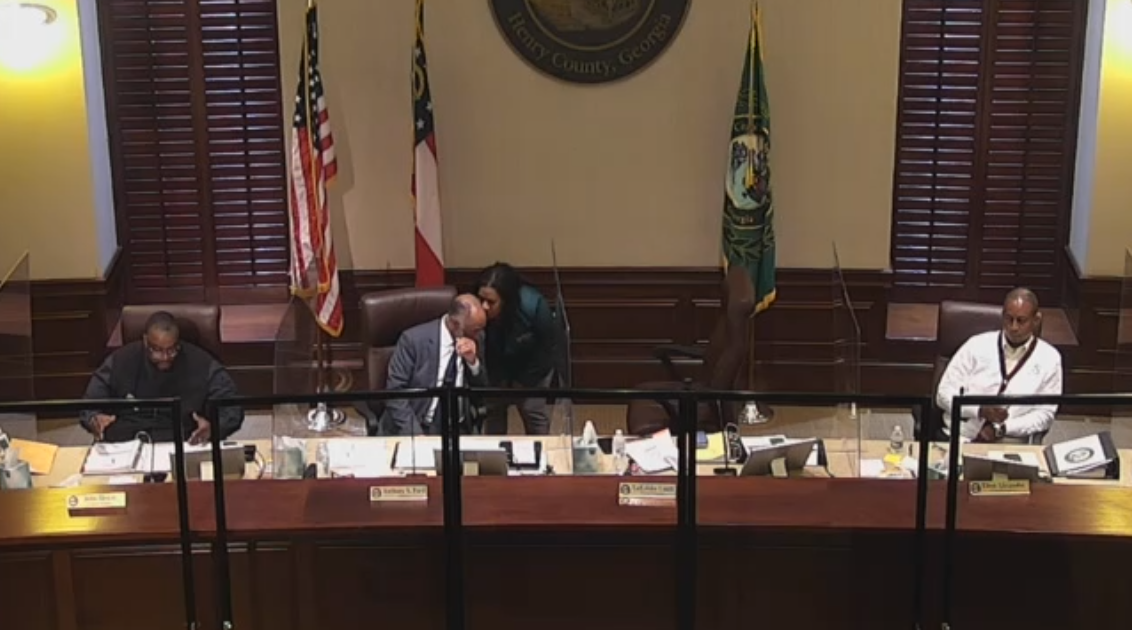
But then, no one calls executive session. What you’ll see is Gantt rise and whisper in the Mayor’s ear at 9 minute and 11 seconds into the presentation. Then, 2 minutes later, she walks to the right of the Dais where the city attorney sits and presumably has another whisper, in a different ear. After she sits down they simply remove the item from the agenda and never call executive session. Then Fred Gardiner comes up to give the TAD presentation.
Now. As to Mr. Washington’s opinion that this was a matter for executive session. A sound curtain isn’t litigation, personnel, real estate or cybersecurity. And furthermore an executive session was never called on this subject. But four minutes into the city manager’s unrelated matter of a TAD presentation, 16 minutes after the noise mitigation presentation began, we see the city attorney appear at the rear door and motion. Then Shimby McCreary and Heather Hubbel follow Quinton out of the room. Then they all turn to their left, away from the elevators and stairs. I assume they had a discussion in the lobby. Or perhaps the door to the right of council chamber leading to the ante-room.
So, my question are as follows. Why the bad legal opinion for executive session on an issue not beholden to executive session rules? Why after that bad opinion was the recommended executive session not motioned for? Well, I suppose to know that, we would have to know what Ms. Gantt whispered into the Mayor’s ear precisely at 9 minutes and 11 seconds into this video. Then we’d have to know what she said, and who she said it to between 11:56 to about 12:50, presumably to The Quizzoner, Mr. Washington, Esq.
I see lawyers working. But they ain’t working for me. Ya’ feel me?
A quick note for the nerds. When the city or Shimby (Acustica) measure sound they measure it in dB(A). That means it’s an A Weighted scale. There are two scales on most meters. A & C. On an A weighted scale you would drop low frequency readings. This is due to a commonly used of a family of curves defined in the International standard IEC 61672:2003. But moreover, it’s because the law says to use the A Weighted scale.
So what’s the difference? “A Weighted” dB measurements drop the low frequency component. As anyone with sense knows. Stockbridge Amphitheater frequency content contains a great deal of low frequency components. This isn’t just a Stockbridge problem. It’s a symptom of corporations essentially writing the law. The ultimate result is, while Shimby measured 72 dB(A) at my property line, I can measure 85dB(C) at my backdoor. Moreover, like low frequency whale song, these deep tones travel very far. Reports we have say ~2 miles away. Which is the same sort of complaints you’ll hear from Red Rocks, Mountain View or any other amphitheater.
As to the low reading of 65 dB(A). All I can tell you is what my measurement says. You’re welcome to come over here and measure it. Consider the fact the city hired Mr. McCreary, and this isn’t an independent investigation. Come, measure it. For I have no reason to lie to you. I’m running -$200 ARR.
Short update on 10-7-2025; there are two budget amendments. One has been done already. 2022 & 2023 were amended into 2024 for $32,900,000. At the end this current outline we begin to approach amending the 2025 budget for a $1,600,000 amphitheater shortfall for 2025. Mr. Milazi discusses the $1 million in revenues vs. $2.6 million amphitheater budget in the video below. That video is from the September 30th 2025 financial update. This amendment is wholly separate from the June-July budget amending the 2024 budget. The three sources used here are the two late filed fec.gov audits and a transcript of Milazi’s speech to council.
Based on the sources provided, the City of Stockbridge has experienced a series of significant accounting mistakes, a pattern of filing audits late, budget shortfalls, and a lack of transparency over several years. These issues are detailed in independent audit reports and were discussed at length by city council members.
Pattern of Late Audits and Recurring Accounting Errors
The city has demonstrated a pattern of filing its annual financial reports late and failing to correct significant accounting deficiencies year after year.
Late Filings: State law requires the city to publish its audited financial statements within six months of the end of the fiscal year.
The audit for the fiscal year ending December 31, 2022, was due by June 30, 2023, but the auditor’s report was not issued until November 13, 2023.
Similarly, the audit for the fiscal year ending December 31, 2023, was due by June 30, 2024, but was not issued until July 10, 2024.
Recurring Material Weaknesses: Independent audits for both 2022 and 2023 identified several “material weaknesses,” which are deficiencies in internal controls creating a reasonable possibility that a major financial misstatement will not be prevented or detected in a timely manner. Many of these were repeat findings from previous years, indicating a failure to implement corrective actions. Key recurring errors include:
Improper Capitalization of Assets: For both 2022 and 2023, the city failed to properly record millions of dollars in capital assets. In 2022, this included over $954,000 in governmental assets and over $1.5 million in Amphitheater construction and equipment costs. In 2023, another $2.25 million in governmental assets were improperly excluded. This was an unresolved finding from 2021 through 2023.
Improper Interfund Activity: The city repeatedly failed to correctly state transactions between its various funds. This required multi-million dollar adjustments to correct the books. Council discussions revealed this practice was used to conceal amphitheater expenses by moving them to an unrelated “citywide projects” fund without council approval. This was also an unresolved finding from 2021 through 2023.
Mismanagement of Receivables and Revenue: For at least three consecutive years (2021-2023), audits found the city did not properly adjust its receivable and revenue accounts, requiring numerous corrections.
Worsening Conditions in 2023: The 2023 audit identified four material weaknesses and a significant deficiency, an increase from the prior year. New issues included failures in managing prepaid assets and reporting accrued liabilities. The city also failed to comply with federal reporting requirements for a Public Safety (COPS) grant.
Budget Shortfalls and Lack of Control
The city has struggled with a severe lack of budgetary control, leading to large overspends and the use of unbudgeted funds.
Departmental Overspending: Numerous city departments had actual expenditures that exceeded their approved budgets.
In FY 2022, the Police Administration department spent $824,064 over budget, and City Events spent $429,790 over budget.
In FY 2023, multiple departments were again over budget, including Police ($351,030 over) and Municipal Court ($256,619 over).
Unbudgeted Expenditures: A significant issue was spending money for which no budget had been approved by the council.
The city’s finance director noted that a prior budget year had over $32 million in expenditures with no corresponding budgeted revenue.
T-SPLOST funds were being spent despite having a zero-dollar budget. The finance director stated that some funds with revenues were never brought before the council for budget approval.
ARPA funds were improperly co-mingled with the general fund, leading to an initial demand from the federal government for the city to return $2.2 million.
Lack of Transparency and Misleading Information
Council members have repeatedly stated that they were given inaccurate financial information and that their requests for accurate data were ignored or obstructed.
Inaccurate Financial Reports: The city’s finance director acknowledged that in the past, “two sets of reports were being made” and the inaccurate ones were provided to the council for decision-making, effectively misleading them. Council members received reports suggesting the city was breaking even or had a minor loss of $65,000, when in reality, spending was millions of dollars higher. One council member noted a report showed only $2.3 million in spending through August 2023, but the year-end total was actually $10 million.
Withholding Information and Open Records Issues: Several council members described a culture of non-transparency.
Councilwoman Yolanda Barber stated, and I witnessed her censure, as she was consistently “shut down” and “fought on every turn” when asking for financial data, to the point of having to hire her own attorney to submit a demand letter for information. She also stated it took her 10 months to receive the 2022 audit results.
Another council member highlighted that open records requests from the public were being redacted beyond standard practice at the direction of the legal department, without the full council’s knowledge.
The consensus among several council members was that despite all of them asking for financial information, the reports they received were erroneous and concealed the city’s true financial condition.
Based on the source from the September 30 Stockbridge City Council meeting, the city’s finance director, Mr. Malazi, provided a budget update covering January through the end of August 2024. The presentation was a summary, with more detailed departmental reports and a significant budget amendment planned for October.
Overall Financial Reporting Status
Catching Up: The finance department has caught up on bank reconciliations through the end of August 2024, allowing for the presentation of a credible financial report.
Past Misinformation: Mr. Malazi acknowledged that in the past, “two sets of reports that were being made” and the inaccurate ones were given to the council for decision-making, effectively misleading them. The current reports are intended to provide a more transparent view.
Upcoming Corrections: A budget amendment will be presented on October 13, 2024, to address numerous funds that had expenditures but no approved budget. This issue was previously highlighted when an audit noted over $32 million in expenditures without corresponding budgeted revenue.
General Fund Performance (January – August 2024)
Budget vs. Actual: The General Fund had a budgeted revenue of $29.2 million for the year. As of the end of August, the city had collected $14.2 million. Expenditures were also at approximately $14 million.
Delayed Major Revenues: Mr. Malazi noted that while revenues appear low, the largest revenue streams for the General Fund arrive late in the year. These include insurance premiums ($3.5 million expected in November), property tax ($7.4 million expected in December), and sales tax.
Issues with Unbudgeted Funds and Spending
A significant theme of the update was the ongoing effort to correct years of spending from funds that were never formally budgeted by the council.
T-SPLOST: The T-SPLOST fund had a zero-dollar budget for expenditures, yet money has been spent from it. A budget amendment will correct this by formally budgeting both the revenues already collected and the expenditures.
ARPA Funds: The American Rescue Plan Act (ARPA) fund was budgeted with zero revenue and has shown significant expenditures. This is because the funds were improperly “co-mingled into general fund” instead of being accounted for separately. The city must continue to fund ARPA-designated projects until the program ends in 2026. Mr. Malazi confirmed that the city was previously asked to return $2.2 million due to improper accounting but was able to resolve the issue by complying with federal requirements and did not have to return the money.
Other Funds: Other funds, like the Property and Evidence fund and the new Red Speed fund, also had revenues or expenditures that were not included in the original 2025 budget and will be corrected via the upcoming amendment.
Enterprise Fund Performance
The finance director expressed concern about the performance of the city’s enterprise funds.
Revenues Are Down: Revenues for all enterprise funds—Water, Sewer, Sanitation, and Storm Water—are down. The department plans to assess the reasons for this decline.
Conference Center: The Conference Center’s expenses are inflated because personnel costs for the City Events department (approximately $500,000) are currently budgeted under the Conference Center. This will be corrected to reflect the true cost of each department.
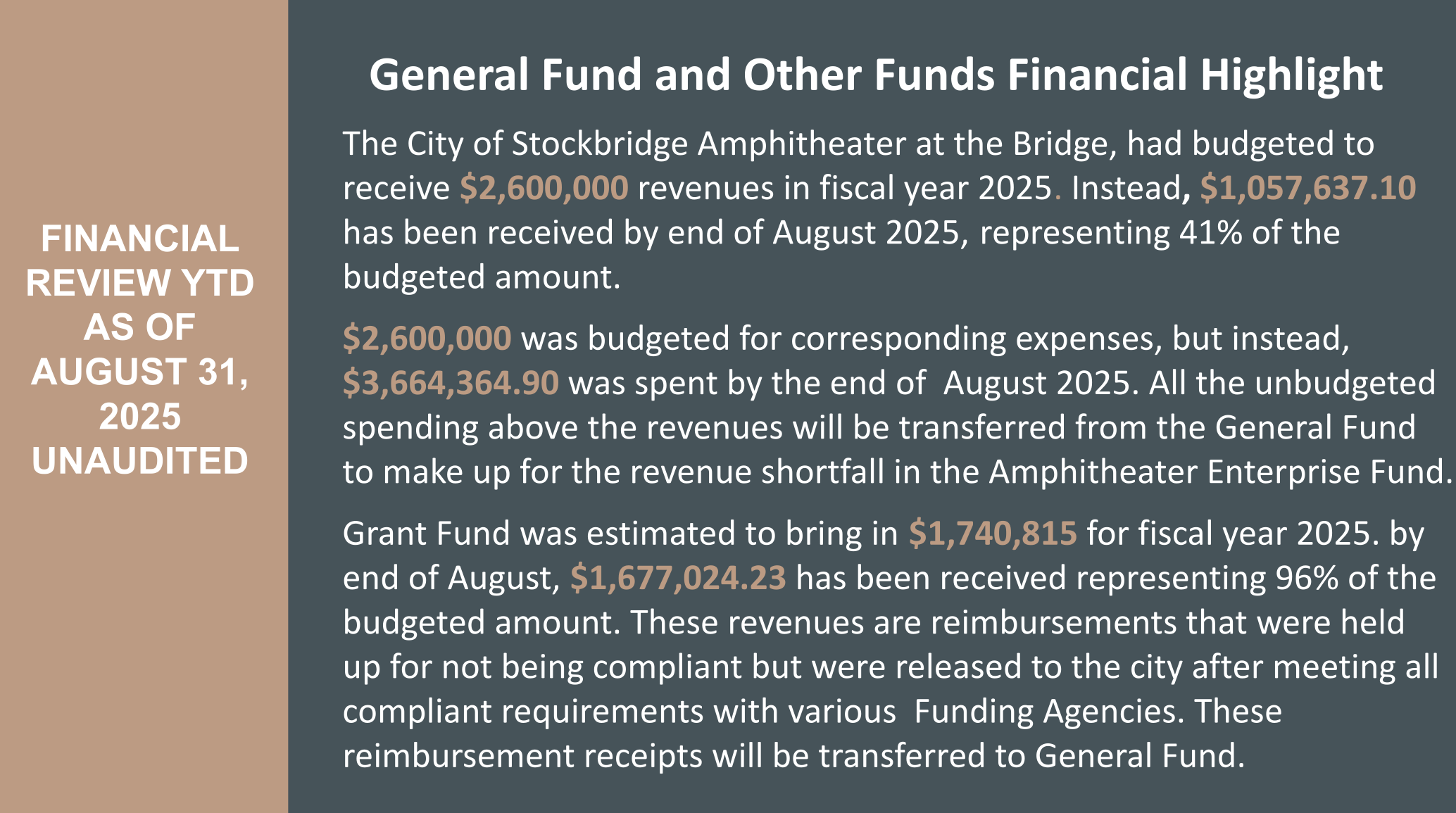
Amphitheater: The Amphitheater had a budgeted revenue of $2.6 million and had collected $1 million through August, with more concerts scheduled. The budget amendment will transfer money from the General Fund to “make up for the shortfalls in revenues”.
From the transcript of this September 30th, 2025 work session video:
233 00:11:49,020 –> 00:11:57,080 There were two sets of reports that were being made, and the reports that were being given
234 00:11:57,080 –> 00:12:00,080 to you to make wise decisions were not.
235 00:12:00,460 –> 00:12:03,420 So we misled you.
There must be an investigation into why two sets of books were kept, leading to a vastly over budget amphitheater, and how we’re going to claw back our money.
City of Stockbridge Financial Update: Amphitheater at the Bridge – Fiscal Year 2025 (As of August 31, 2025)
The Amphitheater at the Bridge is currently experiencing a significant revenue shortfall, necessitating an amendment to its budget. Below is a summary of the financial situation and proposed adjustments:
Revenue Shortfall: The amphitheater budgeted $2,600,000 in revenues for fiscal year 2025. However, actual revenues to date amount to $1,057,637.10, representing only 41% of the original budgeted amount.
Expenses Exceed Budget: While $2,600,000 was budgeted for expenses, actual expenditures have already reached $3,664,364.90 – exceeding the budget by $1,064,364.90.
Funding Adjustment: To address the shortfall, the difference between revenues and expenditures will be covered by a transfer from the General Fund. This transfer will be used to balance the Amphitheater Enterprise Fund and ensure the operation remains financially viable.
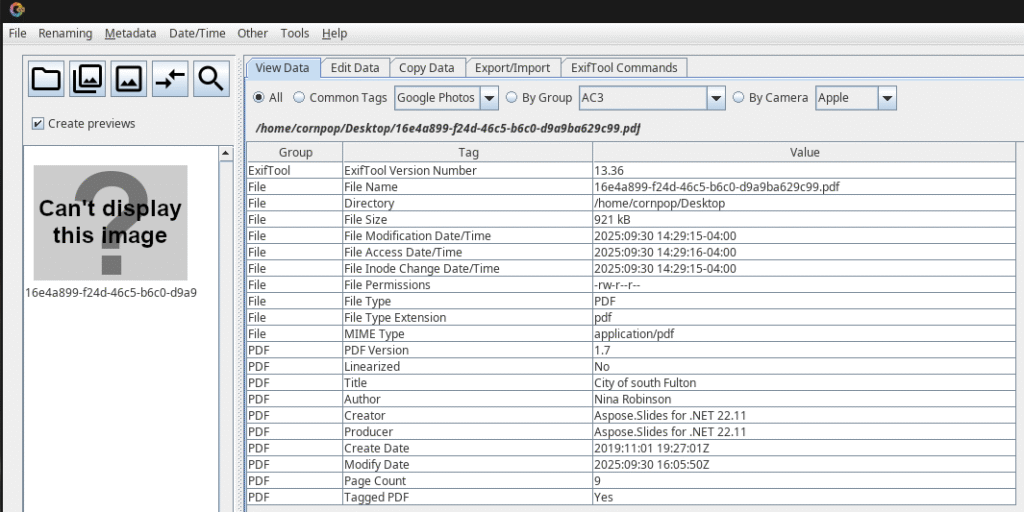
My more nerdy readers will again note the fact this document was authored in the City of South Fulton by Nina Robinson in September 2019. At this point I assume Mr. Milazi keeps a blank of this Power Point and edits in the new details per each presentation. So when the file is saved it preserves the original creator and date in the EXIF data. I’m not saying Ms. Robinson authored this document for the city currently.
Stockbridge Amphitheater, second verse same as the first.
The ink is barely dry on Harold Young’s termination letter, but the questions surrounding his business dealings are multiplying. A story that began with a financially troubled amphitheater in Stockbridge has now intertwined with a controversial charter school in Macon, revealing a cast of characters whose connections stretch into the corridors of state government. At the center of it all are two public-private ventures plagued by allegations of mismanagement and fraud, with Harold Young, Macon Tubman museum director and ex-Stockbridge Amphitheater GM. As well as Donie Hogan, owner of the Alexander Ballroom. Both Harold and Donie are involved in both “VyStar at the Bridge” Amphitheater and The Infinity Charter School.
The Stockbridge Amphitheater was meant to be a crown jewel, but it has become a financial millstone for taxpayers. Under the management of Harold Young, the venue’s budget spiraled out of control, exceeding its $2 million allocation for the 2022 & 2023 concert seasons to reach a staggering $8.1 million. This wasn’t a one-time issue; the amphitheater repeatedly went millions of dollars over budget for multiple years under Young’s tenure. The financial “mismanagement” became so severe that in July, the Stockbridge city council had to amend its budget by a total of $32.9 million to account for the amphitheater and voluminous other instances of financial malfeasance.
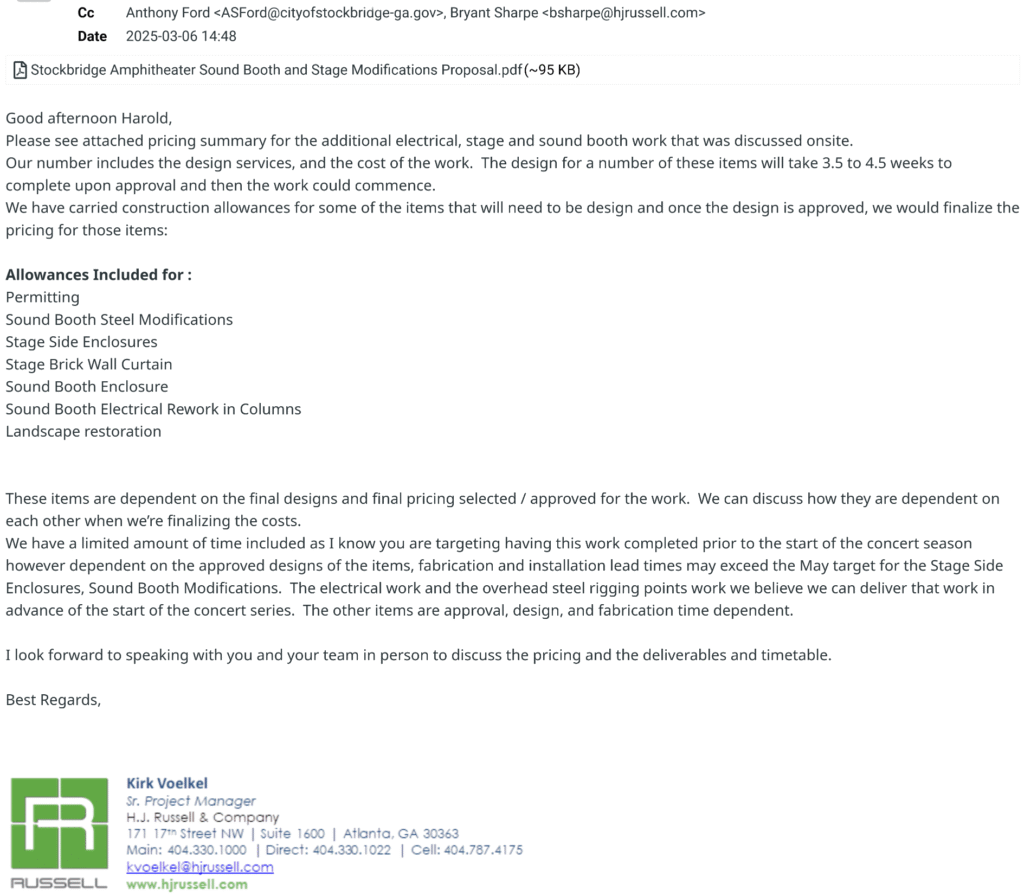
Beyond the budget overruns, serious questions have been raised about procurement practices. There was no competitive sealed bid process for vendors or naming rights at the amphitheater for any year since its opening in 2021. The facility itself was plagued with issues, including being built without a proper sound booth, forcing operations to be run from a tent for four years, which resulted in poor sound quality. So, they decided to try and sneak a $390,000 sound booth around the law. Which states public works construction contracts valued at $100K or more are subject to Chapter 91-36 of the Official Code of Georgia.
Young, who also serves as the executive director of Macon’s Tubman African American Museum, was terminated for breach of contract on June 16, 2025. He has since claimed his name was “slandered” and that he has hired an attorney to explore “legal remedies” for his dismissal.
The Infinity Academy: A Petition Marred by “Deeply Concerning” Allegations
While Young was managing the troubled amphitheater, his name and that of Donie Hogan, owner of the Alexander Ballroom, appeared on the governing board of a proposed charter school in Macon: The Infinity Academy. This venture, however, is now at the center of a scandal that Bibb County school board members have called “deeply concerning.”
The most glaring issue is an allegation of fraud. The school’s petition to the Bibb County School District included a notarized affidavit supposedly signed by its governing board chair, Pamela Burkhalter. Upon seeing the document, Burkhalter stated unequivocally, “That is not my signature. Period. I am stunned”. She claims she resigned from the board in May, long before the petition was being finalized, and never authorized anyone to sign on her behalf. The school’s founder, Christopher D. Holmes, claimed Burkhalter gave him permission to sign for her, an assertion she flatly denies. Mr. Holmes seems to be involved in many corporate entities according to Georgia Secretary of State. Too many to name.
The fraud allegation was just one of many problems. The Bibb County School District ultimately issued an official denial of the charter petition on August 1, 2025, citing a litany of “material deficiencies.” The entity was found to not be registered with the IRS as a nonprofit. Concerns were also raised about their financial planning; specifically, an unrealistic budget allocating only 20,000 for facility improvements estimated to cost between 4.7 and $5.7 million. The proposed building itself presented issues, appearing too small and lacking key facilities like a gym or cafeteria, in addition to significant safety concerns regarding entry points, student drop-off zones, and fire evacuation routes. Finally, the evaluation revealed a lack of clarity concerning governance structures alongside an inadequate staffing plan geared towards effectively serving students with ADA required accommodations.
The Players and Their Potential Connections
Christopher D. Holmes is the founder of the Infinity Academy. I think he’s Alpha Kappa Psi from hand signs he throws up in pictures. A teacher, academic coach, and K-12 curriculum coordinator for the Bibb County School District. In 2018, he took on a new role as a curriculum and instructional interventionist for the state’s Department of Juvenile Justice. He has also worked as a Research Assistant for the Georgia State Charter School Commission and runs his own education consulting firm.
Andy Welch is an attorney and former Republican member of the Georgia House of Representatives for District 110. A key part of his legislative work involved his role as a member, and former subcommittee chairman, of the House Juvenile Justice Committee. Andy also held a long standing position on the Georgia Juvenile Justice Board. He’s currently Locust Grove City Attorney, I’m sure, among many other positions.
The amphitheater was built in large part by Eagle Excavation. Who, during construction were represented by Mr. Welch’s law firm partner, Republican candidate for Attorney General of Georgia, Senator Strickland. Andy does business with the amphitheater as well. The local Tabernacle of Praise church is represented by Mr. Welch in corporate filings and made use of the amphitheater facilities for a show this year.
Professional overlap
Holmes is a state employee working within the Department of Juvenile Justice, a department that falls under the legislative purview of the former committee & juvenile justice board on which Welch served. While this doesn’t confirm a personal relationship, it establishes a direct professional connection where a state legislator & board member would (or should) be acquainted with the operations of selecting curriculum.
Harold Young and Alexander Ballroom owner Donie Hogan were named as board members for the Infinity Academy, a proposed charter school founded by Christopher D. Holmes whose petition was denied amid allegations of a forged signature and deep financial and operational flaws. During this same period, Young was managing the Stockbridge Amphitheater, a publicly funded venue that exceeded its budget by millions of dollars, leading to his termination. We also know that the charter school’s founder, Holmes, has worked for the Georgia Department of Juvenile Justice, an agency that a powerful state legislator, Rep. Andy Welch, had potential oversight of through his committee & board assignments. We know Andy, Brian and SWWW are deeply entrenched in amphitheater business.
Perhaps “coordinated network” is a better choice of words than “overlap,” strictly speaking. For in the case of (State Rep.) Williams vs. Powell. You’ll find my lawyer, Mr. Greenamyre and Stockbridge City Attorney Washington’s firm partner (at the time), David Dreyer on that case together. As the city at large knows by now. We desperately needed to sue the city. So, then. Did this perceived network interfere in my affairs to that acute degree. In my opinion, yes.
Left to right; My former attorney, Zack Greenamyre, Devin Ward, Gary Weber, lead counsel for SCHR & Stockbridge City Attorney, Quinton Washington.
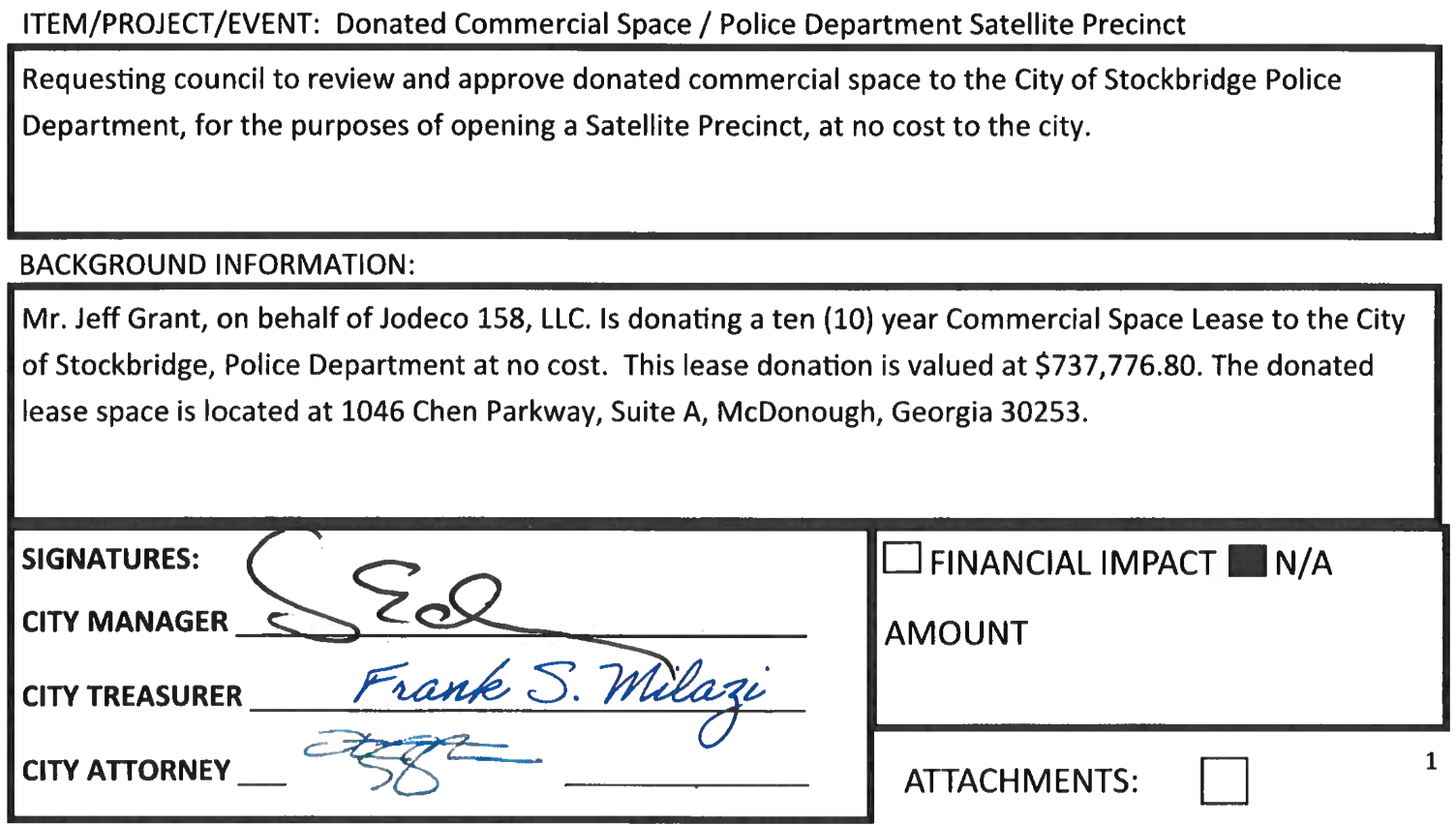
Of note: City Attorney Washington’s police station deal with Jeff Grant. If you’re new in town. Mr. Grant and Mr. Welch’s firm go way back. And if you don’t know about my lawsuit. You won’t be surprised it was Greenamyre representing me against Strickland.
The further questions
• Did SWWW, LLP (Andy’s firm), as registered agent for Tabernacle negotiate a contract with Harold Young in the course of scheduling this years first gospel show?
• Which of Quinton Washington’s three legal entities handled, if any at all, amphitheater business. Such that there was involvement further than Washington & Dreyer’s e-mail concerning the amp. financial open records.
• What accountability measures were in place at the City of Stockbridge that allowed the amphitheater’s budget to be exceeded by millions of dollars for several consecutive years?
• What, if any, is the connection between Rep. Andy Welch and the Infinity Academy project, given the professional overlap between his legislative & board duties and Christopher Holmes’s state employment?
• Are these two cases, a mismanaged amphitheater and a fraudulent school petition simply isolated incidents, or do they point to a broader pattern of insiders leveraging public trust and taxpayer funds for poorly planned ventures?
• The receipts for the $8.1 million amphitheater budget amendment?
In closing, a bit of Shakespeare I find pertinent, “O judgment! thou art fled to brutish beasts, And men have lost their reason. Bear with me; My heart is in the coffin there with Caesar, And I must pause till it come back to me.”
In September 2016, Stockbridge City Councilwoman LaKeisha Gantt was arrested following a domestic dispute. According to a police report, her husband reported that they had been in a verbal altercation by phone all day and that Gantt had threatened to cut his throat. When officers arrived at the couple’s home, they found a smoldering pile of men’s clothing on the garage floor. The couple argued about the burnt clothing and infidelity, with the husband stating he called the police because she had threatened to kill him, to which Gantt reportedly replied, “You cut your own throat.” Gantt was initially arrested and charged with arson, but a judge later reduced the charge to criminal trespass, and she was released on bond. Police officials noted that Gantt’s husband was unable to prove any threats were made. At the time, Gantt was a practicing attorney and had previously served as the first Chairman for the Stockbridge Ethics Board.
Ms. Gantt has also faced two separate disciplinary actions as an attorney before the Supreme Court of Georgia. In August 2017, she received a public reprimand after admitting to professional misconduct in a client’s civil case. Gantt had been retained in 2007 to represent a client whose home was extensively damaged by an unoccupied truck. After filing a lawsuit in 2009, Gantt voluntarily dismissed it in 2010 but admitted she failed to adequately communicate this to her client and never refiled the suit. This negligence caused some of the claims belonging to the client’s minor children to be barred by the statute of limitations. Gantt admitted to violating professional conduct rules regarding diligence and communication, and the court cited mitigating factors such as her lack of a selfish motive, cooperation, and personal issues at the time.
In April 2019, Gantt faced a second disciplinary matter, resulting in a Review Board Reprimand. In this case, she admitted that a client hired her in 2014 for an adoption matter, but due to her failure to promptly complete the necessary work, the adoption was not finalized until March 2018—a delay of several years. Gantt acknowledged numerous instances where she failed to respond to her client’s communications and submit the required paperwork in a timely manner. While she cited personal and emotional difficulties in mitigation, the State Bar noted her prior discipline from the 2017 case as an aggravating factor.
A Failure of Oversight
As a public officer and trustee for the people of Stockbridge, Councilwoman Gantt has a fiduciary responsibility to manage city property with the sole intent of benefiting her citizens. It is therefore deeply concerning that while she and other officials were permitted to enjoy the perks of office, such as accepting food and beverages at events held at the city’s new amphitheater, that very same venue was hemorrhaging public funds. The “VyStar at the Bridge” Amphitheater, intended to be a self-sufficient “enterprise” fund, saw its expenses explode from a budgeted 2 million to an actual 8.1 million. This catastrophic financial failure was deliberately concealed by charging its costs to an unrelated fund without council approval. This demonstrates a shocking failure of oversight from a council member who was literally on-site for the entertainment, yet seemingly oblivious to the financial disaster unfolding behind the curtain.
At this time we have no official word on who was able to remit these funds. We have received no detailed accounting of who this $8,100,000 now belongs to. The only bit of transparency you’ll find is in the fac.gov audits that were submitted 18 months late in the case of 2022 audits.
This lack of awareness is especially egregious coming from an attorney who has been twice disciplined by the State Bar for professional negligence, lack of diligence, and failure to communicate. For a public official with this professional history to preside over a city whose financial reporting failed to meet standards for three consecutive years is a profound dereliction of duty. The amphitheater’s losses were not a secret to citizen assessment of their black box. Yet the council reportedly saw almost no budget amendment requests between 2022 and 2024, only acting when the situation reached a breaking point. One cannot claim to be a responsible steward of public money while enjoying the amenities of a project that is secretly draining the city’s finances. It suggests a fundamental unwillingness to recognize the amphitheater’s drain on finances.
Gantt’s vote to take my home.
The redevelopment plan, which invokes the state’s Redevelopment Powers Law, grants the council immense power; given your history, I have serious concerns about how you and the other members will wield it.
The plan you are championing, “Tax Allocation District #1,” uses the Redevelopment Powers Law as its authority, with the City Council, including yourself acting as the “redevelopment agent.” The justification for this massive project is that our neighborhood is a “blighted or distressed area” full of “substandard, vacant, deteriorating, or deteriorating structures.”
To be clear, the city isn’t taking my home through traditional eminent domain, where the government must pay “just compensation” for a clear “public use,” like a new road. Instead, it appears you are using a more insidious tool available under Georgia’s redevelopment laws. This is a mere ploy to take private property otherwise in good standing. The Institute for Justice is pursuing a similar matter in the courts, currently.
Under a related statute, the Urban Redevelopment Law, the city can simply declare a home “unfit for human habitation” or a danger to “public health, safety, or morals.” If an owner is notified that their property is considered blighted and fails to enter into an agreement to fix it according to the city’s plan, the city can do the work itself and place a lien on the property for the costs. That lien is “enforceable in the same manner as tax liens,” which means the city can foreclose and take the property.
This is how you can take our homes without it being called eminent domain. Instead of paying us for our property, the city can run up a bill for “rehabilitation,” slap a lien on the house, and then foreclose to settle the debt. Through this process, we could lose our home and receive no payment at all, unlike in an eminent domain case where just compensation is required. While your redevelopment plan claims that “no existing residences… will need to be involuntarily relocated,” those homes it purports not to be taken are on the official list of what’s to be “redeveloped.”
You… what? You thought taking my house wouldn’t come up? Indeed, it’s your legacy, Ms. Gantt. Alpha Kappa Alpha & their cohort members may be emboldened by your shenanigans. I, personally, am not of the opinion you should have a role in managing my day to day life, here downtown. Even if you do throw a mean party for your homegirls.
Sources.
1. “City councilwoman arrested after domestic dispute | 11alive.com”
◦ This news article reports that Stockbridge City Councilwoman LaKeisha Gantt was arrested in September 2016 following a domestic dispute. She was initially charged with arson for burning her husband’s clothes in their garage. The charge was later reduced to criminal trespass after her husband was unable to prove threats were made. The article notes she is an attorney with Gantt & Associates Law Firm and was sworn in as the first Chairman for the Ethics Board for the City of Stockbridge in 2011.
2. “IN THE MATTER OF LAKEISHA TENNILLE GANTT :: 2017 :: Supreme Court of Georgia Decisions – Justia Law”
◦ This document details a 2017 disciplinary matter before the Supreme Court of Georgia involving Gantt, who has been a member of the State Bar of Georgia since 2005. She admitted to dismissing a client’s lawsuit without adequate communication, which resulted in the claims of the client’s minor children being barred. For these violations, the Court accepted her petition for voluntary discipline and ordered that she receive a public reprimand.
3. “IN THE MATTER OF LAKEISHA TENNILLE GANTT :: 2019 :: Supreme Court of Georgia Decisions – Justia Law”
◦ This source describes a second disciplinary matter from 2019. In this case, Gantt admitted that after a client hired her for an adoption matter in 2014, she failed to timely perform the necessary work or adequately communicate with the client, causing a significant delay of nearly three years in the adoption’s completion. The State Bar noted her prior discipline from 2017, and the court ordered that Gantt receive a Review Board Reprimand.
Quoting from page 13: In December of 2004 the Stockbridge City Council adopted resolutions adopting an Urban Redevelopment Plan (URP), designating an Urban Redevelopment Area (URA) containing approximately 23 acres, and authorizing the City’s Urban Development Agency to assemble those properties which today include Stockbridge City Hall and the new amphitheater. The “Stockbridge URP” was created under the Georgia Urban Redevelopment Law (O.C.G.A. 36-61-1 et. seq.). The Urban Redevelopment Law, which is a different statute than the Redevelopment Powers Law which authorizes Tax Allocation Districts, defines a redevelopment area as a “slum area which the local governing body designates as appropriate for an urban redevelopment project.” The original URP, which was later amended in 2013, proposed demolishing and replacing 14 existing properties with civic buildings, commercial and office space, new residential development in multi-family and mixed-use buildings, new single-family house lots, associated public amenity space and parking facilities. The boundaries of the proposed Tax Allocation District #1 include the entire designated URA, which is identified on the next page.
5. “O.C.G.A. 36-44-1 et. seq. – Justia Law”
◦ This is the Georgia Redevelopment Powers Law which grants the city the broad power to “tap a property with the blight stick,” as the ij.org say it in their video embedded above. This is the law now invoked by the city, it declares private property rights null and void for vague notions of “the public good.” After this, it’s a hard thread to follow completely for a layman. Between 36-66-1 & 36-44-1, considering their full texts, from this layman’s perspective, this doesn’t look good for me.
◦ Page 93: Redevelopment Powers Act; Renovate, construct, preserve, restore, expand or demolish buildings for business, commercial, industrial, government, education, public or private housing, social activity, governmental services. Enactment: O.C.G.A. §36-44-1 et seq Purpose: Revitalize blighted areas; use future taxes for infrastructure. Funds Use: Broad range for development activities.
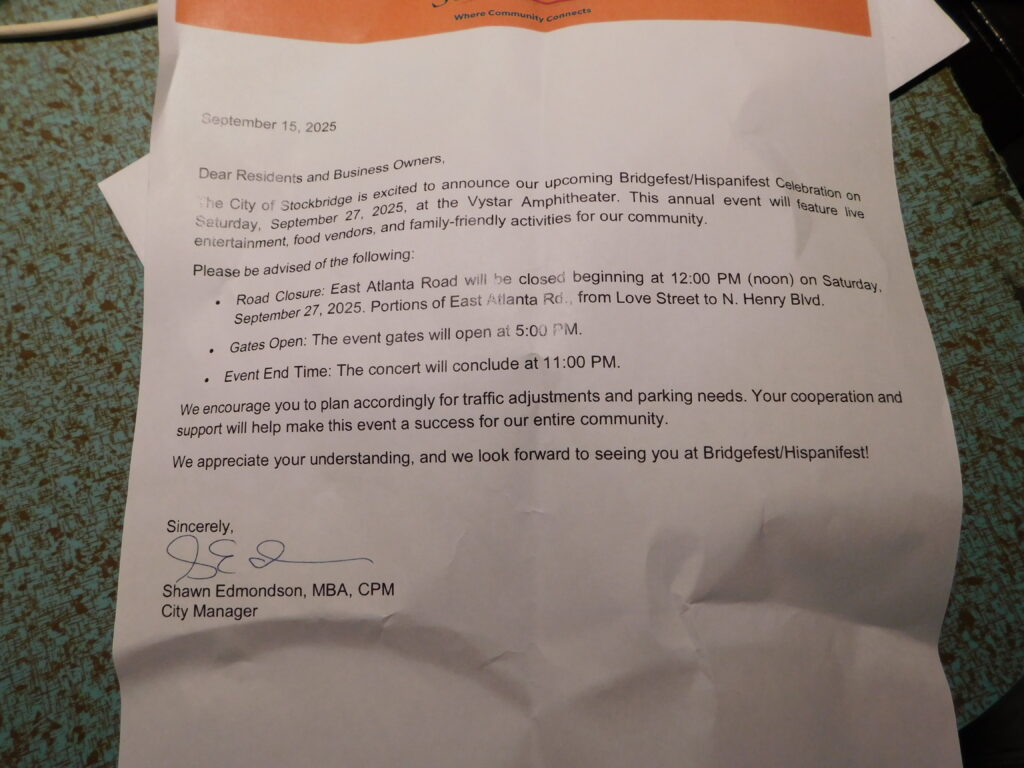
This is how the Bridgefest street closure notice was found in my mailbox. They did this, even though I was yelling out the window not to touch my mailbox. But this isn’t about my mailbox, folks. Not really. This is about you being bothered by something that hasn’t happened yet. Normally you’d come home on a Friday to rest up, eat & share time with those you love.
Normally, in your free time you’d seek to forget the monstrosity in our backyards. But you won’t this weekend.
You’ll come home and think of the traffic and noise next weekend, for all of this weekend. Just after finding trash shoved in, on or around your mailbox.
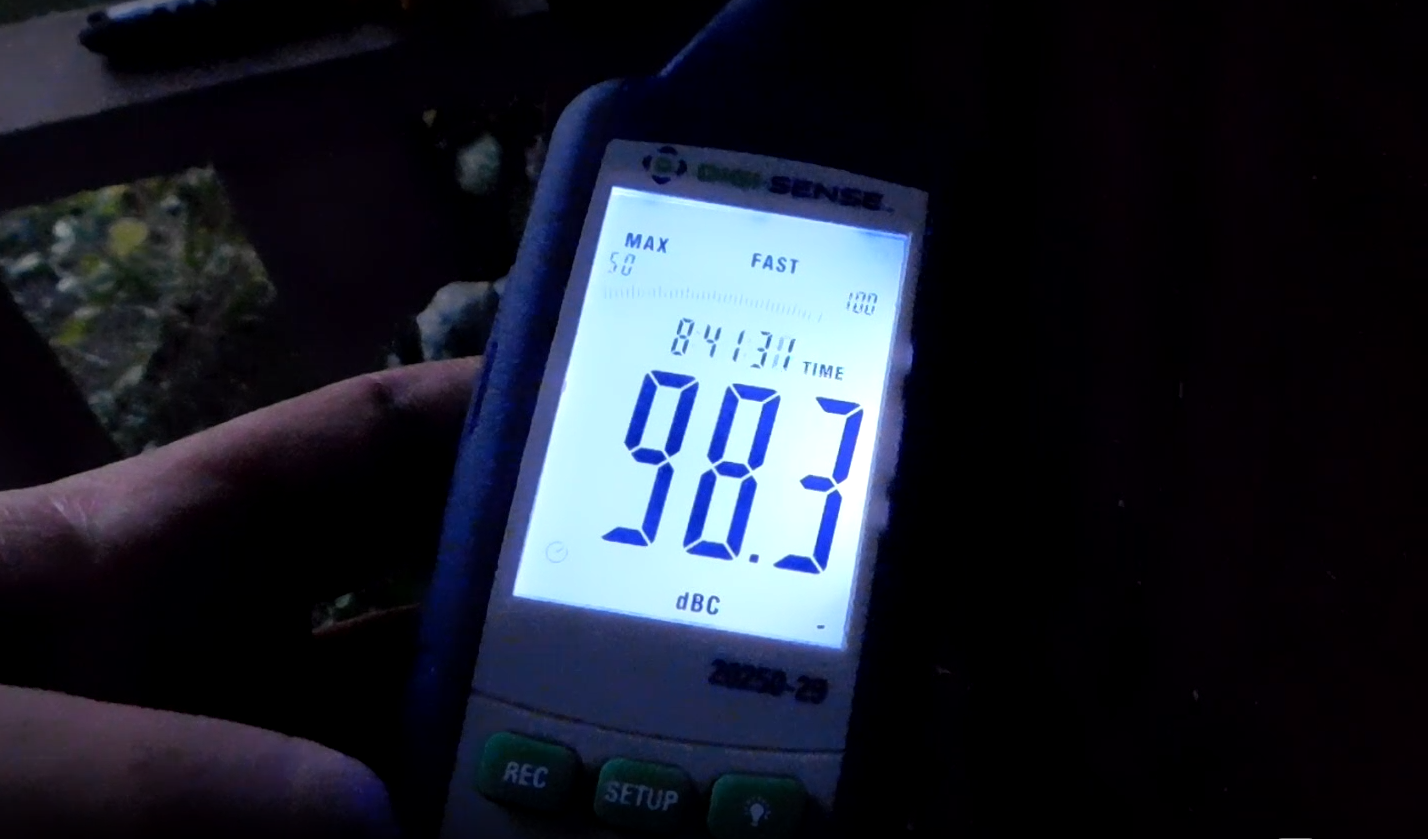
Let me stop you right there at “cooperate”, Shawn Edmonson. As to our problems on Bryant St, Lee St & surrounding environs. You seem to be worse at this than the last guy. At the 9-13-2025 show, you (or whoever), let MC Stanford Lightfoot & the gang over there go hog wild on the board. The only other thing that’s approached 98.5 dB(C) is the fireworks. You, nor the city have my cooperation or support. You want me to support you in taking my private property, and bothering me while you do it? My man. You must have bumped your head?
Control the noise. Don’t ever “inform” people of an event in this manner, as you did today, ever again. Don’t open our mailboxes. Don’t place your “fuck you” announcement to us on the mailbox. Put the son of a bitch in an envelope, then give it to the mailman. That’s how mailboxes work. Moreover, that’s how respect works.
The behavior in the video above, Shawn, is not respectful. It’s not legal, if you set aside the city can exempt itself from the law on a mere whim. The most offensive part is the flag at half staff on 9-13 when the city decided to pull the loudest show of the year.
In closing, I’d like to say fuck VyStar, Stockbridge, Hispanifest, Bridgefest and finally, candidate for Georgia attorney general, Ga. Senator Brian Strickland, Esq. for building the amphitheater, after he strong armed a “historically black city council” with the Eagle’s Landing Cityhood, SB268-2018.
Sep. 3, Henry Commissioners Meeting – As Stockbridge grapples with a reported $33 million financial discrepancy and a history of budgetary mismanagement, concerns are mounting that the city continues to funnel taxpayer money into what critics are calling “free parties” and events, serving more as electioneering for current Mayor Anthony Ford and Council Member LaKeisha Gantt than genuine community benefit. The shadow of the city’s amphitheater, a constant drain on funds, looms large over these decisions, having previously contributed to a controversial annexation and the subsequent imposition of a city property tax on newly integrated residents.
The Amphitheater: A Bottomless Pit Paving the Way for New Taxes The Stockbridge Amphitheater, initially envisioned as a self-sufficient “enterprise” fund, has instead become a significant financial burden. Its expenses reportedly soared from a budgeted $2 million to an staggering $8.1 million for the 2024 concert series, a budget amendment only recognized in June 2025. Disturbingly, there are allegations of a “deliberate concealment of amphitheater expenses,” with costs being charged to unrelated funds without the City Council’s knowledge or approval. This practice has been described as a “let down” to citizens, and council members like Yolanda Barber have repeatedly sought accurate financial reports, often receiving incomplete or incorrect information.
This monumental financial strain appears to have directly influenced significant changes for Stockbridge residents. For decades, the City of Stockbridge did not levy a municipal property tax. However, in May 2023, discussions began on implementing a new city property tax to address a $6.8 million budget shortfall, with staff proposing a millage rate up to six mills. This shift followed the 2022 annexation, initiated by State Senators Emanuel Jones and Brian Strickland through Senate Bill 612. The annexation, approved by voters in November 2022, brought an additional 6,500 to 6,700 residents into the city limits, effective January 1, 2023. This expansion, alongside the establishment of a new city police department, increased the city’s budget.
Newly annexed residents, welcomed by Mayor Anthony S. Ford, found themselves subject to these new financial realities. While in 2021, city residents paid slightly less property taxes than their unincorporated counterparts, the situation quickly changed. By July 2024, Stockbridge was proposing a property tax increase.
To mitigate the impact, voters in November 2024 approved new homestead exemptions, which became effective January 1, 2025. These exemptions, codified in Senate Bill 584, offer a $10,000 reduction in assessed value for all residents and a $15,000 reduction for seniors aged 62 or older, or those with septic systems, from City of Stockbridge ad valorem taxes for municipal purposes. However, these exemptions only serve to highlight the underlying property tax that has been established, a stark contrast to the city’s previous decades-long practice.
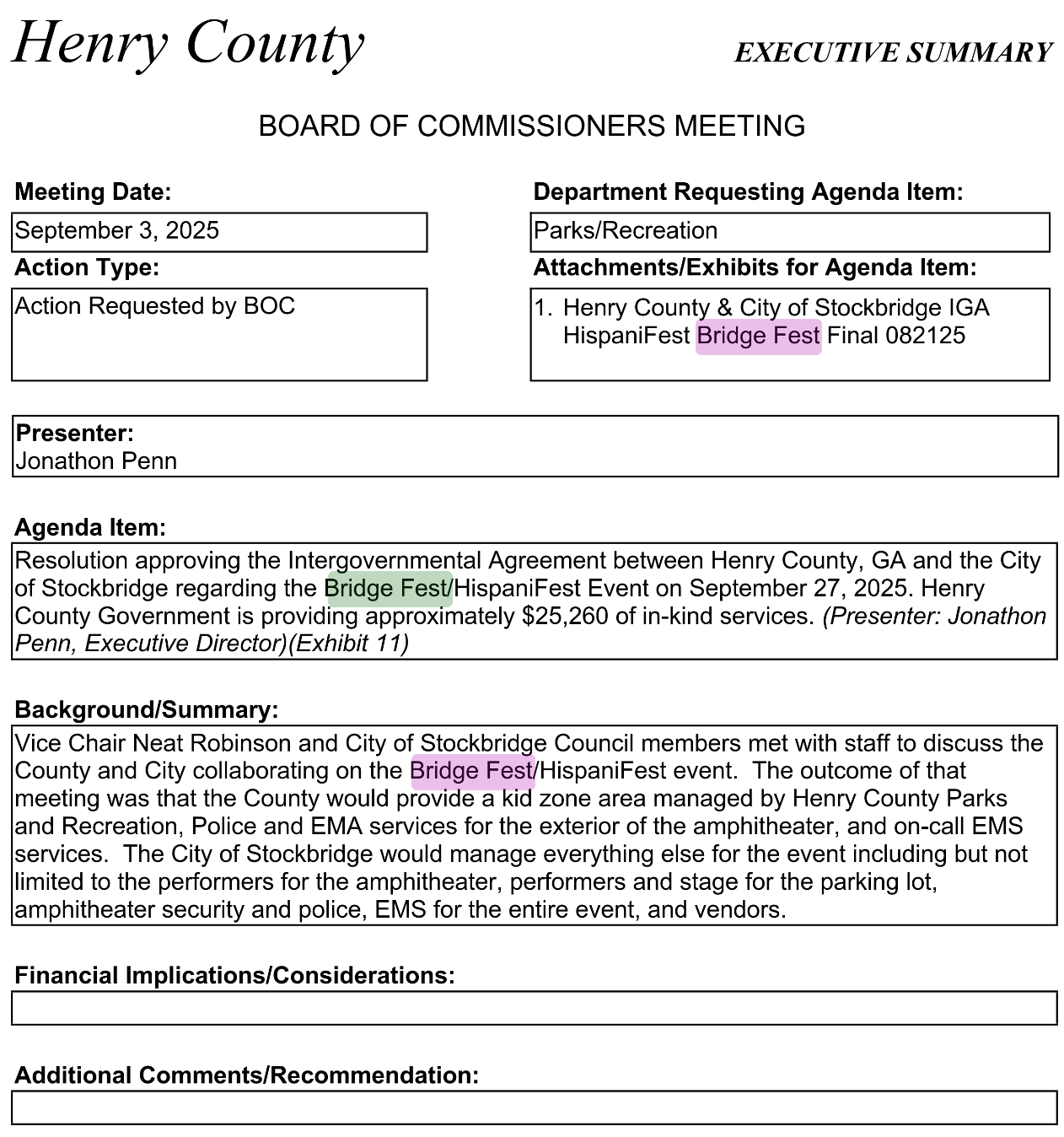
“Free Parties” as Questionable Spending and Electioneering Despite the city’s financial woes and the new tax burdens on residents, Stockbridge continues to collaborate on costly “free” events that raise questions about fiscal responsibility and their potential as electioneering tools. The Hispanifest Bridge Fest is a prime example. Henry County was asked to collaborate on this event, which included a concert inside the amphitheater and a smaller concert area and Hispanic festival outside, along with a kid zone. The total cost for Henry County’s involvement in providing security officers, Parks and Recreation staff, inflatables, face painting, and a balloon arch was $44,018.95.
The county’s involvement was not initially budgeted for Henry County, with a staff member noting it was a “separate ask”. A Henry County commissioner voiced strong opposition, calling the funding of city events a “dangerous presence” and questioning the sustainability of such expenditures given that Henry County would bear the entire cost of its services without shared contributions from Stockbridge. The vice chair of the county explicitly stated that she initially only wanted the county to cover the “kids zone” activities, not public safety, as the sheriff’s department typically handles amphitheater security.
Mayor Anthony Ford, who personally welcomed newly annexed residents, highlighted the city’s “variety of events and programs… including live music at the Amphitheater” as a benefit of living in Stockbridge. Council Member LaKeisha Gantt, whose district assignment was contingent on the annexation passing, also continues to serve during a period marked by these financially contentious events.
The deployment of county resources for what are essentially city-led events, especially given the county’s own budget concerns and the City of Stockbridge’s internal financial issues, raises flags about the true purpose of these expenditures.
Accountability Still Missing As a reporter, it is deeply troubling that since May 12, 2025, the City of Stockbridge has yet to provide a thorough explanation for the alleged “misplaced” $33,930,000. Audits for 2021, 2022, and 2023 have consistently flagged the city’s financial reporting for failing to meet required standards. Despite significant discrepancies becoming known as early as September and March of 2024, council members reportedly saw almost no budget amendment requests between 2022 and 2024. The fact that an April 2022 audit was not completed until 2024, and the city was aware of necessary corrective actions for financial control since early 2024, only compounds the issue.
This pattern of alleged financial obfuscation, coupled with the continued allocation of funds to events and services without clear accountability, leaves one to wonder: is Stockbridge simply asking for more money from its now expanded tax base to misuse in the same manner? The citizens deserve immediate and complete transparency, not just more “free parties” to distract from the glaring questions surrounding the city’s financial integrity.
Please note; Mr. Washington has all but disappeared since the firing of Harold Young and the misplaced $32,900,000.
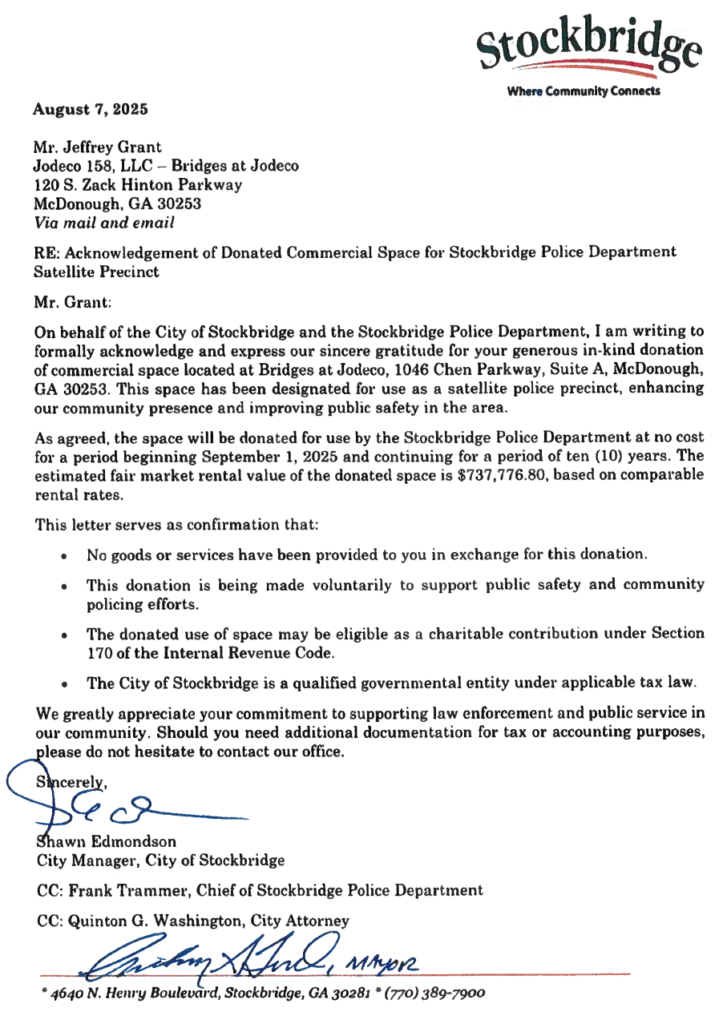
In August 2025, the Stockbridge City Council convened for a meeting, a sense of civic progress filling the air as Chief Trammer presented a significant donation. Mr. Jeff Grant, on behalf of Jodeco 158 LLC, was generously offering commercial office space at 1046 Chen Parkway Suite A for a satellite police precinct, at no cost to the city for a decade. Grant himself, present in the audience, spoke of the additional security system his company would install throughout the entire Jodeco project, with its recording system housed within the new precinct, available to detectives for investigating crimes and accidents. He emphasized the benefits of this enhanced security for the booming Jodeco Project, with Sprouts and Costco seeing impressive sales figures, and expressed his belief that this police presence was “almost a must” to deter potential problems and ensure the safety and security of residents.
However, the shadow of past misdeeds loomed over this seemingly benevolent act and its most vocal proponent. Jeff Grant’s extensive history with the law painted a stark contrast to his public generosity. Decades prior, in 1998, Grant was found guilty in Henry County, Georgia, on five felony counts, including three convictions for forgery and two for theft by deception, stemming from widespread fraud in the timber industry. He received a sentence of five years’ confinement and two years’ probation. Further, Grant was indicted under the Georgia Racketeering Influenced and Corrupt Organizations Act (RICO) for a pattern of racketeering activity from 1983 to 1990. This intricate scheme involved fraudulently obtaining timber, misrepresenting acreage, and selling timber at inflated prices by manipulating inventory books, forging contracts for timber not owned, selling contracts for non-existent land, and miscrediting timber to conceal previous thefts. He was specifically named in “Predicate Acts” for unlawfully taking property from Keadle Lumber Enterprises Inc. through checks and for filing false deeds in various counties, knowingly including fictitious entries or descriptions of land he did not own.
Jeff Grant’s financial dealings with Neighborhood Community Bank of Newnan (NCB) were marred by a pattern of misrepresentation, further complicated by the involvement of the law firm Smith, Welch, & Brittain, LLP. Between 2005 and 2007, Grant, a real estate developer, obtained multiple commercial loans from NCB to acquire and develop land for residential properties. However, in these transactions, Grant and his associated companies frequently misrepresented and overstated the land purchase prices in their loan applications. For example, in a December 2005 loan for Southern Lumber II, LLC, Grant’s company represented a purchase price of $1,992,011.66 for 41 acres, but the actual agreement was for $1,336,725.00, which was $673,275.00 less than the amount stated to NCB. Grant then used $400,000.00 of the unauthorized advance from NCB to cover the required certificate of deposit collateral, instead of his own funds. Similarly, for a March 2006 loan to Orchard Road, LLC, Grant used falsified contracts to overstate the land’s purchase price at $3.36 million, when the actual aggregate price was $2,637,650.00. The additional $722,350.00 advanced by NCB was used for unauthorized purposes and in breach of the bank’s commitment, with Grant again using a significant portion ($625,960.00) of these loaned funds for the certificate of deposit collateral. A May 2007 loan to West Panola, LLC also involved a falsified Sales Contract, misrepresenting a single seller purchase price of $1,060,000.00, when the property was actually acquired from two sellers for $770,600.00, nearly $289,400.00 less than represented. In this instance, the loan was funded entirely by NCB’s initial $864,000.00 advance, with no equity from Grant or West Panola.
Crucially, Smith, Welch, & Brittain, LLP, served as primary counsel for Jeff Grant and his companies in various legal matters and also represented NCB in closing these loan transactions. The law firm was responsible for preparing loan documents, disbursing proceeds, and adhering to NCB’s instructions, including the requirement for borrowers to provide equity for land purchases or certificates of deposit as collateral from their own funds. However, in the Southern Lumber II loan, the law firm created two conflicting Settlement Statements, one for NCB that falsely depicted the higher purchase price and the use of the borrower’s separate funds for the certificate of deposit. The firm did not inform NCB of Grant’s wrongful conduct, including the improper and unauthorized usage of loan funds, information considered critical for NCB’s decisions. Had NCB been aware of Grant’s misconduct in the Southern Lumber II and Orchard Road loans, it would have declined all future loan requests from him and his companies. Despite witnessing Grant’s wrongful conduct, the law firm continued to accept engagements to represent NCB in making additional loans to Grant and his companies. The FDIC later alleged that the law firm committed breaches of the standard of care by deviating from NCB’s closing instructions, preparing inconsistent settlement statements, failing to reject improper requests from Grant, making unauthorized disbursements, and signing HUD-1 Settlement Statements that falsely depicted higher misrepresented purchase prices.
Just as concerning was the enthusiastic endorsement from Elton Alexander, currently the city’s Mayor Pro Tem and the District 5 council member. Alexander lauded the donation as a “perfect example of public-private partnerships that work,” and a “manifestation of where we’re trying to go”. Yet, Alexander himself was no stranger to abusing his public office for personal gain. In 2016, as a city councilman, he visited Arick Whitson’s BBQ Masters restaurant, ordered $60 worth of food, and refused to pay, stating, “I thought you wanted to do business with the city?” before leaving without settling the bill. What followed was a year-long vendetta against the restaurant owner, Arick Whitson. Whitson was harassed by city code enforcement officers, faced difficulties obtaining essential permits (liquor, signage, building), and Alexander even filed false complaints with the Henry County District Attorney’s office, alleging Whitson was on the National Sex Offender Registry and abusive to women. This culminated in a federal lawsuit, settled out of court for $1.7 million, with the city’s insurer paying $1.2 million to Whitson. Despite this, Alexander denied wrongdoing and claimed he did not support the settlement.
Public officers are trustees and servants of the people, entrusted to manage public property for citizens’ benefit, and are legally obligated to carry out their duties free from self-interest, bias, and undisclosed conflicts of interest. Elected officials are (or should be) held to a higher standard and must avoid actions that could constitute an abuse of office, conflicts of interest, or violations of ethical standards. The donation from Jeff Grant, with his history of criminal fraud, and its endorsement by Elton Alexander, with his documented abuse of office, raises serious questions about improper influence and perceived conflicts of interest, which the source from ACCG official abuse of power guide explicitly warns against. ACCG is an insurance provider for Georgia’s counties.
The city’s acceptance, celebrated by figures like Alexander, suggests a potential willingness to overlook troubling histories in favor of perceived public benefit, without adequately addressing the implications of such alliances on ethical governance.